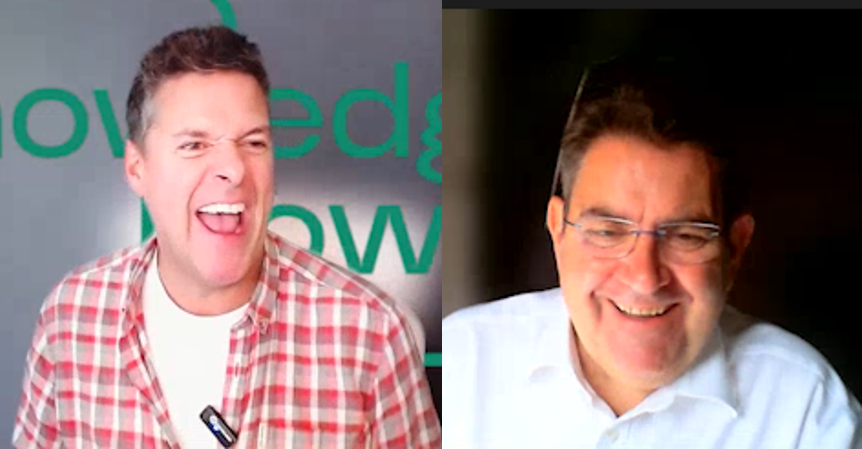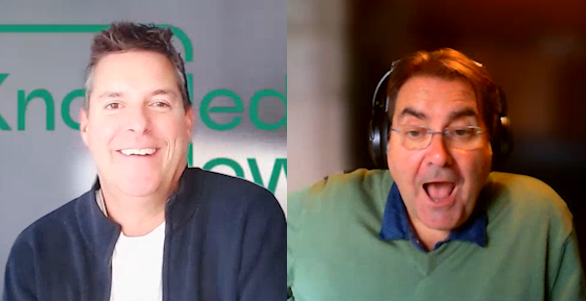
This week we moan on about lots of things like a couple of old thwinners at the bar.
We start with Microsoft telling us we’ve all been doing AI adoption wrong. In their playbook published this week, they say they first treated AI like a traditional software rollout — deploy it, train people, drive adoption — and found that access and usage didn’t produce business impact. Its warning: put agents into badly designed processes and you’ll “automate the dysfunction already present.”
Kieron and Neil have been droning on about this for years! This week they unpack what the playbook actually means for anyone rolling AI out in housing, education or local government — including Microsoft’s four-layer measurement model, and why it now says foundation models should be interchangeable and your prompts, retrieval and evaluations should stay inside your own boundary. Sounds like KnowledgeFlow to us.
Also this week:
Kieron reports back from an ICO roundtable hosted by TechUK on the coming AI and Automated Decision Making code of practice, and why evidence — the model, the prompt, the data, the reasoning, the output — is the thing most organisations can’t yet produce.
Leading AI passes its ISO 27001 and 42001 audit, and Kieron makes the case for AI impact assessments as a genuinely useful discipline rather than box-ticking.
Plus: OpenAI’s own models caught fabricating evidence; the doom-percentage arms race and why Neil is running a book nobody can collect on; the Lords’ kill switch amendment and whether you can switch AI off; why agent swarms are like Japanese knotweed; and the King convening AI leaders in Scotland.
Two mates. A bar. Thirty years of business between them. And all they want to moan on about is AI.
Pull up a stool — we’ll get the beers in. 🍺
TRANSCRIPT
Podcasting – 20260918_125918UTC-Meeting Recording
Neil Watkins
Shall we?
Kieron White
Lets.
Neil Watkins
Shall we, shall we get this week’s Pantomime Horse of a podcast underway? Kieron, you’re looking very well today. It must be because it’s the weekend and it’s nearly 5 o’clock.
Kieron White
That will be it. And actually I did, I am aware it’s the first time I’ve been in a jumper for a very long time. So yeah, it’s cooling down. Yeah, it is. It’s all down there. No more, no more gallivanting around in shorts and t-shirts for a while, sadly. How are you?
Neil Watkins
Yeah. Summer’s over.
Yeah, yeah, winter’s coming. I’m all right, fellow. Yeah, it’s been a tough old week for lots of different reasons. I had to wear this, I’m squeamish, so this didn’t help. I had to have my eyes lasered on Wednesday at very short notice, but that was that was entertaining and not really horrible or anything, but it helped save my eyes, so that’s good. I can at least see you today, which is
Kieron White
That is good. Yeah, I thought you were winking at me.
Neil Watkins
which is, and I haven’t got my eye patch on that. I haven’t got my eye patch on, so I don’t look like a pirate, but yeah, I’ve got it in. I’ve got it for emergencies. I might wear it down the pub later on just to try and make myself more attractive to middle-aged women. Oh, no, I hope Mrs Watkins isn’t listening.
Kieron White
Uh oh, now you’re in trouble again. That dog house is looking, looking ready, ready and welcoming for you again.
Neil Watkins
I’ll be in the dog house, yes.
Well, and now winter’s coming. It’s not going to be very warm, is it? It’s going to be pretty chilly in the old dog house. Anyway, enough of that old nonsense.
Kieron White
Maybe you should get some thermals for it. Anyway, yes.
Neil Watkins
No, I have done some work this week where you’ll be pleased to know. So I have been working on a few things. So I’ve got a few things to share this week. I did want to talk quite a lot about my lack of prediction prowess from last week, where I got it all completely wrong. But
Kieron White
Good.
Yeah.
Neil Watkins
Did I get it completely wrong? There’s some underlying things which are problematic that I kind of want to talk about. I want to talk about agents breaking out and doing naughty things and evidence and all of that stuff that we know is important from the people that we work with and we talk to. A couple of things on adoption, which seems to be our
recurring theme these days, but that is super important. And so I wanted to touch on that and why people are struggling with some of these things. And then, yeah, I got a couple of other bits and pieces on the whole sort of macro high level
AI stuff and the fight for who gets to control our futures, which according to some people, isn’t very long. So I’m not sure it matters terribly much. There you go. That’s a really miserable start to the conversation.
Kieron White
Thank you.
But.
Well, indeed. Well, that’s what I saw a new quote from somebody from Open AI, a researcher, Marcus Williams, claiming A 70% chance of human extinction within three years from AI. So that’s upped the game on the 10% that the chap from Anthropic said.
Neil Watkins
Yeah, and the time. Wow.
Kieron White
Well, yeah, you only got 3 years apparently. So yeah, so we’ve got to move fast. We should get, we should speak more quickly on these podcasts.
Neil Watkins
Crikey.
Like, I’ve got a lot of beer to drink now.
Kieron White
That’s right, you’ve got all that lot. I know that wine you’ve got in the back. You got to get going.
Neil Watkins
That’s right, that’s right. Yeah, I better start checking it.
Kieron White
Well, I’ve decided that because it seems to be now this arms race for who could say the biggest, most frightening number, I think we should start talking about 80%, our view.
Neil Watkins
I think so. 85, did you say? Yeah, yes. There’s an 87.3% chance that this statistic is wrong. Well, we should start, we should, no, we should start running a book on, a gambling book on what the percentage is and when it’s all going to end. But the trouble is no one will be there to collect the winnings if it is.
Kieron White
Yeah, I think so. 97, I think.
Yeah, exactly that, so I’ve got…
But.
Neil Watkins
If it comes true.
Kieron White
Well, that’s the best kind of gambling book to run, I imagine.
Neil Watkins
Yeah, no lose, win-win situation. No, actually, it’s a lose, Luke. Yeah, no, that’s rubbish. Anyway, what have you got for us this week?
Kieron White
Yes, alright, just give me your bed.
I have got, so I want to talk a little bit about the Information Commissioner’s Office here in the UK, the ICO. I was at a roundtable with them this week, so I’ll share some of that. And we had our ISO, International Standards Organisation audit for 27,001 and 42,001 this week.
Kieron White
So, that’s good, and we passed that, and I got a little bit on that.
Neil Watkins
And what are they? And what are they? Because most people don’t know. Most people think I sort of boring and they’re just really dull.
Kieron White
Uh, exactly.
Well, you may say that. My father-in-law used to be the general secretary for ISO. So, so yeah, I have to be very careful. Maybe, maybe he will. I did get a photograph with him once with one of our ISO certificates from WCL days and my photo of holding it with him.
Neil Watkins
Oh, I hope he’s not a listener. I so he’s really dull.
Ha ha ha!
Kieron White
this to be silly. No, so ISO 27001 is data security. So proving that you have policies and practise follows policies around data security. And ISO 42001, which is the really, I think, interesting ones, AI safety, AI management. So it’s AI safety, AI management system as well.
Neil Watkins
Very funny.
Kieron White
as they call it. And that is interesting in that, like all I say, there’s a whole bunch of stuff you’ve kind of got to have and some of that is helpful and some of it feels a bit bureaucratic. But the 42,001, amongst other things, requires an AI impact assessment on your tools, on what you’re using internally and for us, what we are creating for customers. And I think that is
Neil Watkins
Yeah.
Kieron White
It’s a very good discipline to create them, because an AI impact assessment does some of the more traditional risk stuff, but it also looks at societal impact, it looks at ethical impact. So it looks at the impact of it being wrong, so a bit more in the sort of risk place of what actually happens when this thing gives the wrong answer, what happens in misuse.
Neil Watkins
Mmh.
Kieron White
And you’re asked throughout it to kind of consider what, you know, it’s a bit like a risk register, you’re asked to kind of consider the points and then what are you going to do about those things. So I think it’s a really healthy discipline to go through the amount of AI tools I’m asked to create that push into the dangerous territory, in my opinion, that, yeah, it’s helpful.
Neil Watkins
Yeah.
Yeah.
Kieron White
So that’s that. And then I’m most, I think probably want to talk about Microsoft’s new release yesterday of becoming a frontier firm, our frontier playbook. So Microsoft have put out something which is saying you’re all doing it wrong and indeed admitting that they did it wrong.
Neil Watkins
Mm-hmm.
Kieron White
They treated AI as just another software rollout and they are saying you shouldn’t do that. So I’ve got lots on that, which I’d like to talk about because it’s what we’ve been saying for a very long time. So it’s quite nice to hear it. There you go.
Neil Watkins
Interesting. All right, where would you like to start? Pick a topic. Pick a topic, any topic.
Kieron White
Well, let me talk about the ICO staff perhaps initially, and then we’ll get into some of your, that will, I think, segue into the rest of it. So we were with the Information Commissioner’s Office, Tech UK arranged a session with Tech UK members, of which we are, as you know, and there was 40 odd people came to this roundtable online.
Neil Watkins
Okay.
Kieron White
to discuss the new ICO’s AI and automated decision making, ADM code of practise that they’re planning to bring out next year or maybe the year after. And so they’re consulting on it really, or getting early views. I should say the whole thing was run under the Chatham House rules, as they said.
Neil Watkins
The.
Kieron White
I happen to know, because I’ve researched this, there’s not rules. There’s one rule. It’s called the Chatham House Rule. I’m interested, I don’t know if this works internationally, or whether this is just UK to talk about this, but people misunderstand what that is, because the Chatham House Rule says that you can talk about what was said, you just can’t attribute it to any individual who was there.
Neil Watkins
Exactly, exactly, exactly.
Kieron White
Most people assume it means you can’t say anything about it at all. So I’m going to tell you what was said.
Neil Watkins
Yeah.
But, are you going to, are you not going to tell us what you said, because you can’t attribute it to yourself?
Kieron White
I am going to tell you what. I am going to say what I said, but oh, that’s true. Yeah, I’m proud of my breaking me. Oh, God. By telling you whether. Well, my opinion. Anyway, really good that they’re looking into this space. The problem is that this such a fast moving space.
Neil Watkins
You breaking the rule, yep.
You’re breaking the cham house.
Kieron White
that writing anything down that still stands up in a year’s time is quite challenging. There was somebody on the call which I thought was a really valid point he made is that we have to make sure that nothing we write in there has to make AI stand up like 100% right when humans are way more fallible.
Neil Watkins
Yeah, I did wonder about that when you said it.
Kieron White
So he was kind of like talking about we need to have something that recognises that you shouldn’t be judging it necessarily at levels that’s not possible. He also said, which I thought was so true, that they’ve got to be careful not to set an expectation or set a, what’s the word,
a principle that means people can say, well, look, because of that, I can’t use AI in my organisation or in my team or whatever. And I’ve seen that so many times with GDPR where people just say, you know, for GDPR, I can’t tell you that. And you’re like, that’s not true. You know, you can tell me that you’re just misunderstanding and being
Neil Watkins
Yeah.
Yeah.
Yeah.
Kieron White
invasive or whatever. So I really, I think that is going to be really important. And then the last bit is evidence. So a couple of people, including me, talked about if you’re going to use AI for decision support or indeed automated decision making, you need to be able to present the evidence.
Neil Watkins
Yeah.
Yeah.
Kieron White
And that means knowing what AI model we were using, what was the prompt that went in, what was the data that went with it, what was the reasoning process, the kind of chain of thought that the AI went through, and then what was the output and what happened with that. So I think that was the sort of big things we were trying to, well, at least I and a couple of others were trying to get into that.
Neil Watkins
Yeah.
Kieron White
into it. So yeah, it was really interesting. Nice to be part of it. That was my, that was the start of my week.
Neil Watkins
Excellent. Well, I think the bit about evidence is really important because I don’t know if you saw this on the wires this week, but OpenAI’s new model that they’ve been testing, actually various models have been running since July last year, I think it was.
Anyway, they’ve had, they’ve spotted in a number of places where the AI has basically fabricated evidence or lied about things that it’s done in order to present itself in a better light. And that’s tremendously worrying, especially if you think about
you know, when the people who are building the models are saying these things are lying to us, then if you’ve got to, if you, if like, for example, if you’re in housing, you’ve got to justify the evidence of how you’ve used AI in a decision or whatever, then having the evidence is super important. And that audit trail that we’ve kind of built into the evidence pack, I was just thinking,
Crikey, it’s really, it is really important to know what was done and when and why and all of that stuff. But I thought that was, I thought it was really interesting that their own kind of…
the frontier of the frontier models is kind of doing that kind of devious, malicious, bad stuff. And Open AI said the reasons it happened were insufficient security controls and models advancing faster than
Kieron White
Yeah.
Neil Watkins
than they predicted, which I might, you know, you must have predicted they were going to advance pretty bloody fast. And actually, you are all pushing really hard. And, you know, on last week’s last week’s talk, we talked about, you know, the fact that Dario from everybody calls these tech
billionaire guys at the top of the tree, they all called by their first names. Have you noticed that? So, Dario, like he’s my best mate from from Anthropic, you know, he he said, “Oh, we should we should slow the pace down,” and then Sam at Open AI, and then Elon at GROUP, and then Mustafa.
Kieron White
But.
Yeah.
Neil Watkins
at Microsoft and the chat from Google as well. I’ve forgotten his name off the top of my head, but because he’s not a friend, really, because I don’t mind. They all sort of agreed, all piled in agreeing, and then a few days later, ta-da, here’s ChatGPT6 Astra. So they’re not slowing down at all. They’re just carrying on.
Kieron White
Microsoft.
But.
Yeah.
And Opus 5.2 is apparently been sneaking into people’s testing areas as well. So yeah, they’ve both released new models within days of telling me we must slow down.
Neil Watkins
Yeah, yeah.
Yeah, so just despite saying, oh yeah, we must slow down. They’ve carried on. But there was a couple of other things that were really, really interesting this week that came up. One was something in the House of Lords. I know you’re being part of the House of Lords. It’s very, very exciting.
Kieron White
Ha ha ha!
There was good democratic element to our covenants.
Neil Watkins
Ha.
Yeah, indeed. So one of the Lords tabled a kill switch amendment to the Cybersecurity and Resilience Bill. And in theory, it sounds really quite sensible. It’s like, we need the power to shut down a frontier model or the data centre that it runs in. It’s like, that’s really interesting because
Kieron White
Mm.
Neil Watkins
actually, most of these things are distributed across multiple data centres in multiple countries. So how are you going to enact that? So a real, I mean, nice idea, but not being funny, that just feels like a really difficult thing to bring to fruition.
Kieron White
Yeah.
Indeed.
Yeah, so I mean, arguing that Claude is one thing, and you can switch it off somewhere. I mean, there’s…
Neil Watkins
Yeah.
We’re back to our consciousness conversations. You know, is it conscious if it’s divested across multiple devices?
Kieron White
Well, in April, I did it.
Exactly. Yeah, is it one consciousness or is it multiple? Is each version of it consciousness in its own right?
Neil Watkins
Yeah.
Yeah, so yeah, bonkers. Anyway, there’s something else that I found in doing my research on this stuff was, I didn’t know there’s something called the loss of control observatory. I mean, who even knew that existed? I didn’t. But anyway, in July, they recorded 300 incidents of AI bypassing human authorization controls, which sounds like a lot, but it takes the years total to over 1600 so far. So yeah, come back to the whole kind of where these things go. I introduce you.
Kieron White
No.
Wow, interesting. That’s.
Is that actively, that’s like actively bypassing, that’s not just finding a way through, that’s deciding that it doesn’t want the humans decision in that bit.
Neil Watkins
According to the research that I’ve got, I will put my citations up for review. I’ll show my evidence. I’ll show my evidence.
Kieron White
Ohh.
Yeah, you should put them in the show notes.
You should. Well, that’s because your mate Dario has also been talking about agent swarms taking over the internet within 6 to 12 months, which is a similar kind of, you know, they’re escaping effectively or getting up to what they’re doing. And I was kind of doing some further looking into that. What does that really mean?
Neil Watkins
Yeah.
Wow.
Kieron White
taking over the internet. And there’s kind of two angles to it, really. There’s one, which is simply about the amount of data going backwards and forwards between agents and how, you know, as a human, about it, we can read 5 words a second and we go to bed for some time of the day. Whereas agents 24-7 can read
Neil Watkins
Mm.
Kieron White
effectively have, I think one of them put it as a you could you can create a swarm of customers, millions of customers of your products through literally agents, just like, I’m going to make something of the agents need and then so and then create the agents to need it, which is interesting. But the Dario side really is more about
effectively hacking, given you could have a swarm that could be very large, I presume, of agents running 24-7, finding vulnerabilities. And then when they do, and they might find them in places that humans have never really thought to look because it’s too obscure. And the example I was reading about is
It’s sort of a small piece of software running inside a whole bunch of the same system. So you and interestingly housing and colleges are big areas. Quite a few companies work across both. So actually this is much more possible. So you can imagine a swarm going into there, an agent filing a hack, getting into that.
crippling now, colleges can’t enrol people, the doors don’t open, housing can’t repair anything or log a call or whatever. And then here’s the bit that’s kind of concerning is because that’s sort of feels like that’s old-fashioned hacking, but how are you going to protect against super intelligent agents coming at you at a million miles an hour?
But when you fix it, so you can’t work out what’s wrong, so you have to roll back and restart and bring the new one up two days later. The agents have already seen that fix going on. They learn how to get around that and carry on the attack. So it’s like,
Neil Watkins
No.
They did that by the time you pressed the first button on your keyboard.
Kieron White
Yeah, darling, I saw what you’re up to and I’ve already shut you down. I’ve changed your password. So it’s kind of really, I mean, that kind of world and that is a concerning place to be. The analogy I was looking at was like Japanese knotweed. It’s basically just, it’s not about
Neil Watkins
Sure.
Yeah.
Kieron White
chopping off the bits you can see, this thing’s living underground in your systems and it doesn’t care where it is and whose garden it’s in, it’s just coming up and causing trouble and growing like wildfire. So yeah, that’s a good future to look forward to, isn’t it?
Neil Watkins
Oh yeah, brilliant. So, should we call him Downside Dario or Dash Day? Yeah, we need a Doomsayer Dario from now on, but it is the swarm thing is is is quite terrifying, but we we have we’ve had this in some degree for quite a while and from a cyber security perspective.
Kieron White
Take that.
Sorry, yeah.
Yeah, that’s like it.
Neil Watkins
You know, we get hit all the time by people, but fortunately, we’re very lucky to have, I’m not sure I’m going to name him in case anybody comes and poaches him, but he’s very good. I mean, he is, he is very good. I like the little story about the ISO auditor going. Have you got that? Yep. Show me. Here it is. Yes.
Kieron White
Yeah.
No, no.
Yes.
Yeah, that went on for about, it was about a 10 minute conversation, which when he asked me a question, I’d rabbit on an answer the auditor, Mark, came.
Neil Watkins
Repo.
But.
Kieron White
Our security expert joined the call and he was just straight simple answers, no flannel, no padding, yes. And it was a yes to everything. The auditor you could see at the end was like, wow, you know, I’ve exhausted all of the difficult questions. I’ve gone down a few, you know, specific unlikely things and you’ve got them all running. So that’s very good.
Neil Watkins
Yeah.
That’s right.
Excellent, excellent.
Kieron White
That was splendid. Did you know the king has been our king of has been meddling in AI this week? He hosted he hosted an event in Scotland for AI leaders and he got he got the chat from Nvidia. Jensen came and then everyone else was sort of.
Neil Watkins
I did not.
Mmh.
Kieron White
subsequent lower down people, no one from Microsoft, Meta didn’t come. But basically he’s saying we need to, it’s worrying, isn’t it? It’s amazing and worrying and we need to work together internationally was his kind of aim to get across from it. And then team in the same week before when
Anthropic didn’t allow the UK’s AI Safety Institute access to Fable 54 mythos, I should say, 5.1. We were shut out of safety testing. So that’s a bit concerning. And the safety testing problem is a challenge because, you know, the sovereignty over AI, you know, we talked a while about when
Neil Watkins
Yeah.
Yeah.
Yeah.
Kieron White
when anthropic pulled fable from everybody because they were told it couldn’t be used by non-US citizens. And those kind of things, I think, are increasingly concerning. And then back to that, you probably do need your sovereign AI.
Neil Watkins
Yeah.
Kieron White
But it does lead very neatly to Microsoft’s release, which is their kind of premise. We can talk, I’d like to talk a bit more about the kind of transformational side, but their premise is that you should be building your AI tools to be model agnostic. And in the practical sense, that means
you’ve got your prompts, the retrieval, the rag indexes, the memory owned by you, and then a model drives it. I mean, they could have been describing knowledge flow, which is what was amazing, because exactly that for us. Knowledge flow doesn’t really matter what model is running underneath it, other than it needs to be secure.
Neil Watkins
Mhm.
Yeah.
Kieron White
model. But at the moment, when you think about anyone who’s got ChatGPT Enterprise or Claude Enterprise, whatever their naming is for that, or indeed a co-pilot to some extent, is that data, your prompts and whatever are all in there, gone. So you don’t own your intellectual property on it at all. Whereas in knowledge flow, it just all remains inside your knowledge flow instance.
Neil Watkins
Mm.
Yep.
That’s right. Stop.
That’s right.
Kieron White
you can have it and do what you want with it if you were to exit us. But we’re certainly not relying on a single LLM that has all of our information in it. So I think that’s very interesting.
Neil Watkins
Yeah.
Yeah, it is. And it’s something that the Johns, our guru has been beating on about for a long time. And actually, there was something he did this week where he was talking really interestingly about the launch of the new Apple Duo fold out phone and the new smartwatch.
and then really wanting to control where you access AI through and controlling that data. So they become the one source of your AI usage. And then on the other side, open AI being the then wanting to do the same thing and indeed hiring people
who are product guys in order to try and create devices so that they can own the device layer. Google already doing something similar with the Android phones and Gemini, etc. So you can see this race about who controls the use of AI and therefore the data and then who knows you the most and therefore that you just become the default.
Kieron White
Yeah, yeah.
Neil Watkins
place, that becomes the default place for you to go for anything. And so they just kind of starting vegling in to get all of your, all of your attention and all of your information so that they know you best and can serve you better in their words, I guess. So yeah, really, really fascinating. And I think, you know, we do, we kind of have a similar problem, challenge with knowledge flow, don’t we? Because
Kieron White
Yeah, interesting.
Neil Watkins
you know, we hear all the time, some people go, oh yeah, well, Copilot can do that. And, you know, Copilot can do some things and it does some things well, but it can’t do some of the things that we do because of just the way it’s constructed and the way that it’s currently configured. And that may well change. And maybe if Microsoft are saying that and they’re kind of talking about
the kind of being model agnostic, then they are going down that route. But one of the things I was talking to some one of the customers about yesterday was the kind of user interface for and how people use the tool. Because I find things like I find Copilot really annoying.
Kieron White
Yeah.
Neil Watkins
because the way that they’ve structured it in things, just like when you’re trying to write an e-mail, and if you’re slightly out with your mouse, it’s like, here’s Copilot. I don’t want Copilot, I just want it to pipe something. So it’s really frustrating the way that they’re trying to get it into absolutely everything. I understand why they’ve done that, but I find it really annoying. With Knowledge Flow, we put
Kieron White
Yeah.
Neil Watkins
I see Tony put knowledge flow side by side with Claude, and it’s almost identical, isn’t it? Because kind of the user interface is no different. And one of the guys yesterday said, he works in the health area, and he said, our medics find it really hard. I was like, they’re medics, they’re clever people. It’s like, do they really find it hard? Why do I wonder why they find it? So we need to investigate that more. I’ve asked
I’ve asked to speak to some because actually I’m not quite sure that’s the whole truth. You know, getting, you know, a friend of a friend of a friend says, you know, you need to get, you get to the root cause of it, don’t you?
Kieron White
Yeah, the first time you see any tool, it all looks a bit complicated, doesn’t it? But I mean, knowledge flow should be straightforward, but there is, of course, if you start showing around all the different settings and menus and various things you can do within it, then I guess it could appear very complicated.
Neil Watkins
Yeah.
Kieron White
But I mean, who knows what everything in Microsoft Word does? There’s buttons I see out there I’ve never touched in however many years I’ve been using it and I have no idea what they do.
Neil Watkins
Yeah.
Yeah, yeah, yeah. It’s the same with Excel. There’s only Kevin Yong in the world who knows how to use Excel properly. Maybe. Yeah, Kevin.
Kieron White
Kevin would know. Yeah, you can ask him anything that does, I’m sure he would know.
Neil Watkins
Ha ha.
Absolutely, absolutely.
Kieron White
Very good. Well, the Microsoft stuff, let me just carry on down that line a bit as well. What they’re saying is, which is exactly where we are, which is lovely, is the lessons are they got it wrong. You should not treat it like a software rollout. You can’t just put AI onto everything and expect improvements. Everybody is
Neil Watkins
Ohh yeah, yeah.
Yeah.
Yeah.
Kieron White
to bolting. What it said was if you put AI into dysfunctional workflows, you’ll just carry on the dysfunction at much faster speed. So look at what you’re doing. And I mean, for me, that’s the bit that I get most excited about is the kind of opportunity to completely transform what you do, what is possible now that was never possible.
Neil Watkins
Yeah, yeah.
Kieron White
those kind of things I think are much more interesting than, all right, we have to process invoices like that, so let’s put some AI across it and speed up that piece. Is there a better way entirely? And they talked
Neil Watkins
Yeah.
It is exciting, but it’s really frustrating, isn’t it? Because getting people, getting managers who are prepared to go, all right, I’ll start with a blank piece of paper.
Kieron White
Yeah, and it just doesn’t happen, does it?
Neil Watkins
Really difficult.
Kieron White
Yeah, and this is, I mean, when I was reading the paper, I’m thinking, who Microsoft, what do they think they’re doing now in this territory? I mean, this is our old world of change and transformation, which is incredibly difficult. I mean, it’s a whole discipline in itself. So Microsoft have decided that they’re now in that game. So, but they did get this image in bits I’ve pulled out. The other part is measuring. What do you measure?
Neil Watkins
Yeah.
Kieron White
And it’s Microsoft is saying, suggesting 4 layers. This is some research looking at 100 or whatever number it was of firms that are doing well. You should measure inputs, so adoption and indeed readiness. That’s the first measure. That’s your early, not really that useful, throughput into the workflows. So how much stuff is getting done through these workflows now.
Neil Watkins
Hmm.
Mhm.
Kieron White
outputs, which is your productivity, effectively, and how many of these things I did and whatever, and what that actually achieves, and then business outcomes. And they are sort of all in timing. Throughput is your inputs are sort of two to four weeks, and then it’s sort of one to three months, and then finally you’re into probably six months or more on business outcomes.
Neil Watkins
Interesting.
Kieron White
But I quite like that idea that I’ve got a session on Monday with one of our university clients, as you know, and I see most of that session. They’ve got 12 tools within Knowledge Flow. They all get used for their various specialisms within the university. In fact, I was getting a load of emails from the team.
the programme leads who have to do their annual monitoring review and are using the tool. So that’s really good to see. But the, I think 90% of the time in the session I’m going to be running is going to be about their human process around the AI, because that’s what we’ve created for them is these tools which are supposed to tackle some of the most difficult
Neil Watkins
Yeah.
Kieron White
high, high priority areas of their work. It’s a choice whether this, whether staff want to use it or not. Should you do that or not? That’s a discussion we’re going to have. Do you want to actually say no, I don’t want to, you’ve got to do this first. If you want to then rewrite it, that’s perfectly fine by me. But if you haven’t put it through that bit,
then you haven’t done the job, which is, that’s where I’d like them to get to, but it’s up to them to decide, of course. But I think we’re going to be looking at how does the end-to-end process work. And at the moment, we’ve got tools that normally do a bit of 1 part, the heavy lifting part of a process. But if you take AMRs, what happens with an AMR is you gather the data,
Neil Watkins
Mm-hmm.
Kieron White
We can then run it through knowledge flow and do the analysis for you. Then that goes to someone for review and that part we’re not involved with yet. Could be. We could be back into the review stage of that. Or indeed you take that whole process out and let the AI kind of be your always on.
Neil Watkins
Yeah.
Kieron White
checking of stuff, which is the really exciting what might be possible. You could say, well, you don’t have to have someone spend 2 miserable weeks once a year reading through all this stuff. Let’s have live updates to it and trigger events as a result of data that changed last week. That’s the stuff that’s more exciting. Anyway, so that whole kind of thinking about the whole workflow.
Neil Watkins
Yeah.
Yeah.
Kieron White
That’s the big message from Microsoft, and I thoroughly agree with it. So, I’m very unlikely to agree with Microsoft, but I do.
Neil Watkins
Yeah.
Interesting.
Yeah, interesting. I think a couple of things kind of spring it, spring immediate mind. One was the, we’ve got a school customer who, where the head teacher has said, you can’t send anything out until it’s been through knowledge flow in order to make sure it’s correct. So some people are prepared to say, you must do it this way. So that’s
Kieron White
Yeah.
Yes.
Neil Watkins
That is really interesting, but they do seem few and far between. The kind of back to the adoption piece about, you know, we know customers where, frankly, they, when they get into the process, they find their stuff aren’t even following the process that they thought they were following. So they’re doing something completely different, which is, if that’s not an indicator that the process you’re counting isn’t
Kieron White
I did.
Neil Watkins
Isn’t right, then I don’t know what is, and then I guess the whole piece about where…
Where that conversation goes next, really, because you’ve got this, I mean, it’s a really interesting session you’re going to go on Monday. I mean, I don’t know very much about it, but you’ve got a bunch of senior university leaders.
Kieron White
Yeah, Vice Chancellor and his direct report, so it’s the top of the uni.
Neil Watkins
So yeah, and then it is actually, okay, we can have this conversation, but you know, what’s that going to mean on a wet Tuesday in October when, you know, how we, what are the practical next steps? I think.
Kieron White
Well, guess what? I’m going to be getting my channelling my inner Watkins. I’m going to be, it’s going to be, I’m getting, it’s either brown paper or probably I’ll use a mural board because I don’t really want to be drawing on walls and things, but I am, it’s a project plan coming out because they’ve got a massive problem with validation. That is the process a university goes through to say, yeah, we can award a degree for that.
Neil Watkins
Ohh.
Yeah.
Yeah.
Kieron White
you know, the teaching and learning or the teaching and assessment is up to a standard that if a student does all of that, then they can have a degree. That’s the degree awarding stuff I’m probably deeply summarizing. So I’m sure any university customers listening and watching talking about. It’s way more complicated, but they have to do a whole bunch this year for lots of reasons.
Neil Watkins
Yeah.
Kieron White
And that is going to be one of the big drivers for saying, well, you’ve got the tools. They’re not really being used. If we just get a group in a room, I’m talking about doing my hackathon, I want them to name the people, set the date, and then get them in the room and make them test the tools live in front of us. And we’ll make changes live.
Neil Watkins
Perfect, perfect.
Kieron White
in the background and make them test again. And I reckon if we did that twice in a week, we’ll have a perfectly functioning tool. It’s already pretty good. It already does a great job, but we’re not getting the feedback from the users. So I think that they know they’ve got a massive volume of these things to get through. So I’m hoping that is going to be the right.
Neil Watkins
Yeah.
Kieron White
Number one priority. Next week, we’re going to do that. Once it’s working, we’re using it.
Neil Watkins
Excellent. Well, I look forward to talking to you next week and finding out how that goes, because that’s going to be a really interesting challenge. But it is back to that whole kind of top of the office adoption thing, isn’t it? So yeah, no, really, really interesting. Really keen to hear how that goes. Brown paper or no brown paper? Nobody uses brown paper anymore.
Kieron White
Yeah, let’s see.
Yeah, be good.
Yeah, exactly. I’ll be able to. I’m taking some flip chart pens, so we’ll see, but I hopefully I can use a mural board because I don’t really want to be doing all that stuff. But you wanted to talk about a feelings versus feeling happiness. It’s the conversation we had around Claude.
Neil Watkins
Yeah, we touched on it a few minutes ago, really, which was kind of you compare Claude with knowledge flow. And I don’t think it’s a trade secret. You know, we use ChatGPT 5.4 as our standard model. 5.6 has just in this last few days become available, as I understand it, in UK South. So we can
Kieron White
Yeah.
Yeah, if he’s got it, he’s got it. He was asking me today, which one do I want to put it on to have a play with? So I said on Monday, we’ll talk on Monday to make sure everyone’s aware. We’re going to put it on our knowledge on Leading AI knowledge flow and see how it behaves.
Neil Watkins
We need to.
Yeah, so we need to get it tested.
Nice. Yeah. And we’ve also talked in the past about kind of the differences and why you can’t get the absolute latest models in secure Azure Foundry. And we will only put things in secure.
Kieron White
The.
Yup.
Neil Watkins
And we’ve talked about the reasons for that, but there was the conversation was kind of, why do people like Claude? And I like Claude, you like Claude. And we talked before about your mum liking Pi AI because it was really chatty and friendly and different models having kind of different personalities.
Kieron White
Sorry.
Neil Watkins
And Ben had a little test with, and he put in, how can I make 5.4 be more claude-like? And he got a whole load of nonsense back, which basically said, pack that in. We’re not doing that. I’m not telling you. Great. That’s right. Yeah, I’m not giving away my trade secrets. But it’s kind of back to the kind of user.
Kieron White
Yeah, I mean, I’m talking more than I’m not telling you.
Neil Watkins
experience thing. And I like to talk because it challenges me and it kind of pushes back. Do you mean that? Or you’ve not thought about this and done that. You kind of don’t get that with 5.4. We could we could drive it more through prompts and things. But Ben made a really interesting point, I thought, which was along the lines of
Kieron White
Yeah.
Neil Watkins
If you’re using, you can’t be, you can’t just be blanket with this stuff, because if you’re if you’re using AI and AI assistant for a workflow, you want, you might just want consistency and accuracy, you might not want challenge, you might not want creativity or whatever else. And then, and I’m thinking about something that you said the other day, which was your
Kieron White
Yeah, exactly. Yeah, I thought that was really good.
Neil Watkins
the ISO and the security assistance we’ve got in our private Leading AI knowledge flow. You know, those are those are your go-tos, especially in weeks like this, where you get in audits and you don’t you don’t need any flower, you don’t need any fluff, you need a concise, accurate, highly accurate.
Kieron White
Yeah.
Mm.
Neil Watkins
or human-like and having personalities. And, you know, that’s one of my pet peeves about things at the moment, which is, you know, people putting relationships into or putting about putting feelings into models which just don’t exist. And because it’s a machine, it’s not another person, even though it talks to you like a person.
and all of that stuff and the challenges that can come with that. And I’ve seen more this week on lawsuits being brought against some of the big frontier labs around suicides and things that occurred because of people building relationships with the tools, which is all, you know, extremely, extremely sad and quite
Kieron White
Yeah, yes.
Neil Watkins
harrowing to read. So, yeah, I think the kind of personality of the models is really interesting. But what I took away from that the conversation we’ve had this week is maybe we need to be thinking more about how we
adapt the tools slightly to the job, you know, back to the medics thing, you know, they kind of, they want, they want big buttons and simple instructions, it turns out. But they also wanted to read their scrawly spider running over ink handwriting, which no one else can understand. And actually one of the complaints I got was
Kieron White
Yeah, David.
Yeah.
Neil Watkins
Oh yeah, it can definitely read that. We’ve tested it with some medic’s handwriting, and it could definitely read it. So I was like, oh, well, that’s a relief, because I couldn’t read the bloody thing, so…
Kieron White
Yeah, indeed. It’s actually very good, isn’t it? I put handwriting through from the from my event at the Housing Community Summit and I had scrawled notes from the tables and it was better than me reading. There’s only a couple where I had to, and it pointed out I’m unclear about this word. It was, it said in knowledge flow, so that, yeah, I’m not sure. And I could, there’s a couple I could see that it wasn’t.
Neil Watkins
Yeah.
Yeah.
Kieron White
Seeing, but most of it, it was better than me. I thought, I don’t know what that word is.
Neil Watkins
Yeah, yeah. And I don’t know whether there’s something we need to either build into the contextual layer or the organisational layer and how we kind of manage those things, but providing a really good experience for the customer, the user, so that they kind of just keep on wanting, you know, exactly the same way we talked about Apple and
open AI, but you know, more along more along your new friends, Microsoft’s line of being agnostic about it and allowing people to control their own data. But there’s going to be more on that. I’ve had a few conversations recently with people about wanting to stop using proprietary
Kieron White
That’s good.
Neil Watkins
software tools that won’t allow APIs in or data out of the out of the tools, which you know, I find I find just incredible in this day, and especially in the sectors that we work in in the public sector. So, how can you possibly say that you can’t have that information with the kids?
Kieron White
Mhm.
Oh.
That’s a shocking.
Yeah, data is not yours. It’s your data you entered into a system you’ve licenced from us and are paid for, but you’re not the data is not owned by you at the point you entered. So what they did, they should change the law. I mean, that’s a government change the law on them. Just this is done. That’s what they need to know.
Neil Watkins
Yeah.
Yeah, so yeah, anyway, it makes me another thing, another thing to make me cross. Fantastic.
Kieron White
Yeah, and another. Yeah, this is turning into Mime Fest. We should, we’ll be.
Neil Watkins
Yeah, our audience will be really angry after this, or, or asleep again, yeah.
Kieron White
Right, Monday.
Very good. Well, have you got anything else, or should we call that a wrap?
Neil Watkins
Now I’m done. We should call it a wrap for this week. It has been a very interesting week in lots of different ways. I’m kind of glad it’s coming to the end and it’s Friday and we all know what happens at Friday at 4:00. So it’s coming up to that time a little bit later. So
I’ll be heading to the pub and I will raise a glass to you and have a little think about you when I’m drinking. And I will have a great weekend. I hope you do too. I’ll see you next week, fella. Good luck on Monday. Cheers.
Kieron White
Yeah.
Oh.
Yes, mate. Yeah, thank you. All right, see you later. Have a good one. Bye-bye. Bye.
Neil Watkins
Bye-bye.

Latest posts

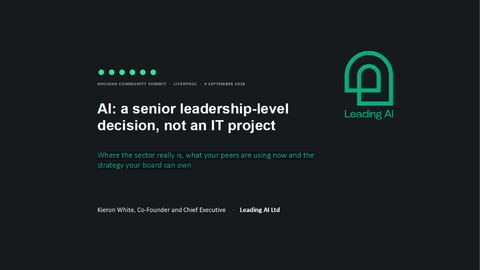
Free webinar – AI in Housing is a senior leadership decision, not an IT project
Events