“Is this what going to the pub is like with you two?”
Er…yes… I’m afraid so 🤣
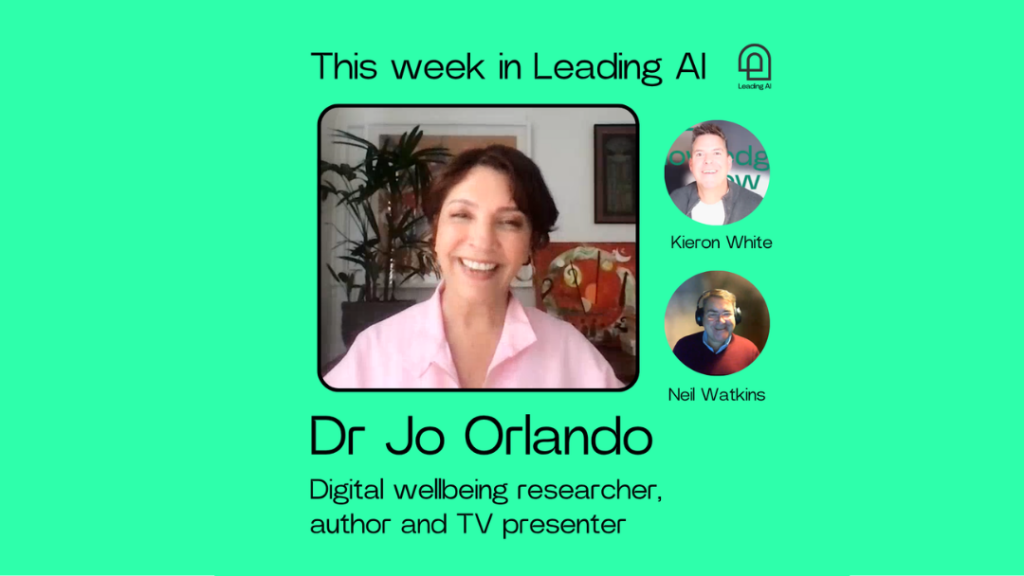
This week the pantomime horse has 6 legs, and our audient needs to wake up and pay attention because we’re joined by Dr Jo Orlando who advised the Australian Government on their social media ban. She joins us from Sydney to explain what’s happened since, and why the UK should pay attention before it follows.
Jo is a digital wellbeing researcher at Western Sydney University, author of Generation Connected and Kieron has already started implementing her advice on screen time. For her latest study she went into 500 Australian homes and watched how families actually use technology and came out with some fascinating stories.
For example, one eight-year-old had three iPads, one from his dad and one from each grandmother, each with different rules. Whatever he wanted to do was allowed on at least one of them.
She explains why social media “accounts closed” tells you nothing about whether a ban is working, why a 14-year-old getting round it sends a louder message to her 10-year-old brother than the government ever will, and why an age limit on alcohol works and an age limit on Instagram doesn’t.
We also talked about some fascinating research showing young women aged 18 to 23 are using AI to help with decision making in tricky situations. We got very excited about Jo’s Panoramic EdTech Policy Framework, which says every technology decision in a school has to pass four tests at once: learning, safety, wellbeing and equity. And Jo’s one piece of advice for any AI user: work out your answer first, then put it into the AI.
And a special thank you to Cameron Mirza for the introduction.
Two mates and a new friend at the bar. Thirty years of business between them. And all they want to talk about is AI. (Sorry Jo🤣)
Pull up a stool, we’ll get the beers in. 🍺
TRANSCRIPT
Neil Watkins
So shall we, shall we get this pantomime horse for podcast underway? Okay, then. Well, Kieron, you will have noticed we’ve got six legs on the pantomime horse again this week, which is fantastic. And we have the pleasure of having Dr. Jo Orlando with us all the way from Australia. Now, it’s very early where we are. And actually the end of the day,
Joanne Orlando
Let’s get going.
Neil Watkins
where you are, Jo. So thank you so much for taking the time to join us. We really appreciate it. And I should say for our audience, if he’s absolutely awake and listening, Jo is a digital wellbeing researcher at Western Sydney University, author of Generation Connected and a TV presenter. So we are very well
Joanne Orlando
Yeah.
Neil Watkins
blessed today, Kieron. Jo, welcome. Yes, we are indeed. So hopefully this will be a really interesting conversation because it touches on so many of the things that we’ve talked about before, the whole kind of safety for children, young people, vulnerable adults, technology, all of that good stuff we’re going to touch on today.
Kieron White
We are.
Joanne Orlando
It.
Neil Watkins
But Jo, welcome and thanks again for coming. I wanted to start by taking you all the way back to the start of your career, where you started on something called Play School. And Play School was a programme in the UK that I remember from my childhood. So I’m guessing, I’m guessing, do you remember it as well, Kieron?
Kieron White
But.
Yes, Hamble and.
Yeah, the Square Window and Humpty Dumpty, or yeah, did they have this? Did they have the same the same characters in Australia?
Neil Watkins
Did you have all that stuff as well?
Joanne Orlando
Yeah, that’s what.
Well, we have our own characters. We have, but they’re probably exactly the same. We have Humpty and Big Ted and Little Ted and then Jemima, which is obviously a UK name. Yeah, we have very similar ones. A couple of new introductions since I’ve been writing on the show. But yeah, we obviously do our own thing here in Australia. So yeah, I used to write those shows.
Kieron White
Yeah.
Alright.
Neil Watkins
Ah.
Kieron White
That’s it.
Yeah.
Cause.
Joanne Orlando
Mostly for young children, but also, you know, a lot of parents would tune in as well. So content that fits both audiences.
Kieron White
Yeah.
Neil Watkins
Well, actually, I’ve got grandkids who are 6, 4 and 11 months. And Bluey seems to be the favourite at the moment. And that clearly has some very adult stories or themes through the stories in there, I would suggest. So yeah, the Australian, the Australian Bluey phenomena has definitely hit the UK big time is all I could.
Kieron White
Mm.
Neil Watkins
All I can say, so please do.
Joanne Orlando
Yeah, worldwide phenomenon, that one. Yeah.
Neil Watkins
It is huge. Jill, please would you share with us a little bit about your background, your history, the kind of things you’re doing today, and right the way up to some of the things that you’ve been doing recently, especially the TV stuff. That’s interesting. And I understand you’ve had some exchanges with the Australian Prime Minister.
Joanne Orlando
Mm.
Okay.
Neil Watkins
on television fairly recently. So share some of those.
Joanne Orlando
Yeah.
Kieron White
This.
Joanne Orlando
I have. I’m in the space of digital wellbeing. And, you know, there’s not a lot of us in the world who actually focus on and research and give advice on digital wellbeing, which is strange, isn’t it? Because it touches nearly all of our lives. So digital wellbeing is about being able to manage all the challenges that technology throws our way.
So it might be safety, privacy, you know, lack of focus, distraction. We know, there’s lots of challenges. But it’s also about how you leverage technology in a way that has a good impact on you. Because we know technology is about both. So when I talk about technology, it’s AI, it’s our phones, it’s what’s happening in schools, in the workplace, any kind of screen.
Neil Watkins
Yeah.
Joanne Orlando
digital screen. So it started off with a complete fascination for how we engage with a screen. I love that kind of human screen kind of interchange. And that’s how I started off working in TV. I love the way that a child could watch a screen and learn from it. So what actually happens on there is really important.
And I was completely fascinated by that. And I had no experience in TV. I just happened to write to this show saying, I’m a teacher. I love what you’re doing. I would love a chance to write for the show. And right place, right time, they gave me a gig. And how I actually got the name of the executive producer is that I went to a party.
Neil Watkins
Leading.
Joanne Orlando
And I met the writer who was writing Bananas in Pyjamas at the time. And he said, I can do an intro for you. So a little bit about like an Australian kind of TV thing. So I ended up writing Playskool for about 10 years. So a long time being the advisor, education advisor as well. And then now I work in a university. I’m a professor in a university and focus on digital wellbeing.
Neil Watkins
Ohh.
Kieron White
Yeah.
Yeah.
Amazing!
Joanne Orlando
So lately, you know, there’s a lot happening in Australia in terms of digital wellbeing. We’ve got social media ban, which we kicked off in December last year. So I was one of the advisors to the government around that. My advice was not necessarily pro-ban. It was kind of the other way because I couldn’t see how it was going to be implemented
in a way that worked. You know, and since the ban has come in, you know, there’s been lots of workarounds. We have 85% of Australian children still on social media. So a lot of challenges around it. And now we’re seeing a lot of screen time caps and things getting introduced into school. So I researched these kinds of…
Kieron White
Hmm.
Neil Watkins
No.
Joanne Orlando
phenomena. It’s about how these kind of social, political, educational, you know, influences on the ways we use technology and how they’re panning out in a family, with government policy, you know, in a classroom. Because it’s not just a technical thing and it’s not just a psychological thing, it’s
Kieron White
Yeah.
Joanne Orlando
a political thing, a technical thing, you know, it’s a social thing. There’s so many factors that feed into the ways we use technology. And I look at it in that wellbeing lens, how we manage the challenges and how we make use of the really good things about tech. So a lot around AI, of course, right now is heat.
Neil Watkins
Books.
Joanne Orlando
Peaks of AI things at the moment.
Neil Watkins
Yeah.
Kieron White
Yeah, amazing. And that is a great, in AI, the kind of future, who knows what it’s really going to look like, but that kind of whole wellbeing side of it seems to me so important. We’ve, here in everywhere, we’ve got this challenge with kind of cognitive offloading, it gets talked about, doesn’t it, which is sort of for really where we play.
Joanne Orlando
Yeah.
Kieron White
in the workplace mainly is how, what’s the impact of us giving away all of our thinking? And over time, sort of, do we get more stupid? And I normally, when I’m asked this question, I’m always asked it when I’m on stage. I do, I mean, I sort of, I don’t have a real answer, but calculators, I mean, that wrecked most people’s maths, it seems to at least.
Joanne Orlando
Yeah.
Kieron White
hardly anybody can do maths and seem quite happy to say so. So I do worry about that. Have you looked into that? You would have done from a children’s perspective, I’m sure, but have you looked into that?
Joanne Orlando
Yeah, no, absolutely. And that’s the kind of questions I’m answering all the time, particularly like on TV and on social media. It’s those great big questions, you know, you know, is our brain just getting wrecked because of AI? You know, those really big things that we’re worried about. What are we losing because of using AI or because of using tech or too much short form video? Like,
What are we losing? What’s the actual damage that’s happening? And is it, are we going to be okay? They’re kind of the big questions that I seem to be answering. And that cognitive offloading is very much, you know, how is all this stuff impacting our brain? Well, our brain gets used to, you know, not thinking deeply. Our brain gets used to
Kieron White
Yeah.
Joanne Orlando
just these chunks of information. Our brain gets used to a lot of things. So it’s recognising what your brain is actually getting used to. And can you reverse any effects? Well, they’re not necessarily long-term effects. It’s awareness and then strategies to kind of make sure that you’re still thinking deeply. You’re not giving it all away to ChatGPT.
you still can sit and watch a whole movie. You know, it’s not just a 60-second TikTok. So it’s making sure that we look after ourselves and the kinds of strategies that we need to do that.
Kieron White
Yeah, absolutely. You go, Neil.
Neil Watkins
Cool. I had a, well, hang on a second. Well, hang on a second. I’ve got questions today. I know, I know, I know we both have. I’m really interested in the stuff you’ve been doing with families because I, as I said, I’ve got grandkids and I kind of watch my granddaughters with watching the screen time and watching Bluey and the other things that we, you know, we’ve talked about. And
Kieron White
No, I’ve got so many questions. I was.
Neil Watkins
And I wonder what if you could share with us a little bit of your research into the whole kind of family interaction thing, because, you know, I think about my kids and my grandkids and my kids are quite, you know, well, they’re not listening, but you know, they kind of, they’re quite, I think they’re quite sensible with their screen time, they limit the screen time, they kind of,
help manage, to help the kids understand. But actually, what happens when a parent doesn’t really care and they just give them, because you see it all the time in kind of airports and pubs and, you know, and in public spaces and things. And, you know, what about parents that don’t actually care about their kids? And I wonder if you’ve got anything, any views on that kind of.
Angle.
Joanne Orlando
Oh, I’ve got so many views on that angle, but I’ll narrow it down a tonne. I could talk for six months on this. So I’ve just done a couple of really big studies. One was an Australian-wide study. So I did it for our Australian government, so our e-safety commissioner, which I think you’ve got a similar kind of role in the UK.
Kieron White
Yeah, have you not read the book?
We should give a plug to Jo’s book here.
Neil Watkins
Yeah, yeah, yeah, yeah.
Joanne Orlando
So they focus on online safety. So I did a big kind of safety in the home study around Australia, 500 families. So I went into lots and lots of different families. Like it was amazing, one, that people would allow me to come into their home and just watch how the family dynamics around technology.
Neil Watkins
Yeah.
Joanne Orlando
I would watch the kids doing whatever they are doing in that family on technology. It might be gaming, it might just be scrolling, using their laptop for homework, all kinds of things. And then the parents. And then look at how the ways parents talk to their kids and backwards, you know, kids talking to their parents about technology.
So the kinds of messages that are coming out in those conversations, the very overt messages like, get off your phone, stop walking around with that phone. Now that might be the parent saying it to the child, but it might also be the child saying it to me in an interview. You know, my mum’s always holding your phone. I can’t seem to get her attention. But it’s also the…
Kieron White
Yeah.
Joanne Orlando
the very invisible messages, like things like one family I remember, you know, the child actually had three iPads, right? So this is a typical kind of thing, the quirkiness of the distinctions of each family. He had three iPads, he was 8. So when I came in, he’s sitting there on his lounge chair,
And he has three iPads. And I’m saying to the mum, like, why has he got three? And she said, well, his dad gave him one, his grandmother gave him one, and his other grandmother gave him one. So they, so the three iPads, but each one had different rules attached to them. So grandma won.
Kieron White
Huh.
Joanne Orlando
had given these kind of rules. You know, this would be fun for you to do all your games and things. And then like dad had a different set of rules and then the other grandmother. So without each other knowing, the child was kind of doing whatever they wanted because whatever they wanted was suitable on at least one of those iPads.
Kieron White
Yeah.
Joanne Orlando
So you can see the confusion around kind of rules and screen times. It’s not necessarily completely clear to a child exactly the rules and the boundaries around these things. So I got to see that in different scenarios, in different families, with some families with six kids, some families with one child.
Neil Watkins
Hmm.
Joanne Orlando
parents who were super busy, parents who were all over it. Like it really does play out differently. And if I learned anything, one is that each family is very distinct. So if you’re trying to do what this family over there is doing in terms of guiding your child’s screen time, it’s probably not going to work. You really need to look at your own family context.
Kieron White
Just saying.
Joanne Orlando
Two, parents are huge technology role models for children. You’re not doing anything that the child isn’t seeing. You know, you think they’re not seeing, they’re definitely seeing. And often also that parents didn’t really know what their child did on technology. So maybe the three and four year olds.
Neil Watkins
Mhm.
Yeah.
Kieron White
Uh-oh.
Joanne Orlando
But once I got to 8, 9, 10, the parents would say, well, you know, they do this and they do that. And then I’d talk to the child or watch a child and often they didn’t really do that. It was something different. So there’s a lot of lack of communication between parents and children around tech at home.
Neil Watkins
Very interesting.
Kieron White
Interesting. And in your book, so let’s just give a quick plug to your book, the Generation Connected, How to Parent in a Digital World at Every Age and Stage. And I must say, I’ve been listening to your audio book, so I feel like I know you already. So I heard you talking and I skipped quite quickly to chapter two, which is the, is it 3 to 8 year olds?
Joanne Orlando
Yeah.
Yeah.
Kieron White
which is where I’ve got a six year old at the moment. And it’s just so, everything you said in there is like, I ran up to talk to my partner and I said, here’s the thing we’ve got to do, we’ve got to create a busy box. And I love how practical, not only do you start with the kind of neuroscience of it, but then get into the, so what do you do?
Joanne Orlando
Okay, yeah.
Kieron White
because it’s all very well knowing what the neuroscience might do to a child’s brain or having a view on that. But how do you stop a six year old from having a tantrum when you tell them it’s time to get off their screen? So do you want to share your, I mean, I can share it, but I’d love you to just, how do I get my six year old off his iPad? And we do limit it quite strictly only at weekends and he gets half an hour.
on his iPad, but it’s always a nightmare after that.
Joanne Orlando
Yeah, that’s right. I think what we don’t realise as parents, particularly younger children, is how quickly they get into routines. And that’s part of their brain makeup. You know, we know their brains are rapidly developing at that age. So everything that we say and do really counts, you know, so much more than when they’re older. It really
makes a difference because of their rapid brain development. So if we start a routine with a child, if we do it two or three times, they probably, their brain is probably locked in and that’s what the brain is expecting to happen. So say for example, you’ve got your five-year-old and you take them to the shops and just to, just so you have some peace of mind and you have a bit of quiet time, you give them your phone so you can just concentrate on something.
or do that two or three times and they’re probably going to be locked in to that habit. Their brain is expecting, okay, well, when I go to the shops, I know that I get the phone. So when you don’t give them that phone, you know, the third or fourth time, their brain is reacting, hey, you know, look, this isn’t right. Something’s wrong here and you get a bit of pushback.
Kieron White
Yeah.
Joanne Orlando
So the idea of the busy box is it’s using it as a replacement. So you wouldn’t take it to the shop. So you might take a bit of aversion to the shops, but you might. It’s kind of this replacement. We’re not going to do this, but we are going to do this. I’ve got this amazing thing, all these things in here that you can
Kieron White
Yeah.
Yeah.
Joanne Orlando
play with and I’ll play with you for a while. So it’s that simple kind of replacement rather than saying, no, you’re not having my phone this time, I don’t care what you do. It’s like, no, but we are going to do this. So it’s that, it’s offering a bit of hope and a replacement. So being aware that kids get into these routines so quick.
A lot of parents said to me, oh, well, I would never have started giving them lollies or I would never have started giving them an iPad every time they go to grandma’s. I would never have started that if I didn’t know. So the brain science is good, but then how do you work with it? So the book has lots and lots of practical examples for each age group.
Kieron White
Ha ha ha.
Amazing. That’s very good. And I liked what you said in there as well about the, it’s not just another digital world screen time is not just another parenting challenge, but it’s fundamentally changing the way children grow up. And I think that is so true. I mean, certainly from my perception, my older, my older kids, you know, they’ve lived with screens their whole lives and it just must change their whole brain chemistry, really. I mean,
Well, here’s the thing I’m alarmed about. I think my 17 year old will often come to me and tell me some news story that’s going on and he gets it entirely from TikTok. And I just kind of think, oh my word, do you think this is the kind of view on the world? And I think they’re wise enough at that age to know it’s not all true, but that doesn’t make as much difference if it’s just
Joanne Orlando
Yeah, yeah.
Kieron White
constantly being hit at you I think.
Joanne Orlando
Yeah, they do know there’s a lot of like misinformation and deep fakes and, you know, bias in the content that they see, but they don’t necessarily know which is which, you know. And the thing about teenagers, and if I take teenage boys, there’s a lot of kind of content, quite extreme masculine content that the Australian teen boys get hid. I’m guessing your teen boys
are the same kind of thing and there’s a lot of concern about that. So they get this kind of content and the thing is, even if you don’t believe it, if you’re seeing the same content over and over and over and over again, giving you the same kind of messages, boy should be this, boy should be that, boy should do this.
Kieron White
Mm.
Joanne Orlando
You start to believe it, even if you kind of know it’s not really real. You know, there’s this way this brain reacts. It’s kind of the routine and you start to, it starts to shape your views. And even if you start to look at the comments, a lot of those comments will also reinforce the content. Now they might be real content.
Kieron White
Mm.
Joanne Orlando
comments, but they could be AI generated comments as well. You know, who knows what’s happening with each of these posts. So the idea that sheer kind of repetition of the content starts to make us believe that content and starts to make us think, well, that’s how everyone thinks. And we’re all in these kind of echo chambers now. And it’s even more so.
because of AI and all the AI generated content. We’re starting to see it here in Australia. We’ve got an election coming up. Now all of a sudden we have this really skewed fake content, not necessarily put out by the political parties themselves, but by everyone and anyone who wants to shape your views to vote a certain way.
Kieron White
Mm.
Yeah.
Joanne Orlando
It’s really getting hard to work out fact from fiction online.
Kieron White
Yeah. And I think that whole kind of no smoke without fire, when you see this stuff over and over again, you kind of think, well, there must be something to it, even though it can literally be made-up in somebody’s imagination. I did see, but we tried to stay off this hot political and geopolitical topics most of the time, but I saw an article, apparently over this weekend,
Joanne Orlando
Yeah.
Kieron White
Ukraine hit two of Russia’s data centres and bot traffic has fallen through the floor in France, American, as they get towards their midterm elections, the French elections, apparently it’s gone literally dropped like 90% overnight from these two big data centres. Read into that what you will. I don’t wish to get too into that space, but
Joanne Orlando
Wharam.
Yeah, yeah.
Kieron White
It’s quite, quite concerning.
Neil Watkins
But just kind of…
Joanne Orlando
Yeah, and then when a parent comes to that and thinks, well, how am I supposed to talk to my child? I don’t even know myself. So it makes it really difficult for parents as well.
Neil Watkins
The thing going through my head as you were talking there, Jo and Andrew, Kieron, you might not like this next bit, Kieron, but you know, your boy, your eldest boy is 20. And you know, he could be having children very soon. You could be a granddad, Kieron. I did tell you wouldn’t like it.
Kieron White
Ohh, good.
Nope.
Joanne Orlando
Okay.
Kieron White
No, I definitely don’t like it.
Neil Watkins
I just wanted to, if you must have thought about this, Jo, what happens when the next generation who’ve only ever known this stuff in kind of an intense period since they were babies, really, you know, how do you think it’s going to affect them bringing children up in the future?
Joanne Orlando
Yeah, I think it’s definitely the unknown, but there’s some interesting new research that it came out about 12 months ago and it came from ChatGPT users. So OpenAI did the research and they wanted to look at who was using ChatGPT the most over the previous 12 months and what they were using it for.
And it was really interesting statistics. The biggest user group all of a sudden have become females 18 to 23 years. And their biggest use of AI was for decision making. You know, should I do this? How should I reply to this person?
I’m not sure what I should think about this. What should I think? Who should I vote for? You know, all this. So this outsourcing of decision making. So you can see even from that kind of research, how this might be actually impacting when those women are mums, when they’re…
Kieron White
Yeah.
Joanne Orlando
teachers or nurses or moving into their careers, you can see how this can impact young adults as they move into further into adulthood. So I think this real awareness of how we’re using technology, the kind of ways we’re leaning on it, good and bad, and how that’s impacting us is so important.
Neil Watkins
Mm.
Kieron White
That is terrifying, isn’t it? Because my instant reaction to that is, oh, well, they’ll grow out of that. But probably they’re not. Are they probably, if that’s been such a part of their 18 to 23 very formative years, you’ll, yeah, it’s going to carry right through. We have everybody parented exactly the same way by Claude and ChatGPT.
Neil Watkins
Fascinating.
Joanne Orlando
Yeah.
Yeah.
Kieron White
Heaven help us!
Joanne Orlando
Yeah, maybe. Like hopefully the more awareness about digital wellbeing, about critical literacy, AI literacy, like this, a growing awareness about that. And hopefully we see more and more and more of it in schools, like but spot on ones in schools, not kind of dated content. Hopefully we start to really understand our relationship with AI because it is a relationship.
Kieron White
Yeah.
Yeah.
Joanne Orlando
It’s not just us using something technical. It is a relationship. It does respond back to us. And hopefully as we have a bigger awareness of that as children, as teenagers, as adults, as every age group, anyone who’s using it needs to really fully understand it.
Kieron White
That is interesting.
Neil Watkins
That’s interesting, because that leads to two that leads to two things, really. One is the kind of there’s a there’s a theme around AI shouldn’t be personalised and it shouldn’t pretend that it’s a person, and there’s a push for that kind of restriction. And then the other thing that a lot of your stuff seems to be
Joanne Orlando
Yeah.
Neil Watkins
is about improving capability of a restriction. How do you improve the ability of people to understand? And I guess that links to the things you’ve just said about young women using it for decision making, I think others too. So yeah, really fascinating. I wondered if you could talk a little bit more about that capability of a restriction stuff, because I think in the UK,
Joanne Orlando
Yeah.
Neil Watkins
The debate seems to be more about restriction than anything else.
Joanne Orlando
Yeah.
Kieron White
We’re following your footsteps of the social media ban, which I know you have a quite a strong view on, so that would be great. Yeah, let’s hear about that.
Joanne Orlando
Yes.
Yeah, of course. Yeah, well, it’s nice that we are leading the world here in restrictions. But yeah, a lot of countries have jumped on board and look like they’re following Ali. Increasingly, we’re hearing about countries bringing in some kind of ban on social media with an age restriction in some way.
Neil Watkins
Yeah.
Joanne Orlando
Look, I think the whole, I think the idea behind it is that we need to protect young people in their uses of technology. And of course, we do. I don’t think anyone would dispute that. We know there are harms. We know there’s good. We know there’s harms. And a lot of people are just seeing the harms and the media headlines really whip up a bit of a frenzy.
around that. So it seems like there’s a lot of clickbait headlines scaring the hell out of parents about technology. So that in itself is doing a lot of damage. But it’s not as if there’s no basis to that. We know there are harms. But restrictions, of course, there’s a few…
Neil Watkins
Mhm.
Joanne Orlando
issues with the restrictions. One is, do they work? Well, I said at the beginning, you know, they’re not really working here. Most kids, you know, 85% of that age group are still using social media. And then I’ve had a lot of people say, well, you know, maybe it won’t work for this generation of teenagers, but maybe the younger ones, you know,
the kids who are 10 or 12 now who aren’t on social media, maybe it will stop them from going on. Yes and no. And here’s the no part. Okay, this is how we also need to think about these unintended consequences. Imagine you’ve got a big sister who’s 14. She’s banned from using social media.
You’re her sister, you’re her 10 year old, you know, little brother or sister. You see her go in, she’s worked away around the ban and she’s using Snapchat every day still. She’s on TikTok, she’s on Instagram, she’s on everything. So this great big government ban that’s been introduced, she’s just…
Kieron White
Hmm.
Joanne Orlando
flown in the face of it, you know. So what’s the messaging there? You know, that’s a pretty important message for a 14 year old. I can do what I want. The government can say whatever they want. I can get around them so easy. And then the little brother or sister, the 10 year old, well, I saw my sister do it, you know, I’m going to do it too, just like her.
Kieron White
Mm.
Joanne Orlando
So there’s a lot of invisible messaging we have to think when it’s not working, when a policy hasn’t really been thought through, the holes in it, when it hasn’t been thought through, this is what happens and the unintended messaging. And also parents also feeling like, you know, where’s their trust in the government? They brought in this great big thing. We had such a big lead up to it.
And then it didn’t work within hours. So it’s, you know, the parents trust in the government and how the parents are responding to their child getting around the ban. There’s a lot of social issues at play here that really need to be thought through before we think restriction is the answer.
Kieron White
Mm.
Yeah. And we had over here when they brought in some age limits of the just the VPN use has just gone through the roof over here. So it’s just straight out if you move out of UK and hit the server from somewhere else and the problem’s gone away.
Joanne Orlando
That’s right. We learned from all the TikToks about that, you know, probably 10s of thousands of TikToks about how to get around that when it was brought into the UK. So we learned from that, you know.
Kieron White
Yeah.
Right.
Yeah.
I imagine they’re somewhat incentivised to promote those videos on your algorithm once you know there’s going to be a ban coming in. You talk about, you talk about, I think there was a figure, wasn’t there was a drop from 85 to 82 percent, I think, in social media accounts when you first brought the ban in, but that’s the wrong measure.
Joanne Orlando
Yeah.
Yeah.
Absolutely, yeah.
Kieron White
And measures are really interesting in our world because most AI use in organisations, in businesses and education and social services and housing where we really work, most of the measures that people are using are very crude. How many people are using it and how many times are they using AI? And it seems that’s a good thing, the more of it.
Earlier this year, it got called token maxing, but we heard the term and lots of the tech companies were being incentivized on how many tokens you use. And when you give tech bros an incentive like that, guess what they do? They write little programmes that use loads of tokens. And apparently Amazon got a $500 million bill one month for their token burn. So
Joanne Orlando
Mm.
Kieron White
be careful. But measures is really interesting to us is how do you really measure the effectiveness? What should we be looking at, particularly looking after our young people? But I’m also very interested in the world of work on that too. So I’d love to know if you’ve got thoughts on that.
Joanne Orlando
Yeah, sure. Well, those tokens became very expensive. So first it was that, you know, everyone get on, let’s use it, use it, and then all of a sudden the price increase. So big difference for that. But in terms of the measures, so initially within the first month, and I can’t remember the exact figure, I’m sorry, but a certain number
Kieron White
Yeah.
Joanne Orlando
of social media accounts had been closed. So the government after, you know, one month was calling it a success. Like, look at all the accounts that have been closed. So on the surface, that figure looked amazing. Like, yay, it’s working. But the reality is, you know, young people have multiple social media accounts, like many.
Kieron White
I.
Joanne Orlando
many, many, they might have some of their own name, they might have a few Instagram accounts, they might have accounts that are just with their friends, they might have public accounts, you know, they have multiple accounts. So what, you know, in interviewing young people who’d had some accounts closed, I go, yeah, that’s fine. These 2 are closed, but I can still use these ones, you know. So
Kieron White
Right.
Joanne Orlando
It wasn’t a measure of young people being off or on social media. It was just accounts closed, but a lot of them still had multiple accounts that they could use. So using a number like that just really doesn’t say what’s happening on the ground, you know, with a child in their phone or a child in their bedroom on their iPad or things.
It’s a very crude measure, particularly when it comes to technology, because technology is so, there’s so many doors into it. You know, it’s a lot of people would say to me, well, it’s just like, you know, young people can’t have alcohol until they’re 18. They have to show their IDs. So not being able to use social media.
is the same. Well, it’s actually not because there’s one door into that liquor store and someone checking your ID. But who knows how many doors there actually are into Instagram, into any of these spaces that they’re restricted. It’s not the same. It’s a completely different scene.
Kieron White
Mm.
Yeah, interesting. You, can we can we move on to talk about AI in education and what we should be saying to our children in schools, what we need to be teaching them, and indeed what we should be talking to the education professionals about, I think. It’s a very, very live topic here in the UK, as I’m sure it is everywhere.
kind of starts to challenge the very fundamentals of what’s education for, which is always a great debate to have. And you can kind of carry on that a long time. But you’re working on the panoramic EdTech policy framework. Can you say a bit about that work, please?
Joanne Orlando
I am, yes. I am. So one of the things, we’re always making decisions around technology in education, and normally we look at it like, will it help learning? You know, will this app, is it a good one for my class? Or is this kind of approach to…
using, you know, tech in our school, a good one for the school community, is it going to help the kids learn? And so learning is looked at by itself. And that’s obviously an important question. And then we’ve seen kind of safety things happening at school, parent nights and cyber safety lessons. But the reality is that
Asking if something is suitable for learning, you know, this app or this device or this approach to technology, is it good enough for learning? It’s just not enough of a question anymore because technology has really changed so much, but particularly in the last five years. So how do we know this?
Because if you think of how many people different groups are really worried about technology in schools, oh, we’ve got parents, we’ve got governments, we’ve got, you know, health professionals, the community, so many groups are having a say in what’s happening in schools.
They shouldn’t have it, they should have it. There’s an incredible amount of tension around using technology in schools. And that tension just isn’t getting resolved. It seems to be getting worse and worse, if anything. So right now here in Australia, the way the government or the Department of Education are responding
is, well, let’s cap screen time in schools. So now, with New South Wales, where I live, you know, the schools here, the public schools, the first two or three years of school, the students could have a maximum of 15 minutes screen time in class. That’s it.
Kieron White
Mm.
Joanne Orlando
You know, it’s got to be enough for a five-year-old to be able to log on, maybe that’s about it. But still, it’s not going to resolve the issue. So when I’ve done my research, I’ve identified 3 factors that actually influence, you know, I looked into all the tensions, I looked into the research, all the policy, like a really big.
Kieron White
Alright, yeah.
Joanne Orlando
deep dive. And I found that there are actually particular factors, 4 factors that influence every decision that’s made about technology in school. So one is learning, of course, we need to ask learning questions. We need to ask the safety questions, of course, but we’re not really asking them alongside the learning questions. Often it’s separate.
And then wellbeing, you know, there’s a lot of concern around how technology is actually impacting the wellbeing of young people, their ability to focus, their mental health, things like that. And then equity. So equity used to be about the haves and have nots, students who have access to technology and those who do not.
Kieron White
Yep.
Joanne Orlando
Well, that’s not, it still is an issue, but there’s other equity issues now. So for every technology decision that’s being made in a classroom, in a school, at a government level, they need to look at all four of those factors at the same time. So learning wellbeing, safety and equity.
So I’ve developed this framework that actually is a bit of a decision making tool, very simple series of questions that people go through that helps them to consider all four of the factors. Because if you don’t consider all four, blind spots will emerge and they normally emerge after you’ve made the decision.
Kieron White
Mm.
Joanne Orlando
to go ahead. Oh, we didn’t think about this, you know, it might be a wellbeing issue, or we didn’t think about this, you know, an equity issue. You know, what about all the kids who are coming to school with too much screen time? We didn’t think about those kids. So it helps you to make really balanced decisions on what’s important now.
Kieron White
Mm.
Joanne Orlando
regarding taking schools.
Kieron White
Fantastic. And if that’s the panoramic edge tech policy framework, that’s what that, and when will that be published, Jo? I was trying to hunt it down.
Joanne Orlando
Yeah.
Yeah, very soon.
Yeah, very soon. I’ve written it. So it’s just with the designers and things now. So the official launch of that. And now I’ve been working with the Department of Education here in Australia, some of them regarding implementing it into their decision making, into their policy decision making or school decision making.
Kieron White
Yeah.
Joanne Orlando
and also working with governments around this too. So it’s a brand new idea that’s getting a lot of traction. You know, it’s a fresh way of thinking about it. And then it helps us to focus on developing practises around technology. You know, we talk about intentional teaching with technology A lot.
Neil Watkins
Mhm.
Joanne Orlando
you know, making sure it’s really purposeful. So what is purposeful? Is it just about learning? Well, it can’t be anymore. It has to be about learning, wellbeing, safety and equity. That has to go into intentional definitions of teaching as well.
Kieron White
Very good. I was going to talk about the DFE frame right Neil, but I’m conscious I keep asking questions and you’ve probably got some things in your work.
Neil Watkins
No, no, I do, but I can hold them. And I think some of them are going to be pretty similar. You know, that whole kind of, I think that framework you just talked about, Jo, is fascinating. And I can see lots of people here being really interested in that. But you go ahead, Kieron, and then I’ll ask my questions.
Kieron White
Yeah, so in the I think over here, it seems to me we’ve got a sort of government position on AI and then each of our departments has their own kind of papers. As you know, we were Leading AI, we work with housing, social services and education A lot. So we’re kind of looking into three different areas of government and they all have their own sort of
their own regulations and frameworks underneath those. So trying to keep up is quite challenging. But the DFE here has done, I think, a reasonable job. They’ve got a kind of set of sort of, I guess, a policy position. And then what they put out, which is what I found very interesting for us, is generative AI product safety standards.
Joanne Orlando
Yes.
Kieron White
which they published earlier in January, which is really interesting because it does start to get into some of the, it’s arguably, well, maybe it’s right into that space, I’m not sure, but they talk about, you can’t, it’s got to be that kind of Socratic style, if you’re going to give this to students, an AI for students, it can’t just give you the answer. It’s got to help you kind of work through it.
Joanne Orlando
Yeah.
Kieron White
which is a challenge to do, but you can do that. But in equity here, if you bring equity into this, those kids that already know how to navigate around stuff will be the ones that are able to get around the guardrails and get the answers anyway. But they also talk about usage limits. One of the hardest things, interestingly, from our perspective,
Joanne Orlando
Yeah.
Yeah.
Kieron White
RAI, we don’t build it for students. So we like it to be like close as close as we can get it to what the DFE consider safe, but we don’t actually put it in front of students. But they talk about limiting the time and how, and the question on my mind is how we would ever do that technologically, because you’ve got this sort of challenge of if someone was working on their essay question.
with AI. And then you just go, well, sorry, you stopped now. You’ve had your 10 minutes. It’s come out until you actually manage it. I think it’s really interesting. And then the no sycophancy. So none of that, which ChatGPT was very bad at in its early models. I hear the latest six series is much better. And I think one of the reasons people like Claude Moore
Neil Watkins
Yeah.
Kieron White
A lot of people will tell you, oh, I really like Claude, there’s something about it. It’s less sycophantic and it tends to be a bit more challenging back of saying, you’ve asked me this, but actually here’s three things you should think about before I answer you, which I think is really good. So there’s a whole bunch of kind of stuff they’re doing here, but the challenge we have is that will be DFE’s view.
of the supplier safety standards. I no doubt we’ll get one from our housing ministry soon, saying the same things in different ways, or not the same things probably. How do we join that all up? Is the answer your panoramic framework? Is that the way we sort it out?
Joanne Orlando
David.
Neil Watkins
She.
Joanne Orlando
Oh, I’ll definitely say yes to that. I think that I think we’re all experiencing that with AI. Like, there’s this incredible pressure on urgency. We’ve got to get something out. We’ve got to get some guidelines out really quick so that
Kieron White
But.
Neil Watkins
Yeah.
Joanne Orlando
pressure to put something out is obvious across the board. And I think a lot of the people putting the stuff out are also on the ground learning about AI, like all of us. No one’s getting trained in AI, no one’s doing their PhD yet in AI. So it’s a lot of like…
such a big work in progress, the guidelines, our own knowledge of it, you know, the people putting together the guidelines, people implementing the training and things. So I think we do need some kind of framework or set principles. Now, they don’t have to come specifically
from AI, but it has to be able to apply to something like AI. So yeah, absolutely, my panoramic framework would work because they’re all the things that apply to our interaction with technology around education, but around other things as well. So having some kind of a solid framework, you know,
an evidence-based framework, not just one that someone’s pulled out of the air. So that would work. Otherwise, you know, it gets really confusing and no one, it causes more confusion than any kind of solid guidance, I think, as well, otherwise.
Kieron White
And.
Mm.
Yeah, very good. Neil.
Neil Watkins
Yeah. We, yeah, we kind of, we’re coming to the end of our time together, unfortunately. Jo, you’ve been very generous with your time and thank you very much. We grilled you for the last 40 minutes or so. I wondered if you had any questions for us. Is there anything that we’re that that we can we can share back with you or that might be interesting or useful to you?
Joanne Orlando
So.
Yeah, like we’ve talked on lots of points where there are challenges right now, and there’s always going to be, you know, challenges and great things. But I guess right now in the UK, from your position, what is the great thing that you’re seeing about AI and what’s the kind of big challenge that’s really standing out for you now?
Because if we’re looking at well-being, we want to see both sides there.
Neil Watkins
Yeah. Shall I have a go first, Kieron, and then you can chip in because you, and we, I think we probably got similar but slightly diverging views because we do slightly different things, Kieron and I, but I think the biggest challenge is that lots of people can see benefits to AI, but adoption is really difficult.
Kieron White
Okay.
Joanne Orlando
Ed.
Kieron White
Yeah, go for it.
Joanne Orlando
Yeah.
Neil Watkins
And adoption is really hard because people are using either AI to circumvent their workflows in things like housing and other areas, but not thinking about the implications and the 2nd and 3rd order consequences of that. And so, and actually the impact on the organisation or the impact on
Joanne Orlando
Yeah.
Yeah.
Neil Watkins
I’m going to call them customers, if you will forgive that loose expression across that. So we deal very much with the public sector and we see lots of benefits for the public sector, but actually getting them to work it through because you get a bunch of, you get different perspectives. So you get senior managers going, yes, we definitely need to roll out AI now and it’s going to transform our organisation.
Joanne Orlando
Yeah.
Yeah.
Neil Watkins
And then you’ve got a frontline kind of housing officer or social worker going, hang on a minute, what does this mean for me? And, you know, am I going to lose my job is a very often important question. Or they get given guidance, come back to the guidance thing, you know, they get given guidance, they either don’t understand or they don’t, they don’t, they don’t relate to or they just ignore, frankly, and a bit like the kids working around.
Joanne Orlando
Yeah.
Yeah.
Neil Watkins
the guardrail, people at work, it’s adults and, you know, so that I perceive as a really big challenge. And but I also see big opportunity for helping to transform public services in lots of different areas. And one of the things that I’ve been
Joanne Orlando
Yeah.
Mhm.
Neil Watkins
thinking about before we talked to you was, you know, the opportunities for my grandchildren to learn are tremendous. And, you know, my niece, for example, she had a terrible time at school and used computers to help use the internet as it was Google back in the olden days to research and pass her exams. And she did very well.
Joanne Orlando
Okay.
Neil Watkins
But, you know, the personalised learning, I think, is potentially a huge area, but it’s got to be right. And your framework is really interesting in thinking about those four areas when you’re thinking about personalised learning and what are the implications for that. So there’s a whole stack of things, but I recognise that I’m waffling, so I’ll stop and I’ll let Kieron have a go.
Joanne Orlando
1.
Kieron White
Yeah.
Joanne Orlando
Yeah.
Kieron White
Yeah.
Joanne Orlando
Mm.
Kieron White
Well, you will not be surprised, Neil, to hear me saying this, but complaints, so public sector complaints, one, it’s a massive benefit that suddenly people that were really struggled to articulate a complaint and get heard and represented now can.
And obviously, there’s still an equity gap between those that haven’t really worked that out or don’t have, you know, the technology to do that. But what the ability now for in social housing is a really big area that we work in and the complaints volume and length has gone very, has doubled in the last two years since ChatGPT really, or three years since.
Joanne Orlando
Yes.
Kieron White
Four years since Chat TPT nearly. And that, I think, is a wonderful, wonderful thing on one level. The downside is, of course, we haven’t kept up on the other side. So this is, you know, every coin has two sides and all of that is you’ve got the team, the same team dealing with a 20-page complaint letter about the bins not being emptied, which would have been a
Joanne Orlando
Mm.
Yeah.
Kieron White
you know, one line or a phone call is now a 20 page letter quoting the law. And now that means that case officer, that customer service team now have to spend half a day trying to respond to it. And arguably that is going to lead to, we hope it would lead to people finding the insights and improving their service.
Joanne Orlando
Yeah.
Kieron White
In reality, it’s going to, at least for a while, I think, leads to less of the service because people are going to get swamped in those complaints. So it’s that sort of two-sided coin really. But I’m really excited and it speaks to that neurodiversity. It’s the same kind of point really in a different way, that being able to help a dyslexic student, help someone that needs it in their own language.
Joanne Orlando
No.
Kieron White
I think is a really wonderful thing. But be careful what we wish for too, because the complaints has now gone through the roof. I’m sure you’re seeing it too in Australia, because I think Australia is ahead of us on AI. Everything I read in here, I think you, your education wise, you had Ed chat in New South Wales, I think a long time ago, which was
Joanne Orlando
Yeah.
Kieron White
When we were still talking about should we use AI in schools at all, New South Wales had already put out this Ed Chat thing for students. So I think it’s tremendous to see in Australia, but no doubt you’ll be at the forefront of these problems too.
Joanne Orlando
Mm.
Neil Watkins
Yeah, yeah. Don’t listen to him, Jo. He’s just looking for a sabbatical because the winter’s coming. He’s looking just to head out and enjoy the sunshine. So, yeah, yeah. Kieron, we are coming to the end. And Kieron, have you got one final question for Jo?
Kieron White
Yeah.
Yeah.
Oh, I haven’t prepared one. No, but I, I, no. Yeah, you go, yeah, you do yours. Yeah, thanks for that.
Neil Watkins
All right, okay, well, I’ll go then. I’ll go on if you…
I told you this wasn’t scripted. I was just going to say, can you leave us with one bit of positive advice about children and young people and technology going forward?
Joanne Orlando
Yeah.
Kieron White
Yeah.
Joanne Orlando
Yeah, like young people are often very enthusiastic around using tech, particularly around AI, and they’re using it constantly across apps or large language models. So I think if you think of one piece of advice, if you want to give you’re a teacher or a parent, it would be, you know, we’re all using AI to help us brainstorm ideas and work out solutions.
is to tell the child, work out the solution or the idea 1st and then put it into AI. Because that way, you’re still doing the deep thinking, you’re using AI as a bit of a thinking partner, and the results prove, you know, latest studies show that you get a much better result from using AI.
If you’ve thought of the kind of draught burst, so that’s just one really easy kind of tip.
Neil Watkins
Yeah.
Brilliant. Thank you. Now, have you put your question into ChatGPT yet, Kieron?
Kieron White
Nice.
No, I haven’t got anymore. I’m done. I’ve asked lots of questions. I mean, I can carry on all afternoon, I’m sure, or evening, morning.
Neil Watkins
No.
We could, we could, but we can’t we can’t take any more of Jo’s time. Jo, thank you so much. It’s been a real pleasure and an honour to talk to you. We should thank Cameron Mirza, our good old friend who, he’s not that old, but our good friend from a long time ago. He is old. Yeah, yeah, he’s old that he looks. He just looks very young.
Kieron White
Yes, he is.
Neil Watkins
So we should thank Cameron for putting us in touch. Jo, it’s been a real pleasure. You have a good evening. Kieron, you enjoy the rest of your day and thank you very much and have a good evening. Goodbye.
Joanne Orlando
And.
Thank you to you both. Thanks. Thank you.
Kieron White
Thank you. Thanks, Jo. Lovely to see you. Take care.