Kieron poses the question “When a new model drops, does that make your company better or worse?”
Other topics they wander cheerfully through this week include AI pricing, token burn, on-prem models, procurement, reverse engineering, and what happens when customers finally see AI working in real time.
They dig into the shift from subscription pricing to usage-based AI costs, why some organisations still have no feel for what AI actually costs, and whether on-prem AI might be making a comeback for reasons of sovereignty, latency, and control.
There is also a lively discussion on AI in procurement, including the idea of agent-to-agent negotiation, plus a deeper detour into how LLMs “understand” the world and why model self-explanations may not be as transparent as they sound.
Along the way, they talk about a client workflow where AI helped turn a process that used to take days into something resolved in minutes, and they take a swipe at the growing pile of AI-generated newsletter slop landing in everyone’s inbox.
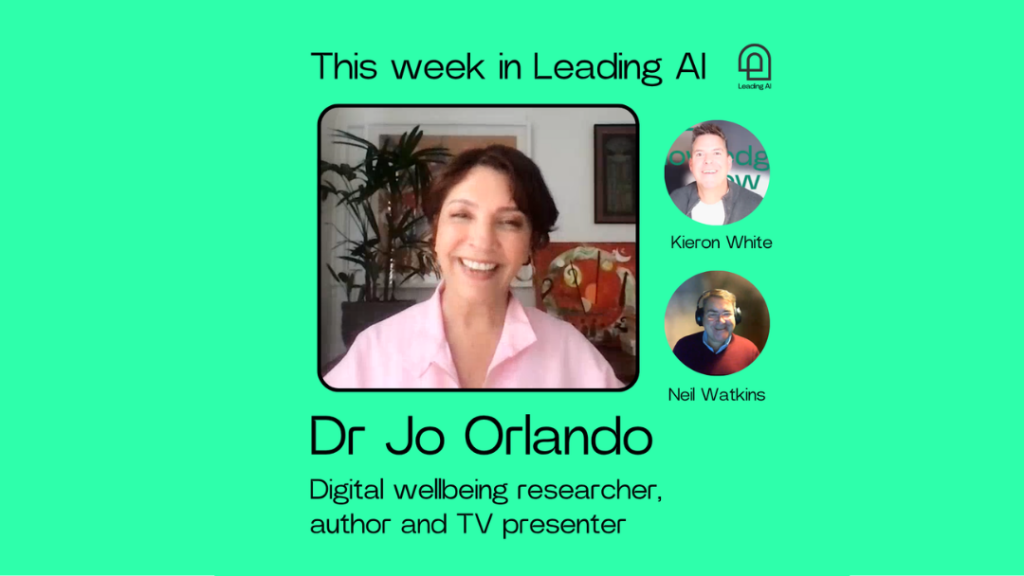
They finish by teeing up next week’s episode with Dr Jo Orlando, whose research on technology in families and book Generation Connected: How to Parent in a Digital World at Every Age and Stage gets a strong recommendation. Listen in next week to hear what Kieron has in his “busy box”. 😀
Two mates. A bar. Thirty years of business between them. And all they want to talk about is AI.
Pull up a stool, we’ll get the beers in. 🍺
TRANSCRIPT
Neil Watkins
Right. Shall we get this pantomime horse for podcast underware, Mr. White? You look, you look a bit damp. Have you, what have you been doing? You look a bit damp.
Kieron White
It’s got to be time. It’s got to be time to.
Da.
Neil Watkins
Yeah.
Kieron White
It is rather wet here in Richmond at the moment. And yes, I had to nip outside and I got soaked for a bit, which will delight many people, I’m sure. You should see my back. I’m drenched.
Neil Watkins
Well…
Hi.
You are a bit, you are a bit soppy, there’s no doubt about it, so…
Kieron White
Well, that’s nothing unusual about that. That’s standard for me, isn’t it?
Neil Watkins
Excellent. Well, I hope you dry out soon. So, so anyway, cool. What if, apart from being damp, what have you got on your list for us to talk about this week, fella?
Kieron White
Thank you.
Well, I want to talk back again about pricing, continuing our conversation about pricing and where is it all going and what’s happening, what should you be worried about if you are a user of AI? So lots of stuff on that. And really right into my geek spot is understanding LMS. So there’s some latest research that I was
Neil Watkins
Mhm, mhm.
Yeah.
Yeah.
Kieron White
I guess it was shown really, I guess not from Nate B. Jones, I hardly got into the research myself, but there’s some very interesting things that I think it’s a continuation a little bit of our conversation last time about how AI, how LLM understand the world and how maybe they’ve got a better grip on it than we do.
Neil Watkins
Yeah.
Kieron White
But, so it’s really interesting, and a couple of other bits to amuse and entice as we go through.
Neil Watkins
Six.
entice our audience and make sure he’s awake. Jolly good. Well, I got a couple of things. So, you know, I like to read at least a book a week. I try and get through a book a week. So I read this week a book on AI in Procurement, which was like riveting. So I’ll share a little bit some of the insights from that, which were a bit bonkers.
Kieron White
Exactly. What about you? What do you got?
No.
Yeah.
Neil Watkins
I wanted to talk about reverse engineering anything, or REA, as they call it in the sector. And then we’ve talked about the Disney-ification of AI adoption. And I sat with a customer this morning who was seeing some of the tools that we’ve put in come to life.
Kieron White
Mm.
Neil Watkins
in real time while I was sat with him. And that was that was super interesting. So, so those are the things that I would I would like to share. Where should we start? Where should we start?
Kieron White
Nice.
Oh gosh, who knows? Where do you want to start? I’ll tell you, I’ll start with something off-piste, which wasn’t even on there, which we touched on last week, but didn’t really talk about. So if someone at a dinner asked you if a new model drops next month, does your company get better or worse? That is the ultimate question. That tells you everything you need to know.
Neil Watkins
What should I say? I tell you what. Go on then.
That is a really interesting question.
Kieron White
If you’re an AI startup right now.
And I think, I mean, I recognise it massively in our world. And the answer for us is probably some of our tools, it becomes a problem and it makes our company worse. For some of our tools, it would be amazing because better models means more accuracy, means better following up the instructions, so we get better outputs.
But it’s.
Neil Watkins
We also have to do a lot of work to get ready for them and introduce them and test them. You can’t just hoy them in. I mean, we had this with, was it 5.4 and then 5.4 mini or whatever it was, where we had all sorts of challenges. But, you know, and it’s interesting that nobody ever sees that at the back end. So when a customer says, oh, that sounds expensive,
Kieron White
Bst.
Okay.
Yeah, we got that.
Neil Watkins
And you go, if you only knew how much we were doing in the back end to make sure the models work, the security, the testing, all of that good stuff, the LMS are obviously often the cheapest bit, aren’t they? So interesting. Yeah, I think for us, it is a mixed, it is a mixed bag. If I’m just thinking, I’m just thinking through some of the tools, because actually any at the other challenge that we’ve got,
Kieron White
Yeah, indeed.
Yeah.
Neil Watkins
linked to that is everyone says why are you using the latest model? And we’ve discussed this on here before of kind of, you know, what’s available in Azure, UK, South. Interestingly, I spent Monday with a chap, a Chinese guy who works for a very large infrastructure company.
Kieron White
Yeah.
Neil Watkins
And he was like, why aren’t you using any Chinese models? Because they’re much cheaper. And I was like, well, a couple of things. One is, if it’s not available in, we build 90% of our stuff in Azure. If it’s not in Azure in the UK South, we can’t do it, use it for GDPR reasons.
Kieron White
Yeah.
Neil Watkins
I have said that, I did say that we have experimented with on-prem stuff. And I know that Big D, Donald, has tested some of these Chinese models and said they get really good results and they’re much cheaper. And of course, if you’re doing it on-prem, then you don’t get the token burn, you don’t get the…
Kieron White
Yeah, exactly.
Neil Watkins
You don’t get that, you don’t get that unpredictable expense. And I was relaying to this, this chap, part of my experience when I first started in Ford Motor Company in 1984, Kieron, 1980.
Kieron White
When they had the Model T, they just had built the first Model T.
Neil Watkins
This.
You can have it in any colour except black. There was a gnarly old guy who worked in the IT systems, and he, at the time, Ford were the largest supercomputer users outside of the US military. So they had the big old data centre in Worley.
Kieron White
Yeah.
Neil Watkins
that they’d built to house this big old thing. And anyway, this gnarly old guy’s like, yeah, what they’re going to do next is they’re going to decentralise stuff, then they’ll centralise stuff, then they’ll decentralise. I’ve seen it all before. And so I was laughing, telling this story to this chap who worked for the infrastructure company, because he said, we’re being asked by customers to build on-prem AI solution so that the data never leaves? And do you think KnowledgeFlow could work on that? Well, it already does because Bars already tested it. So it is interesting. I have talked to a FinTech guy before who said he would never build anything in a cloud solution because he was worried about data leakage.
Kieron White
Right.
Yeah.
Yeah, absolutely.
Yeah.
Neil Watkins
So, he only ever built an on-prem model. So, yes, for all the talk of cloud, then yeah, on-prem could be making could be making a comeback. You heard it here first.
Kieron White
Yeah, we’re leading the way again. And that whole on-prem thing is very exciting. The idea that we could just bring latency would reduce a bit. You wouldn’t need redaction on everything that we do, the pseudo anonymization, that would improve pace of things as well, and indeed open up some a few more potential possibilities. So I mean, it is exciting.
I worry about the size of them, because whilst there’ll be no token burn, if you need a hell of a server probably to run a good one for a sizable organisation. So I think those things will cost somewhere else, but security and sovereignty. I mean, talk about sovereignty, it’ll be literally sovereign to your organisation. And that is really exciting.
Neil Watkins
You do?
Yeah.
Yeah.
Kieron White
Very interesting. And pricing on that, that takes me, I can take that straight into the pricing piece. So Jisc, I was reading, I was reading a far bit from us to plan anything, Neil. I don’t think anyone’s under any illusion that we plan this podcast.
Neil Watkins
Ooh, it’s like we plundered.
No, we haven’t. We haven’t. Just as to say everyone’s clear, we did not plan this.
Any of this stuff.
Kieron White
Jisc have just put out a blog on pricing and the kind of watch out for pricing because they’re saying that the frontier models are starting to look much more at usage based pricing instead of subscription based pricing. And we talked last week about the extension move to saying you’ve all got $29 a month.
Neil Watkins
Noon.
Kieron White
tokens and after that it needs to go to a cost centre. So I think that is interesting and I watch out and here’s some of the stuff to the frighteners. So co-pilot co-work, right, I’m going to read this, requires an existing M365 co-pilot licence and then adds usage-based credits on top.
Neil Watkins
Yeah.
Kieron White
So there’s a model, Jisc did a model modelling for 500 staff, which would be a pretty small organisation in education, in college land, for 500 staff at 16 pounds 10 a month, which is apparently the education cost of the co-pilot, 365, that’s 96 grand a year. Then if you give co-work,
to let’s say 100 is what they modelled power users, that adds roughly another 96 grand a year. So the total bill is 193 or whatever that is I’m reading here, I’m rounding, with no ceiling if usage runs over. So you’re suddenly in a Wild West of pricing on token and consumption basis,
Neil Watkins
Yeah.
Kieron White
opens floodgates potentially. And having said that, there’s a stat I read from Google in terms of usage. So Google went from 9.7 trillion tokens a month in May 2024, so that’s a couple of years ago, to 3.2 quadrillion per month this year.
Neil Watkins
Mm.
Oh.
Kieron White
And over that period, the price per million tokens dropped from $30 to under to half a dollar.
Neil Watkins
Yeah.
Kieron White
So while usage grew 300 fold, prices fell 60 fold. So you’ve got a difference in sort of, effectively it is more expensive just because you’re doing more with it, because the price hasn’t sort of dropped to match the drop off. But it does kind of bring that back, that whole kind of how sustainable is the future of AI.
Neil Watkins
Interesting.
Kieron White
On the current model, where you, where, where effectively investors are funding all that in the back in the background.
Neil Watkins
Yeah, well, that we discussed before the whole kind of, it was a bit like that in the early days of cloud computing and people worrying about the bills, etc. I do think there is still no, for lots of organisations, there’s no real handle on how much the costs are. And do you remember the conversation we had with Cameron Mirza a couple of months ago about where something like, I don’t know, it’s quite a high number of university leaders thought AI was free. They had no idea there was anything at all. It was in the survey that he did with the crikey, he was at the University Times or whatever the publication was. I’m looking.
Kieron White
Yeah, indeed, yeah.
I can’t believe you don’t remember the name of that auspicious.
Neil Watkins
Oh, you can say that austere organisation. I don’t know if they are austere, but anyway, they’re very reputable, very reputable organisation. But anyway, their service, lots of lots of HLE leaders thought AI was free, which is absolutely nuts, but I
Kieron White
Ha ha ha!
Yeah, that’s them.
Neil Watkins
I think for most people, they just don’t have a feel for costs at all. And tuck and burn is just something that you hear and tuck and maxing is just something that you hear and you just kind of don’t really know what it means because you just do stuff. So yeah, nuts.
Kieron White
Yeah, indeed. Did you, did you hear that the biggest user I heard of, Peter Peter Steinberger, who created OpenClaw, apparently?
Neil Watkins
I know who Peter Steinberger is, yeah.
Kieron White
So he burned last month, he reckons he burned 10 $10 million of tokens himself.
Neil Watkins
Wow.
Kieron White
I know, isn’t it just unbelievable? He just didn’t want on earth. And last May, he said that he actually got some facts, not, I reckon this was fact, 1.3 million was made, it was factual, like that’s the invoice for his bill. He says, what?
Neil Watkins
Yeah.
And he works for OpenAI now, so is he getting a staff discount?
Kieron White
Yeah, yeah.
I presume it, yeah, I presume he’s not actually spending that money, but that’s crazy. What are you doing? You must be able to rebuild.
Neil Watkins
Exactly, what is he doing with that token bird? What is he up to?
Kieron White
You must have agent swarms galore, swarms running swarms.
Neil Watkins
I was going to, I mean, we need to be careful what we say. We don’t want to get sued. You know, let’s not let’s not assume that he’s doing the Agentic swarm and all the hacking nonsense, because there’s been lots more stories this week, hasn’t there, about things going wrong and actually what else happened? Oh yeah, PHP being hacked because of the…
Kieron White
Okay.
In my test.
We’ve been getting messages from lots of our customers, which are clearly sending us exactly the same text that say they’re getting it from somewhere and asking what are, you know, do we have any exposure? Explain why, what have you done? And luckily we have a very clear answer. No, we don’t use PHP, which is great. That’s very good to know. We don’t have to have any fear of that right now. But no doubt, lots of fear of other things. So luckily.
Neil Watkins
Ben.
Right.
Yeah.
That’s right. That’s right. We do. That’s right. Yeah, he’s he is brilliant. Actually, no, no. For anybody who’s listening, he’s rubbish at security. He’s rubbish. He’s yeah, he’s dreadful. He’s dreadful. Yeah, yeah. No, you’re the one working for you. No. Indeed.
Kieron White
We’ve got Mark watching over us.
Yeah, awful. Terrible. You wouldn’t want him working for you. No chance. Oh, awful. Unmanageable.
Neil Watkins
Very good.
Kieron White
Very good. Right, what you, why else did you, you had another, you had another thing, didn’t you?
Neil Watkins
Bst.
Well, speaking of unmanageable, yeah, yeah, yeah. I have had a challenging client for quite some time, as you know, but I was sat with them this morning and really interesting just watching them respond to
Kieron White
Uh-oh.
Yeah.
Neil Watkins
some of the stuff that the KnowledgeFlow was doing this morning on their systems. And basically, it’s a client inquiry comes into an inbox, it’s triaged, it draughts the response if the agent, the customer agent, doesn’t like it, they can ask it to be rerun or register or whatever else, goes out to the customer and then the customer responds. And now often that will take anywhere between one and in some instances four days to get a response out. And he was timing the kind of
Kieron White
Yeah.
Neil Watkins
This went out at 08:57. The response came in at 09:02. Then the customer response, we went back to the customer at 09:07 and by 09:16, he’d agreed to whatever he was wanting to buy. So just that whole speed of operation and the speed of sale and the excitement, not just on his face, but as he called up some of the
Kieron White
Okay.
Neil Watkins
the team members that were using it, just helping them with their job, helping them move things faster, they were just delighted. And it was one of those things which gave me real pleasure to actually see. So yeah, good news story. And that’s for an organisation that had kind of prides itself on customer service and they were worried about AI.
doing two things, really. One is not giving very good responses to customers, but also disempowering the staff and completely the opposite in both instances this morning. So that was that was really pleasurable. I have to I have to say it was really good.
Kieron White
Yeah.
Nice. Well, that’s good. And yes, having worked with that organisation a bit in designing some of their stuff, it’s interesting to see. We’ve done some sort of AB testing on the current way of doing things with an AI’s angle. And what I have noticed now in a handful of cases is where the AI picks up and is more accurate. It picks up on the little things that easily skim miss in the skim read.
Neil Watkins
Yeah.
Yeah.
There was a real interesting story where a customer had written in and said, oh, I’d like, I’m going to make it up, you know, 15 iPads. And doing a side by side comparison with the agent response and the, so the customer agent and the AI. And the AI was like, great, would you like a trolley? Would you need a charging trolley with that? Do you want covers, etc.? So it was already kind of asking more
Kieron White
Easy.
Okay.
Neil Watkins
pertinent questions. And then the feedback for, crikey, I wouldn’t have asked those. It’s like, oh, really interesting. Yeah, good. Well, now you know what to ask them, don’t you? So it already helping them move on in the way that they operate. So absolutely fantastic. So it kind of leads on to the next thing, because that
that is, that’s kind of linked to the world of procurement. You know that I like to read a book a week or try and read at least a book a week. And this week, I read a book on get ready. I mean, if you can still work through this next sentence, I’ll be delighted. So I read a book on AI in procurement this week, Kieron, that’s how exciting my life.
Kieron White
Yeah.
Yeah.
Neil Watkins
That’s how exciting my life is. And mostly it was Bobbins, is the honest truth. It was just so basic. And I reflected, is that because I know so much, which I mean, clearly I know more than the average punter about AI because we do this. But lots of it was so basic.
Kieron White
Neil, what has become of you?
Mm.
Neil Watkins
descriptions of what is an LLM and how does how does it work and lots of it was rubbish. The bit that was really interesting though was the questions at the end along the lines of what’s procurement going to look like in 10 years time and the whole Agentic to Agentic procurement that you and I have talked about. I’m not sure if we’ve done it on here, but we’ve talked about it in bars.
Kieron White
Bst.
Yes, I think we have talked about on here, yeah.
Neil Watkins
Certainly, we have.
And that whole kind of piece about actually how could, you know, my agent talk to your agent and if you’re a customer, he has marked the limits of what I can, you know, as an agent, you can negotiate, you can negotiate on price, you can negotiate on size, you can negotiate on colour, but you can’t negotiate on delivery. It has to be on this particular day. And then
Kieron White
Yeah.
Neil Watkins
talking to a supplier’s agent where it says, you know, I can deliver on this day, but it’s going to be a green one and it’s not an i5, it’s an i7. Does it matter? Oh, no, I can accept that. What’s the price? Da da da da. So, and there was a, there was a,
Kieron White
All done in seconds, by the way. All of that could be done in microseconds.
Neil Watkins
Exactly, exactly. And the bit of feedback I got talking to my friend this morning was, oh, that might work in the commercial sector, but it will never work in the private sector. I was like, that’s really interesting. Why not? And he said, well, you’ve got to be fair in the public sector. You’ve got to give every, you know,
lots of suppliers a chance, or and if you’re in certain certain types of procurement lots, you have to get every supplier on on the list the chance. It’s like, and if and if they and if they don’t have a very good agent, then they’re going to be disadvantaged. And like, I mean, I’m not being funny. If you go out to every supplier on a lot and say, you’ve got 24 hours to respond to this,
Kieron White
Mhm.
Neil Watkins
and they don’t get back within 24 hours, then so be it. And if, you know, and if as the times come down, you know, if it is, you know, you need to respond.
Kieron White
Yeah. And the quality of the author at their end is, what do you say about that then? Say, well, that’s just like we’re judging you because ultimately you’re trying to judge the product or service and actually you’re judging the ability of the writer. That is 90% of procurement in public sector, in my opinion, is you’re judging the author’s capability of answering the question properly, thoroughly and adding in the value bits and all that stuff.
Neil Watkins
Yay.
Yeah.
Kieron White
which is not at all useful in the world of actually saving money in government and getting the best service you can for the money.
Neil Watkins
And the other thing we talked about, you and I have talked about before, is, you know, you don’t need to, you know, if you’re doing a software procurement, the best software might be in Australia. So now, if you’re doing the agent to agent procurement, you can go and look at it elsewhere and then bring it back. And if they comply with the UK regs, then, you know, it’s not.
Kieron White
Exactly.
Yeah.
What?
Well, I remember consulting on requirements definitions. Now, that wasn’t a day, there would be like a six-week project, sometimes more than, you know, a small team of people crawling around, interviewing people, watching people working, working out what the requirements are of a procurement. That stuff, I mean, I read a thing about this, is like, imagine an AI agent could just
Neil Watkins
Yeah.
Kieron White
watch your work for a week, it probably easy to do your job. Smash it, in fact, because it probably just leave you with the three bits you actually need to intervene on each week. But at the same point, if you just put an AI agent over your network traffic for your HR system and watched the actual emails, if you could, if you
Neil Watkins
Mm.
Kieron White
plugged into everything. The only bit you’d admit where you could potentially get voice in there as well, if you could record meetings and things about people’s frustration with why I can’t put my expenses in or whatever it is, it would take not very long to get a very accurate picture of your requirements for your future expense system, HR system, fill in your system name here.
Neil Watkins
Yeah.
Kieron White
Well, there’s a much better future. I’m excited about that. I mean, Procurement folk won’t like it, but it’s…
Neil Watkins
So, yeah, that…
I think so, too.
Well, I don’t know what this book was saying was actually a procurement, the types of procurement folk that will be valuable in 10 years time, those are going to know how to manage and manipulate AI and then get involved in the bits that procurement are really important for, which is the relationship building, you know, building the relationships with the suppliers,
Kieron White
Nate.
Yeah.
Neil Watkins
building the relationships with the internal buyers, that whole kind of, you know, what happens when something goes wrong, get involved in the sticky things and plug in things.
Kieron White
Yeah.
And this, I mean, I think a lot of big government procurement that was very required because I, I mean, having been on the receiving end of some of this when we’ve put in big bids, but seeing it also happening to others is all of the goodwill gets burnt before you even start the contract because of the arguments over the little fine minutiae and all the stuff.
Neil Watkins
Yeah.
Kieron White
And it’s just mad. And then you get into the point of the contract starting and someone wants something additional done. And so I, no, I’m charging.
Neil Watkins
Yeah.
Yeah.
Do you remember those public private initiative things for like hospitals and stuff where where you couldn’t move the chair? We got told off from moving chairs around because it was somebody’s job and there was it was it was a breach of the contract. If you move them, then the contractor could could charge or fine the organisation.
Kieron White
Exactly, exactly.
Yeah.
Yeah.
The breach of the contract, yeah.
Yeah, that’s right, because you’re allowed so many chair movements a year and if they go over, they charge you an extra 100 pounds a go. I remember being with the CEO of the Multi-Academy Trust and he said to me, see that clock, I wanted it moved over there. Guess how much that was? It’s like 2 grand or something. And it’s literally, I mean, it was a battery powered clock. It wasn’t a mains power clock, but to take it off and put it over there.
Neil Watkins
Events.
Yeah.
Kieron White
So he’s like, I’ll live in with that over there, funnily enough. I’ll leave it where it is. But he’s not allowed to do it himself. So naughty, all of that stuff. And that’s all about negotiating away everything. Interesting, I was with a former civil servant last night who now works for, who’s the CEO of a large charity that trains teachers.
Neil Watkins
Yeah, that’s right, yeah, yeah.
Exactly.
Kieron White
And she was sharing with me how her team, they do a lot of government contracts and the government contracts, you know, they all negotiate and hassle exactly this conversation with you over everything. And then the minute it starts, oh, could you just do that? And she said her team are like, hey, trying to rob us. And her point, having sat both sides of that,
Neil Watkins
Yeah.
Kieron White
fence is they’re not trying to rob you, it’s just that in government, that just there is no such thought of, because the way government works is you take on the work and then the resources follow after and you don’t ever pay for that. It’s just I get another three people in my team and that’s in theory good for my career. But you never have to actually kind of think about pricing something and saying, yes, we could do that for
X 1000 pounds. But so it was really interesting because she’s not reflecting on the same point as poacher and gamekeeper. So there you are.
Neil Watkins
Mm.
Yeah.
Interesting.
Kieron White
Well, well, shall we talk about understanding LMS?
Neil Watkins
We should, yeah, because actually, as I say, in my procurement book, there was the most basic, I was like, this is rough, I mean, this is like Dr. Bobbins stuff. So, and I just thought if somebody read that, would they really, would they really get it? So yeah, what have you got on, what have you got on understanding LMS? What’s your latest?
Kieron White
It’s getting right into geek territory. So finish up your hot chocolate now and put your eye mask on. So Nate B. Jones, there is an organisation, Good Fire, that have published this research, which is actually a paper by a guy called Nick Cammarata. I’m reading that bit, as you can probably tell. And it’s trying to get into the what’s going on in the black box of the LLM. So the neural network that’s
Neil Watkins
Mhm.
Yeah.
Ha ha.
Oh.
Kieron White
actually driving the answers in all of AI, all of generative AI at least. And it is the black box part that we try very hard to explain as far as we possibly can, but ultimately there is always a final black box moment of here is all the data that we’ve sent, here is how it’s been ranked and re-ranked and blah, blah, blah, and here’s all the chunks.
at some point we hand that to the LLM to make sense of and do what we tell it to do with it and then produce its output. And that part has always been a challenge for everybody. And I’ve argued before, and I still stand by this, is it’s a bit like saying to you, you read all those papers, you think the most important thing is this, why? Explain your actual thinking process, not just tell me why because you read it a lot.
Neil Watkins
DE.
Kieron White
why, what went through your brain, which neurons were firing. And that’s how you understand and understand LLM. Now, get this. So there is in the neural network, so there’s been a lot of work looking at trying to assess what’s going on in the neural network and try and kind of judge it.
and work out, you know, what’s happened and is it therefore right, wrong or indifferent? And Cameron Arthur’s argument is with coming at it entirely wrong. We are trying to measure it with, it’s a bit like I was, we talked about last week or week before about this stuff is we’re trying to bring our human
what’s the word, understanding our human kind of groupings and categorizations to understanding something which maybe doesn’t work quite like that, or maybe doesn’t see the world quite like that. And his point was, there is, he’s saying we should just go back and look at the original neurons, which is the parts of the neural network that do the firing.
Neil Watkins
DE.
Kieron White
Without getting geeky, but they, he said that his well-known example is a neuron that seems to fire for both cats and cars. And he suggests that the real common thread is a pointed V-shaped pattern and that the two only looked unrelated.
So we’re just going, why is it doing that? That must be wrong. They only look unrelated because we categorise things and a cat and a car seem like two very different things to us. And it’s back to what we were talking about, or at least I was musing over, is that we’re bringing our sort of rigid and tiny minds
Neil Watkins
Mm.
Kieron White
to something that is way beyond us in many ways. So he goes on. So he’s saying it’s the investigation tools that are the problem because they’re trying to categorise in our sort of more basic way. And apparently there’s a thing called the Neuron 127, 127 example. And Neuron 127 is a vision model.
that responds most strongly, this addicts A neuron to ladybirds, ladybugs. So they call it the ladybug detector. That seems really obvious and it fires when it sees, a vision model sees a ladybird. But the strangest thing is that there’s a negative response for toy terriers. When it sees a toy terrier,
Neil Watkins
Okay.
Kieron White
doesn’t do anything. And that is also inferred by the neural network as meaning something. Because the absence of it, that leads the thing to be, it must be a toy terrier because it’s not fine.
Neil Watkins
Okay.
Kieron White
I mean, I’m oversimplifying massively. But the point of all of this is like, we may be his view is we may be a bit getting a bit closer if we can start to what I mean, who knows, we never get there was one argument here because we can never, our tiny minds can never do it. But Nate’s point, which is bringing it back to why does any of this really matter, is that asking an AI to
Neil Watkins
Yeah.
Kieron White
cheque itself, tell you why it did it, is totally pointless because it’s simply giving you another load of text. It’s not actually doing any checking, where it might be, but it’s just giving you another subject to all the same knowledge and training that it’s had. And it goes further, is that like lots of vendors
Neil Watkins
Another predictive, yeah.
Mm.
Kieron White
Lots of our competitors are out there going, well, here is your transparency, because it’s the model’s explanation of its reasoning. But actually, what we really need to do is to find the debugging tool that can actually show you that black box part. So really geeky and convoluted, and as I say, probably not that interesting to most people.
Neil Watkins
Mm.
Kieron White
But for us in knowledge flows, kind of evidence packs and how we, you know, those are factual. Most of what goes into an evidence pack is not really what the AI is interpreting. There’s a bit of reasoning we put into it to show what the AI is at least shown, said it is going to do. But it’s more about the data that it’s used and not used and all those things which are deterministic.
Neil Watkins
Yeah.
Kieron White
things we can prove, but if we can get into that black box part as well, then potentially we have fully transparent explainable AI.
Neil Watkins
Crikey, that is pretty deep stuff, isn’t it?
Kieron White
It’s mind-bending, isn’t it, really? And then when you get into the trillion parameter models that are there now, and what that means, trillion parameters, is each neuron has connectors coming out of it and it counts every connector. So it’s massive, absolutely not as if a trillion is ridiculous.
Neil Watkins
Yeah.
Yeah.
Yeah, no, it is. And the models aren’t slowing down and they’re getting more complex. So are we always going to be moving further away from being able to answer that question about how does it actually work? It’s really interesting because when we were young, Kieron, which is a long time ago,
And we first started in the world of computers. Computers were really easy, right? You input stuff, it processes stuff, it does stuff. But now, because of the way things are, come back to my Chinese friend who I was chatting to on Monday, he did a PhD at Loughborough. I know somebody else who went to Loughborough. And yeah, yeah, yeah, I did.
Kieron White
Yeah.
There you go. Go to Loughborough alumni. Go, go, go, Loughborough.
Neil Watkins
I said you, I said you’d be. And he was, he, crikey, he was in the, he was there in the 1990s, I think he said. And he talked to his professor and he wanted to do his PhD on neural networks. And
Kieron White
Interesting.
Neil Watkins
The professor persuaded him not to do his PhD on neural networks because he said you will never be able to explain how they work properly. And that’s 30 years ago. And we’re now, oh, here we are talking about it. So yeah, fascinating. So I said, did you, did you
Kieron White
Okay, interesting. Interesting.
Yeah.
Neil Watkins
But did you did you browbeat him into submission? He said, no, no, he beat me into submission. So I didn’t do it on neural networks because I could, we couldn’t work out how to how to prove that they they worked.
Kieron White
Yeah, I can imagine.
And to your point, I mean, maybe we’ll just never be able to understand it and we just have to kind of live with that. And I said, we were talking last, I’m not sure if it was on the podcast or not, but about the dolphin language and it was on the podcast. Yeah, but that, you know, idea that they might be talking to each other with imagery, with
Neil Watkins
Yeah, we did, yeah.
Yeah, I think so.
Kieron White
sonar records with, who knows, and doing it all through these kind of instant data bursts. That’s what seems to be happening. And we just cannot compute, we can’t comprehend how on earth we can ever understand it. It’s a shame. I’d like to be able to talk to dolphins. That’d be quite nice. I know what they’re saying anyway. I’m not sure I’d much to say to one, but
Neil Watkins
Yeah.
Yeah.
Yeah.
Ha ha ha ha!
Kieron White
We got interested in it.
Neil Watkins
Haven’t you got a tattoo of a dolphin somewhere on your anatomy?
Kieron White
I do not have a dolphin, but I do have some other tattoos, as you know.
Neil Watkins
It wasn’t you that got it. Somebody in the WCL days, I’m sure, had a dolphin tattoo on one of their buttocks somewhere. But anyway, it doesn’t matter.
Kieron White
Well, we did have a, we did have a tattoo show off at one point, didn’t we, in WCL? I do remember. I do have, I do have a tattoo on one of my buttocks. This is not a dolphin.
Neil Watkins
We, we did.
OK, enough of that. Let’s move on. Yeah, indeed. Yeah, last Thursday. Yeah, yeah. You know, is that why you’re not sat down still? Because your bum still so forget at it.
Kieron White
Well, I misguided youth.
Yeah, that’s right, yeah, probably about right.
Sorry, I’m just soaking wet. Did you, so I just, a little amusing aside for you is newsletters. So I’ve been talking a lot about AI driven complaints and how that is a problem that we are now helping housing and education and indeed anyone else is interested.
Neil Watkins
Yeah.
Yeah.
Uh-huh.
Kieron White
tackle, tackle well. But it occurred to me only like a couple of weeks ago, maybe last week, and I was like, how many newsletters am I now getting? And for the most mad things, right, I ordered a bathroom, and this was a few years ago, I had a new bathroom, and then I got a weekly newsletter from them.
Neil Watkins
Oh, nice.
Kieron White
And can you think of something that you’re now definitely no longer interested in by, and probably anybody with a moment of thought could go, yeah, you probably don’t really want to know about the latest taps a week after installing something. I get them from my, I’ve got a robot Hoover and I get those, they’re similar. I don’t want to read about, what?
Neil Watkins
Ai.
Kieron White
What can it, but that AI allows you to just deliver slop into people’s inboxes. But it’s, you’ve got to stop and ask yourself, is what we do worthy of a weekly Newsletter?
Neil Watkins
Her.
Ai.
Ha ha ha!
That’s hilarious. Yeah, it could come back to me in 10 years’ time, not every 10 minutes.
Kieron White
Yeah.
Yes.
Yeah, exactly, yeah, but yeah, but plan it a bit better, yeah. How’s that? Is it leaking yet? We thought it would be, yeah, that that one you bought.
Neil Watkins
Yeah, yeah, yeah, that’s right. We built some obsolescence into that one, so it would definitely leak, yeah.
Kieron White
That’s right, yeah. I’m amazed that tap hasn’t fallen clean off by now. Four sets for our American audience tap.
Neil Watkins
That’s right.
Indeed, good day, good day.
Kieron White
Right. Anything else on your list? I’ve got I’ve got something very funny I found out about, which I mentioned to you, but we haven’t talked about, which was a book club. Right. Do you like books? So a book club, right?
Neil Watkins
All right, let’s do that. Oh yeah, book club.
I do like books. I told you I like to read a book a week.
Kieron White
So I was saying like I didn’t want to be in a book club because I don’t want to have to read it. It reminds me of my GCSE English days when they’re making you read Far from Madding Crowd and oh God, don’t make me do it right. She told me, and I’m not going to name who it was because I got told off that don’t you dare say this on your podcast, is that her mum is part of a book club.
club where you don’t actually bother to tell, you just bring whatever book you’ve been reading and you just, and everyone’s reading different books. And then you all get together and talk about what, I was like, that sounds like someone explaining their dream to you. It’s about a dull conversation. Oh, let me tell you about this book I was reading and what happened in the depth of the cat. What?
Neil Watkins
Ha.
What?
Just.
Kieron White
What? What’s the hell about?
Neil Watkins
That sounds like a really bad pub companion. Let me tell you about it. That sounds like a really bad podcast companion. Let me tell you about the AI in Procurement book I was committing this week. You’re not wrong.
Kieron White
There you go. Yeah, actually, you’re in danger of this. Yeah, people were. I’m going to watch for our audience, our audience figure dropping off.
Neil Watkins
Ha.
That’s why, yeah, yeah.
Kieron White
When you mentioned AI in procurement books, like, alright, let’s move on.
Neil Watkins
Well, hopefully next week our audience figure will rise because you are going off on holiday and we have the fabulous Dr. Joe Orlando joining us.
Kieron White
Oh, yes.
IAM.
Boop, boop, boop.
Neil Watkins
And for those of you who don’t know who Dr. Jo Orlando is, find out because she’s great. And she’s done a load of really interesting research into technology in families. She’s been in to see 500 families in Australia and how they use technology and what that means for both the parents and for the
Kieron White
Really good.
Neil Watkins
for the children, young people and adults in the house. She’s written a really good book on technology and you’ve already stolen some ideas from it for not only your six-year-old, but also for yourself. So yeah, if you want to find out what’s in Kieron’s book,
Kieron White
Absolutely.
Indeed.
Neil Watkins
busy box, then you’ll have to listen to the next episode. So I would highly recommend our audience actually stay tuned for next week’s episode. It’ll be much better than this one.
Kieron White
Yeah.
Indeed, Jo is really good. She’s very good value. She’s brilliant presenter and got some fantastic insights. And I love, I mean, the book particularly is some, we should call it out, it is called Generation Connected, How to Parent in a Digital World at Every Age and Stage. And the practicalities in there are so helpful. And that sort of dawning realisation that this is a part of your child’s upbringing. Technology, particularly AI enabled technology, but just technology, it’s part of their upbringing and you need to get your head around that in order to then work out what that means for your own parenting. I think that’s fascinating and it was deeply useful as well, just for some practical what you can do. As you find out, the busy box
Neil Watkins
That’s right.
Kieron White
So, you know, listen next week and find out about the busy box.
Neil Watkins
Excellent. Well, you enjoy your holiday. I hope our audience enjoys next week’s podcast with Joe and I will speak to you in two weeks’ time, Kieron.
Kieron White
Yeah, indeed. I look forward to it. Nice one. Have a lovely weekend when you get there. Thank you.
Neil Watkins
All right. I hope you’ve dried out. Yeah. Catch you later. Bye.
Kieron White
See you later. Bye.