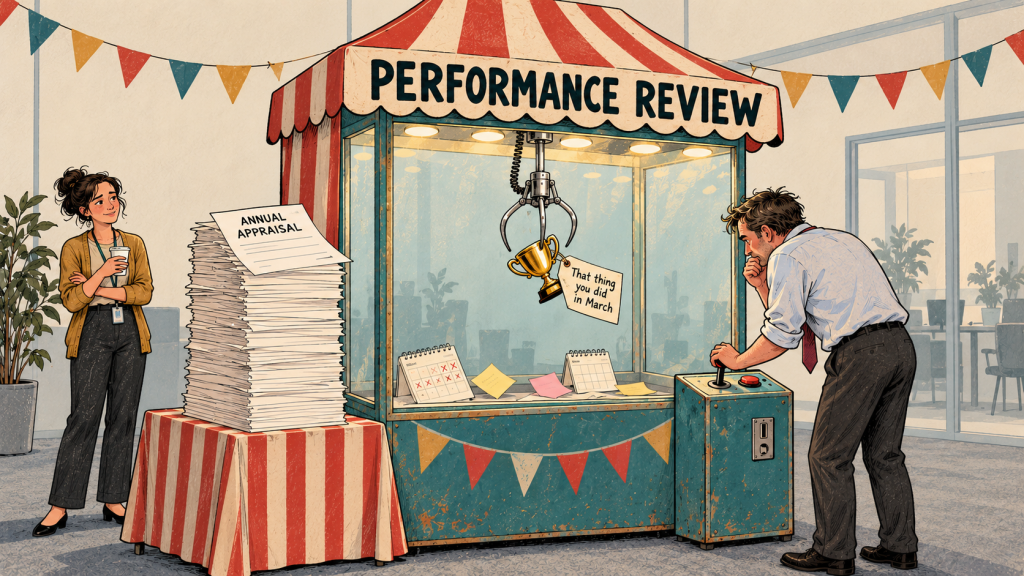
There’s a button that does the work for you. But nobody presses it. Why is that?
Neil spent this week with a customer struggling with AI adoption, and got something you rarely get: time with the leadership team, the managers, and the people actually doing the job.
The leadership were saying all the right things. Investing in AI. Making people’s lives easier. Pushing forward.
The managers were under time pressure, so they quietly revert to the old way of doing things.
And the frontline staff were entering the same information into four separate systems and losing patience with all of it.
Sitting in the middle of that is a Know Your Customer button. Press it, and it pulls together everything about that customer, summarises it, and shows you its sources. Ten seconds. This is an organisation talking to forty or fifty customers a day.
Almost nobody uses it.
That gap — between what the board thinks is happening and what’s happening at a desk on a Tuesday — is the real AI adoption problem. Not the technology. Not the cost. Not whether the tool works. It works. It’s the fact that under pressure, people fall back on what they’ve always done, and nobody in the middle has been given the room or the mandate to change that.
Which is why the thing we most want to learn from the JISC pilot that launched today — ten colleges and universities, three months, all starting together — isn’t which of our tools they liked best. It’s what actually makes adoption work. Capture that properly across ten institutions and it’s useful to the whole sector, whatever AI they end up buying.
Also in this week’s episode: KnowledgeFlow can now make live API calls into your systems, which changes complaints handling completely — one place, one version of the truth, with an evidence pack underneath proving exactly what was used. The £100m Sovereign AI Fund announcement that came with almost no information attached. And a Healthwatch England report on GP AI scribes making errors that patients are the ones catching — including one that dropped the word “no” from a diagnosis.
Two mates. A bar. Thirty years of business between them. And all they want to talk about is AI.
Pull up a stool — we’ll get the beers in. 🍺
TRANSCRIPT
Neil Watkins
Very good. Well, shall we? Shall we start the pantomime horse of a podcast on this beautiful sunny day?
Kieron White
Why don’t we? Why don’t we get in the get in the costume, get in your pantomime, wriggle wriggle your way in there if you can after your holiday.
Neil Watkins
You cheeky sausage. I did eat and drink a lot. It has to be said. So I had I had a great time. It was it was fantastic. But as somebody said to me this morning in a meeting, does it feel like 3 weeks ago? I was like, no, no, no, it feels like much longer.
Kieron White
Heather.
Yeah, yeah, sorry.
Neil Watkins
And it’s not even, not even 4 days. It’s just like, oh, crikey, back to worst with a bang. But in a good way, I guess, because lots of super exciting things going on. Spoke to lots of people this week, had lots of catch up meetings. I’ve not done very much kind of, I was going to say real work, I mean, screen type typing work.
but lots of catching up, lots of good stuff going on, some of which I can talk about on our call this afternoon, which I will share. And I also wanted to talk about some of the technology changes that have been happening while
Kieron White
Good.
Neil Watkins
We’ve been schmoozing and I was going to say snoozing, drinking, eating, all of that stuff, all the holiday. Yeah, yeah, you’ve been working. So good for you. And yeah, I wanted to share some of the thoughts I’ve got on that because I think it could affect where we’re headed in the next wee while. So yeah, what have you got on for this week?
Kieron White
Speak for yourself.
Yeah.
Neil Watkins
What’s on your list?
Kieron White
Well, we should definitely talk about new as of today’s ChatGPT 6 Astra. So we should touch on that. I’ve got the most amazing product of the week for knowledge flows developments. It feels like a really big breakthrough. There’s occasions, you know, we do a whole bunch of stuff which ends up really being bug fixing.
Neil Watkins
Yeah, it’s a modest.
Yeah.
Kieron White
And we’ve got now a real big step forward. This feels like one of those big moments in our career, in our history of development. So I can’t wait to talk about that. And then a couple of news stories which have caught my eye on various things. GP AI scribes, I’ll talk about that. And outcome based
Neil Watkins
Mm.
Yeah.
Yeah.
Kieron White
My thanks, so we.
Neil Watkins
Cool. Well, should we start with outcome-based pricing? Because it’s an interesting model. And it’s been around for a little while now, probably 6, eight months or something like that. And it was talked about in certain circles just because of the whole, actually, we’re worried about talk and burn in the same way that when cloud computing first came around sort of 10 years ago.
10, 15 years ago, people were scared to move to the cloud because I don’t know how much I’m going to have to spend. And of course, now everybody uses the cloud, both personally and professionally. But outcomes-based pricing, I think, is a really interesting model. It’s just how do you get that right from a…
Kieron White
Mm.
Oh yeah, tough as hell. You’re going to end up in fights with people, aren’t you? Because I mean, so Salesforce, Agentforce is offering it to some of their customers. I saw Open AI are also doing that. The idea being, I think the line I read was something like, can we, we might charge you $2 because we helped you earn $20 or $40 or whatever.
Neil Watkins
Yeah, I saw that.
Kieron White
but the challenge of that, you’re going to be in a fight with them constantly over like, hang on a minute, no, you owe us a bit more. It’s going to be very tricky.
Neil Watkins
The.
That’s right, yeah. It’s like having multiple salespeople and commission on the same sales, isn’t it? It’s like, oh no, I definitely did more than that. Oh, I did more than you. I tell you.
Kieron White
A whole.
Do you remember that? Oh yeah, we did that in WCL, didn’t we? We had a, we were trying to be super generous. I remember that we gave a sales bonus on the gross payment rather than profit, which is unusual, but we did it to make it as transparent as we could. But yeah, I remember the amount of people that would come out with their hands out when we got a sale. Well, I read that thing before it went in, so I’m entitled to something.
Neil Watkins
Yeah, yeah, yeah. There’s an old, there’s an old expression that success has many parents and failure is an orphan, I’m afraid.
Kieron White
SN.
No, indeed.
Yeah, exactly. Isn’t it just right? So, yes, so I don’t know, the outcomes pricing, I like it. I think if we could do that with knowledge flow, it would be great. And you know, some of the things that we’ll talk about in a moment, but some of the tools that we have that might prevent things, you know, escalating to.
Neil Watkins
Yeah, right.
Kieron White
claims and legal action, you could, you could try and go down that way. It’s just so tricky, isn’t it? And nobody in the public sector wants an open-ended budget. So it doesn’t really help you if you take, assuming you actually saved someone from a fine, saved an organisation from a fine, well, that’s a kind of a saving that you can
Neil Watkins
Hmm.
No.
Yeah.
Kieron White
presumably claim a lot of, if you could argue it, but then that’s coming out of someone else’s budget. Over here, IT are going to be like, hang on a minute, why do we have to pay the fine?
Neil Watkins
Yeah.
Yeah, indeed. And it kind of reminds me of the, we talked about this probably six months ago, but companies in the public sector claiming spurious savings amounts, like 7.2 million pounds, virtually saved this year. It’s like, wow, you can’t have virtual cash saving, can you? You’ve saved it or you haven’t. You’ve either got the cash or you haven’t.
Kieron White
Ohh, yes.
Yeah.
Neil Watkins
you haven’t spent the money. So yeah, nuts, absolutely. So I think it’s immature as a concept, but I can see the direction of travel, but as a concept, outcomes-based pricing is a good thing, I think, for some people, not every case, but yeah, watch this space. No doubt we’ll talk about it again in a few months time when some people have been really burned.
Kieron White
Yeah.
Yeah, I’m sure.
Neil Watkins
It’s a bit like the, we talked about the people who switched on the Gentic AI and then woke up they spent 150 grand overnight on because the legends went nuts.
Kieron White
What?
Yeah, exactly.
Terrifying, terrifying prospect, isn’t it? Or indeed, very large organisations who spent half a billion dollars in a month.
Neil Watkins
Exactly. Yeah, yeah, that’s nuts. Absolutely nuts. But it comes back to trust, doesn’t it? Actually, how can you trust the tools? How do you know what you’re getting into? How do you know what you’re buying? And it’s kind of the link to the how do you trust your AI in general? I spent quite a bit of time this week with a customer who’s having
Kieron White
30 stamp.
Neil Watkins
some I think it’s fair to say some adoption challenges along with along with 99.9% of the AO world, I guess. But it was really fascinating to me because I got some time to spend, I got a chance to spend time with the senior leadership. I also got some time to spend with the management team and also some of the people actually doing or indeed not
Kieron White
Ha.
Neil Watkins
doing the work. So that was that was really interesting to me, because the leadership team were all, you know, saying the right words, you know, we’re investing in AI, we, you know, we’re pushing forward with using AI to help develop and help make your lives easier. And then you get to talk to the managers and they’re like, oh, yeah, but then we’re kind of under time pressure. So we just kind of do these other things.
Kieron White
Yeah, the old way.
Neil Watkins
And then you get to talk. Yeah, and we just revert to just getting stuff done. And to the point where we’ve developed tools which actually do a bunch of things for people that help them and they don’t actually use them. And a really simple one is we created a button in Knowledge Flow, which you just press it in. It’s called Know Your Customer. So it pulls up all the information about that particular customer. So
Even if you just jump on a call and you type it in, press the button, it will put up all the information about that customer and it will summarise it for you. If you want to know more, you can go into the site of sources and da, da, da, da. And it turns out that no one’s using it. It’s like for an organisation that’s dealing with customers on a daily basis, something
I don’t know, I don’t know how many customers are there on a daily basis, 40, 50 customers a day. And nobody’s doing that. They’re all kind of using their memory of what they talked about last time or, but what happens when, you know, someone’s on holiday? I just find it bizarre that a sales organisation or sales related organisation just isn’t using
Kieron White
Yeah, absolutely.
Neil Watkins
So, and then…
Kieron White
And I think about, I think about that exact thing. I mean, I haven’t had a customer conversation where I didn’t look them up first and normally using some AI to get a summary of what the likely areas of interest are going to be or whatever. I mean, why would you not do that? It’s literally 10 seconds work. So, so easy to do.
Neil Watkins
Yeah, yeah, it’s crazy, absolutely crazy. And not only crazy, lazy. It’s just kind of, it’s dereliction of duty in my humble, in my humble opinion. So yeah, really, really frustrating. And then I got to talk to some of the people who are actually supposed to be doing the work and they’re complaining about duplicating effort. And one instance,
they input the same information four times into the company systems. And the people are getting rightly frustrated. I’m like, hang on a sec, how does this match with what’s at the top of the office? What’s in the management? They just. So really interesting set of challenges around adoption, even in
a relatively small and allegedly agile organization. But yeah, really, really, really challenging.
Kieron White
Yeah, that is so frustrating. Well, we’ve just launched today the JISC pilots with 10 colleges and universities. And interestingly, what I put on to my introduction was there’s two things we really want to find out. We obviously have their own view of what they want to know, but one is adoption.
and how is it best managed? We’ve got 10 of them, they’re all starting together. They’ve got a three month window, which is not really enough time, but I’m keen for them to capture the different ways that they are having success or not. So that ideally we come out of that with a kind of here’s what works in adoption of particularly in education institutions, which is
would be really interesting, I think. It’s probably more useful, frankly, than which of the tools in knowledge flow were most useful to you. But actually, for a sector wide, whatever AI you’re thinking of using, this is the way to go about it. I think really interesting. But we should talk about, sorry, go on, I interrupted you.
Neil Watkins
Exactly, yeah.
Yeah.
Especially.
I was just going to say, especially in a sector which has got, you know, highly documented challenges and some real opportunities, I think. So getting not just staff, but also students and related organisations, including employers, you know, using these tools is just has to be.
Has to be the way forward. I interrupted your apologies.
Kieron White
Yeah, for sure. No, no, so I will. Well, I was going to push us on to product of the week because it’s related to your point. Yeah, play your jingle in your head. It’s related to your point about your know your customer solution that we’ve that we built. But what we’ve now created, and I’m really excited about it, it feels like a massive step change, as I said.
Neil Watkins
La, da, da.
Yeah.
Kieron White
is API calling to all of your systems where that is enabled, or we can do batch transfers if you’ve got some old-fashioned stuff. You know, just download it every day, run an automation and pick up that data. But where this is absolutely tremendous is complaints handling, which is what we, as we’ve talked about before, we think this is the real
thing that we can do to help organisations that are being inundated with AI driven complaints coming in the door. So how it works is that you can, if it’s an e-mail or an inbox or a thing, you can paste that or indeed it can pick that up directly. Or if you’re on a phone call to someone, you can just enter their name or some sort of credential and e-mail address or an address or something.
and then run an API call across all of your systems. That then brings all this data in a very structured and deterministic way into the knowledge flow context window, and then you can reason over that. So you can then say, give me a quick summary. I’ve got Neil on the phone again. He’s moaning again about this thing. And you can get the that way. Neil always moans about that, but actually that is a problem with that property. And indeed, you know, the
that boiler type is known in our repair system for being a noisy blah, blah, blah, whatever. But I’m super excited about it because it gives you that.
Neil Watkins
Yes.
Kieron White
with four different systems and have to get four different versions of the truth from different places, or do it all through knowledge flow, which effectively is like your middleware or your kind of joining it all up in one place. So really interesting. And then with AI doing its thing over that, you know, what should I say to Neil now to
appease him. Well this is the policy, this is Neil’s background and here therefore probably the best thing to say is this and apologise quickly.
Neil Watkins
Yeah.
Kieron White
Haha.
Neil Watkins
Yeah, that’s brilliant. Because that’s shifted on since before I went on a holiday, that’s come on massively.
Kieron White
Yeah, yeah, we’ve got it now working. And now, so it’s now getting the clients to plug in their, give us their API keys and allow access and we’re off. So, and with the evidence packs that go with knowledge flow, that ability to prove it, to build trust into it, show what it’s actually done, show what data it’s used, that is, you know, altogether becomes a fantastic solution. And
Neil Watkins
Nice.
Kieron White
If in outcomes-based pricing, if we could save a 10,000 pound fine because you can better respond in a more timely way and not breach something, then, well, that’s, you know, this pays for itself very quickly.
Neil Watkins
Indeed, well, the new hazard laws for housing come into effect in October, don’t they? So not very far away. And you’re going to a housing conference next week to talk about this very issue.
Kieron White
I do.
I am, yeah, I am. Well, I’m doing a session. It’s quite interesting because they very much wanted it to be a hackathon, the organizers. And so I was like, okay, well, we could do that. We do hackathons. But tell me about that because, you know, actually creating AI tools live in the room, which is what we do
Neil Watkins
OK.
Kieron White
on a hackathon quite often. That probably isn’t right for a senior audience because it’s a CEO and chair of board pitch that I’m doing a session for them. So it’s a kind of hackathon around AI strategy is how I’m changing it. So I’m opening with you’re all actually getting a lot of AI, dealing with a lot of AI in your organisation because it’s all coming through your letterbox.
Neil Watkins
Yeah.
Kieron White
And your teams are not enabled with it. And complaint handling now is an absolute nightmare because you’re getting sophisticated, long complaints to deal with. So your team can’t manage it so easily. So I’m going to open with that and then got some stats on usage and adoption in the sector.
Neil Watkins
Yeah.
Kieron White
I then go to some chat where I’m going to get them for the first conversation, almost the warm up thing, to talk about where they are and that, you know, if 76% are using it, where are we? Are we, does that feel right? So I wanted to do a quick kind of just a 5 minute thing around their tables just to get a bit of a measure. And then I’m doing some strategy slides on what they need to worry about as CEO and board members.
And then we’re going to do, this is the bit that sort of, we’ll see how it goes, but it’s getting them to then deal with some specific questions under each of the strategy pillars. So each table dealing with a kind of different set. And then my plan is to then get photos of their notes and create a report that goes with the slides. So instead of just getting the slides, they’ll get like,
Neil Watkins
Mm.
Kieron White
These are the slides and here’s what you actually talked about. So that’s the kind of hackathon element is you sort of come out with the stuff that you talked about at your table, but also the other areas of that the other groups talked about.
Neil Watkins
Nice.
Kieron White
I hope it works well, because it’s quite different to my usual sort of here’s AI and here’s how you can be using it pitch really and how you need to use it safely. So as always, it’s going to be slightly nerve-wracking when I’m up there hoping it’s going to work, but…
Neil Watkins
Yeah.
Yeah.
Kieron White
We have to say.
Neil Watkins
The complaints thing is interesting, isn’t it? I’ve posted a few things recently on LinkedIn. So The Economist, the FT, BBC have all put out articles recently about the kind of rising complaints. And I think it might have been the last one on the BBC, which basically said,
local government lawyers basically saying they can’t cope with the, you know, they’re going to have to double the size of their outfit in order to deal with the complaints. And actually, as we’ve discussed many times, that’s not the way forward. But it kind of links on to a survey that I read about this week.
Kieron White
Yeah, I’m sure.
Neil Watkins
from Heriot Watt, which had done a survey of 208 councils across England, Scotland, Northern Ireland and Wales and the disparities between the different councils. And at one end, it talks about Surrey having AI enabled pothole identification.
Kieron White
Nice.
Neil Watkins
they can get potholes. And then right at the other end, the council’s going, no, we’re not doing anything because we haven’t got any money, we haven’t got any capacity, we haven’t got any infrastructure. So nothing in that kind of complete disparity across the public sector. And I don’t know if you saw earlier this week, I know you did because you sent it to me, didn’t you? You spotted the
Kieron White
Yeah.
Neil Watkins
the Sovereign AI Fund, putting out a call for 100 million pound competition for using AI to improve public services. And you sent me the link and I spent ages trying to find anything on the on gov dot UK about it.
Kieron White
Yeah.
Yeah, it was very bereft, wasn’t it? It was a good announcement.
Neil Watkins
Lori, big summer in AI website was rubbish.
Kieron White
Yeah, it was a good, yeah, good announcement, but like absolutely no detail on how you get involved, but how you find out more, just a static page.
Neil Watkins
What?
No. Well, actually what it did was it said, click on these links, you know, one to the gov.website, one to the Cabinet Office website, one to, but actually no, no kind of landing page, no kind of direction, no signposting, nothing. It just to the general words, it was absolutely pathetic. It was kind of a, yeah. So I actually stopped saying,
Kieron White
Ha ha.
Neil Watkins
Read things, because I’m on a webinar with them on Monday, and I’ll find that JSR.
Kieron White
Oh yeah, yeah. Quick. Put a disguise on quickly.
Neil Watkins
I’ll wear the don’t worry, I’ll wear the horse outfit; they’ll never know it’s me, but it kind of comes.
Kieron White
There you go, yeah. No, that’s really interesting. And I love it that the government is now putting some money on the table for it in this kind of way. And it does sound like they’re being a bit more sensible in, because we bid for a thing a while ago where it’s very unclear about who owns the intellectual property after you finish, which is kind of like, well,
Why would I do it? So this is this one is saying the IP will be yours afterwards. So that’s really good. I don’t wonder what whether it is an investment style fund or whether it’s a grant though. I’d be interested to know.
Neil Watkins
Yeah.
Yeah.
Yeah, it’s, well, it will be interesting to find out, but I think it’s, it put just some words. So I think it’s not really quite clear to me, but what is clear is where they want to invest money so that they’ve got six different
projects. So one is kind of things around data centres, others is around kind of different tools, some of it is around cyber security. But the one that really, I think it hits our sweet spot is around trust. And in particular, there’s mention of tools that you can trust in the NHS. And
given what we’ve been doing with Northeast Links, what we’ve been doing with the GPs in the Northeast, you know, that is kind of right in the sweet spot of what we’re doing. So I think, you know, hopefully we’ll be in with a good chance if we can get through the, dare I say it, the bureaucracy and the nonsense of
Kieron White
Oh yeah, no doubt.
Neil Watkins
of the process. But that, yeah, being able to trust the tools, we’re right back at where we started 20 minutes ago. So, yeah, interesting stuff.
Kieron White
No, Dan.
Yeah, exactly. And I saw on that exactly in there was a report from Healthwatch England. So they are a statutory voice of the patient organisation. I’ve been running a few of their conferences over the years, so I know them quite well. Yeah, I’ve been done a few of their big things. But their report was that GP
Neil Watkins
Okay.
Yeah.
Kieron White
AI scribes, so those ones that take the notes for you and write the notes so that the GP can focus on you, are making errors. And it’s the patients that are spotting it, apparently. And it’s pretty catastrophic, the risk. So one of the ones they reported was it admitted the word null
Neil Watkins
Yeah.
Kieron White
from a diagnosis. So instead of saying that you’ve got this thing, well, the doctor had said no thing, it was saying thing. So you’re about to be treated for something that you don’t have. So that potential, yeah, that could be a bit disastrous, couldn’t it? So, and the sum, yeah, and the sum of it comes back to the MHRA.
Neil Watkins
Okay.
Oh, God.
A bit.
Kieron White
which is our regulator and this is a medical healthcare records authority, I believe, healthcare regulation authority, I think they’re called. But they don’t class AI scribes as medical devices at all. And so therefore, they’re just not regulated. So I think is a big challenge and no doubt many more of them. And particularly in health, because one of the things that
Neil Watkins
Yeah.
Yeah.
Kieron White
we know is large language models are not very good when it comes down to really sort of specific, unusual words. And that’s when they guess, because they, you know, they don’t know how to deal with it. So health is riddled with, you know, little things, isn’t it, that are only very specific and very niche.
Neil Watkins
Mm.
Yeah.
Kieron White
So they need to be using the more of the kind of cohere models, I guess, because there’s a whole large language model group cohere that build models designed to understand these weirdities and strange words. So that’s probably what they need to get on to, I imagine.
Neil Watkins
Yeah.
Yeah.
Is weirdity actually a word or did you just make that up?
Kieron White
You have to ask, you have to ask AI if it is or not. No, that’s a great, great question, Neil.
Neil Watkins
Alright, after we get off our call.
That’s right, yeah, yeah. What’s the context? Is it involved your medical records? Yes, it does.
Kieron White
Yeah.
Yeah, yeah, yeah. Sorry, yeah, we’ve seen a lot of weirdity in your medical records.
Neil Watkins
That’s right, it’s confidential though. Keep it, keep it quiet. Don’t tell anybody.
Kieron White
Very good.
Neil Watkins
Ohh, yes.
No, they’re not.
Kieron White
Hail this Uber, and you might get one of their autonomous vehicles, but it’s got a driver in it; it has to monitor it all, and it’s like, what? That’s gonna be weird, isn’t it? Why would I do that? That’s like…
Neil Watkins
Yeah.
Well, you can’t pick them, can you? We went to that Bitcoin conference last year where the chat group who started with spoke, and he was actually, he was a great, he was great from a keynote perspective. But the stuff I’ve read on that is that they just, yeah, Transport for London just won’t sign it off without a driver in the first instance.
Kieron White
Yeah.
Yeah.
Neil Watkins
Because, just because…
Kieron White
Crazy.
They do seem to have some quirks. I’ve read a couple of things or seen a couple of news articles on them. And one is they don’t seem to be able to recognise, if you’re like, you know, when someone says, yeah, you can come out, they don’t see that. So it can’t deal with that. And also, apparently, which might well be, because I guess, you know, your San Francisco streets are mainly block.
Neil Watkins
Nope.
Kieron White
thing and everyone’s kind of moving in banks of traffic, aren’t they? And there’s not really much waiting to pull in. And that whole, because I mean in London, driving in central London, the only way you’re going to get out onto some roads is if you force your way in and apparently they just don’t. So you’re going to be sat there for like 25 minutes waiting to pull out until there’s a gap or more like 25 hours.
Neil Watkins
Hmm.
No.
Ben.
Yeah.
Exactly. People falling asleep in the back. But the chap who spoke at that conference, though, he basically said, if you can crack London, you can crack anywhere because the streets are also kind of old and gnarly and, you know, some of them date back centuries.
Kieron White
Yeah.
Yeah.
Right.
Yeah.
Neil Watkins
So, if you can crack, if you crack London, you can crack pretty much anyways. This is a big difference between Milton Keynes and Piccadilly Circus, so he can, yeah.
Kieron White
Indeed. Indeed. Yeah. Well, it’ll be interesting to see. I will say yes if I get offered one. I’ve signed up on the Uber trial. So if I get offered one, I’ll have a go. But I think the weirdity of having another, having a driver there when you’re not supposed to just, it’s quite peculiar, but I’d like to try it out.
Neil Watkins
Do you think that in the driverless cars, there’ll be a chat function? Do you remember Peter Kieron? He was a comedian quite a while ago now, but he used to say everybody gets into a cabin. All right. And then been on long.
What time to get off? Just everybody, everybody’s just got a standard taxi driver drunken chat, and I wonder whether you can you can invoke drunken autonomous vehicle chat.
Kieron White
Yeah.
Ha.
Autonomous chat. Yeah, we can ask you silly questions that are of no interest to you.
Neil Watkins
Ha ha.
That’s right.
Okay, well you need to be careful getting into your next cab, dear boy.
Kieron White
I certainly will be, yeah. You know, what else you got? Anything else I saw? There’s another thing that made me laugh. There’s A Time, it didn’t make me laugh, but you’ll see why, was the Time magazine have released the 100 most influential people in AI in 2026. And I didn’t see you on it. I did. So I think maybe
Neil Watkins
Very good.
Yeah.
Up.
Kieron White
That explains our vast podcast, the listener.
Neil Watkins
That’s right, yeah. Our audience clearly didn’t put their vote in for me. So yeah, to be honest, you’re probably more, you’re more upfront and central than me, with you standing on stage and doing your fancy AI strategy talks and all of that stuff. So yeah, you’re more likely to be.
Kieron White
No.
Maybe I’ll make it. Yeah.
Neil Watkins
influential in me. Yeah, maybe 20, 27, maybe that should be our target is to get you in the 100 most influential people.
Kieron White
Be.
You’re very good. Well, I look forward to it. If I can get on that list, that would be very wonderful. But yeah, I suspect it might be a stretch.
Neil Watkins
I think it might be. Well, speaking of stretching, it’s nearly time for me to stretch my legs and wander up to the horse and farrier for a small libertian. I’ve got a little bit of work to do before I go and enjoy a beer, but I am planning to do that this afternoon. So unless you’ve got anything else for me, fella?
Kieron White
Very nice.
Neil Watkins
I’m gonna call it a bit.
Kieron White
I am good. Let’s yeah, let’s wrap up there. That’s a wrap. You can get out of your pantomime horse costume and into your wherever you wear to the pub costume.
Neil Watkins
No.
I’ll wear the, I’ll wear the panterbound horse to the pub because it’s called the horse and farrier, so it’s perfect. Yeah, sure. Yeah, yeah, cool.
Kieron White
And again, this is perfect. All right, nice one. We’ll have a very good time in the pub and I’ll speak to you very soon, no doubt.
Neil Watkins
I’ll speak to you next week. Cheers. Have a good weekend. Bye.
Kieron White
All right, thank you. Bye-bye.