One of our cofounders recently sent me Pilita Clark’s FT column on the rules of AI etiquette. It talks about AI-written emails, meeting bots and the various ways technology allows us to make life easier for ourselves while making it more irritating for everyone else. You can ask Perplexity for a summary, if the paywall is in your way.
One particular example caught my attention. A manager had used what appeared to be AI to turn a lengthy performance review conversation into a few stilted paragraphs, overlooking achievements and goals that mattered to the employee.
I can see why that would be upsetting, but I’m not sure the key question is whether AI wrote the appraisal; I’d rather know whether the manager had been doing the managing.
Somewhere out there, a dashboard light turned green
I have a bit of a hang-up about performance appraisal systems. This comes from having spent an (un)reasonable amount of my working life completing them, administering them and sitting in meetings about whether other people had completed them properly.
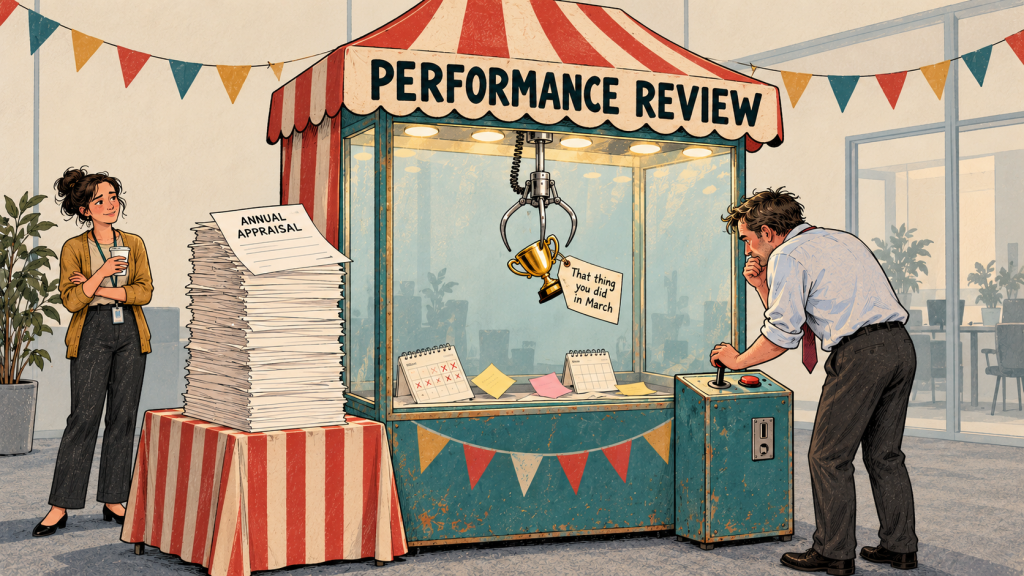
At their worst, they are enormous annual exercises in which everyone stops doing their job to write an account of having done their job. Managers try to remember what happened ten months ago. Employees search emails to prove that something did. Forms are completed. Ratings are discussed. Meanwhile, the feedback that would have helped someone in November arrives in March.
If someone has been doing something badly for months without being told, that is a management problem, but The System is often much better at belatedly recording their shortcomings than asking why their manager allowed the situation to continue.
Here’s the thing: most people don’t particularly want to feel managed. They want to know what is expected of them, get help when they need it and have their contribution recognised and rewarded. They want someone to notice when they have done something well, and tell them early enough when they haven’t, and how to fix it. An annual form is a pretty indirect way of achieving this.
Three tick-boxes that actually worked
One of my favourite systems was, on the face of it, thoroughly superficial. Every month, managers had to go online, place each team member on a nine-box grid relating to readiness for promotion, confirm that they had had a conversation and flag any performance problems. You literally ticked three boxes. The employee could see the assessment too.
I’m not offering a blanket endorsement of nine-box grids. But this particular arrangement meant you actually had the conversations. It was just the right level of nudge and enforcement. You didn’t want someone discovering an unexplained judgement about them on a screen, nor did you want to be asked later why a problem had apparently come from nowhere, so you talked. And it normalised giving feedback – positive and negative. It was frequent enough to be useful and light enough to be manageable. The small administrative requirement made avoiding the actual management harder.
There was still a place for a more substantial periodic conversation about development: what someone wanted to do next, what they needed to learn and what opportunities might help. That deserves time and attention, but it shouldn’t also be the first time they discover that their manager has been unhappy with their work since last Easter.
Rewarding visibility (shudder)
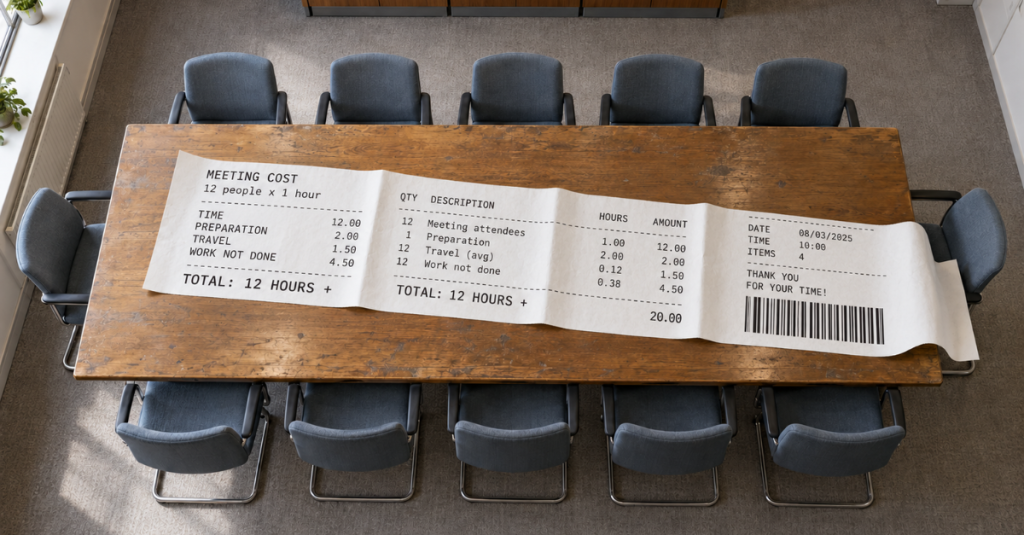
Then there are the moderation meetings. I have sat in enormous moderation sessions where everyone discusses everyone else, with junior grades leaving in batches as we work our way up the hierarchy. A roomful of people makes consequential judgements about colleagues, some of whose work they barely know. Eugh.
Done well, moderation can challenge inconsistent standards and unfair assessments, but putting lots of managers in a room doesn’t automatically make the process fair. Particularly when very few are properly equipped to have the discussion. The word “visibility” tended to come up a lot. Visible to whom? Doing what? Is this person delivering excellent work, or are they just more familiar to the people around the table? Are we assessing readiness for a bigger role, or confidence in talking about it to more senior colleagues?
Moderation is where we should be tackling bias and discrimination, but it is also where we can give personal impressions the reassuring appearance of a collective decision. It’s a system tailor-made to reward style over substance.
That said, show me the receipts
Which brings me back to AI (at last, you cry). Because there is an obvious, useful job for AI here. People further up the organisation reasonably want to see the receipts: evidence that conversations happened, feedback was given, support was offered and commitments were followed through. The catch is that producing those receipts shouldn’t take longer than doing the things they record.
AI can help turn brief, agreed check-in notes into a useful account over time, with links back to the evidence. It can help managers prepare for development conversations without reconstructing a year from memory. It could make it easier to see that a promise of training has appeared in three successive check-ins without anything happening.
Some of this is already being tried. One of our own conversational AI solutions acts as a coach; performing different roles in an organisation so you can test out different ways of giving feedback. You can try asking a really tired but not real nurse if she’s thought about maybe resting more rather than complaining to you, then watch the conversation spiral unproductively. It teaches you to ask questions, pay attention to what’s being said and think about what would be useful, before wading in. You get a chance to learn what the rest of us learned by messing up in real life. Although you should still do that too.
Culture Amp has a feature that checks written feedback for specificity, impact, actionable advice and whether it describes observed behaviour rather than subjective judgement. That’s a useful challenge to introduce before an impression becomes an official assessment.
I like asking AI to challenge my reasoning. What evidence supports “lacks presence”? Have I praised the same behaviour in someone else? Have these people had comparable opportunities to demonstrate what they can do? Am I rewarding contribution, or familiarity?
An AI won’t magically make those judgements fair. If the records mainly celebrate people who speak most in meetings, it will reproduce that preference in beautifully consistent prose. It also needs to distinguish missing evidence from evidence of poor performance. But used carefully, it could help us ask questions that a roomful of humans has failed to ask. You could also gather loads more unstructured 360 feedback and analyse it, and crunch all the data on your possible unconscious biases. But you can do that quickly, lightly, and spend more time acting on what you learn.
Who did the managing?
So this is where I part company slightly with the FT. I don’t think recognisably AI-written language is a particularly good test of whether a manager cares. Someone could write every word themselves and still have paid very little attention to whether they really set their team up for success. Someone else could use AI extensively to organise their notes and give an employee a much better conversation, even if the notes then lack a bit of warmth.
The test is whether the employee recognises the feedback, has had a chance to discuss it and knows what action will follow. AI could make a bad system more efficient at producing convincing paperwork. It could also remove a substantial amount of bureaucracy from a good one, while making the quality of management easier to question.
By all means ask who wrote the appraisal, but ask who gave the feedback, offered the support and kept their promises too.