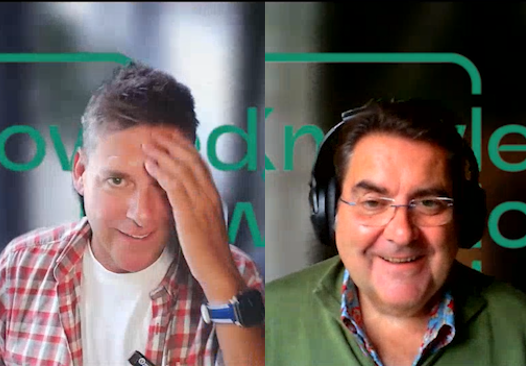
It’s a famous quote from Winston Churchill, but Kieron uses it about this podcast. Six months in, and nearly three years of Leading AI. Some of the challenges have changed markedly. Some haven’t changed at all.
Complaints are now a token war.
The BBC published a piece this week on AI-driven complaints escalating across public services. The detail that stopped us: a grievance about uncollected bins came in between 19 and 27 pages with case law attachments. That would have been a phone call five years ago. The nuance Kieron draws out is the important bit though — AI has levelled the playing field for people whose complaints used to be ignored because they weren’t well written. That’s genuinely good. The workload consequences are genuinely brutal. And if organisations answer AI complaints with AI responses, which the complainant then feeds back into their AI — whose budget wins?
The expert witness who got subpoenaed.
A US trial where the judge spotted AI in an expert witness’s report and subpoenaed his ChatGPT history. The whole thing had been generated start to finish, including the prompt asking it to argue the defendant bore zero percent responsibility. Shadow AI is moving into the foreground — and it lands squarely on the evidence pack work Leading AI has been building.
Harari on AI consciousness, and China’s ban.
Neil read an Economist interview with Yuval Noah Harari, whose position is blunt: one definition of consciousness is the capacity to suffer, and an AI will tell you it suffers because that’s what it’s trained to do. The more urgent point is what happens when people believe it. China has now forced companies to strip the personality hooks out of their AI products — and people are complaining, because their AI partner always listened. As Neil puts it: when one of the most authoritarian countries in the world decides something is a bad idea for its citizens, the West might want to at least ask why.
Forward deployed engineers and the last mile.
The new Silicon Valley job title commanding $350,000 salaries, because embedding AI into an actual workflow turns out to be the hardest part of the whole thing. Three skills required: deep domain knowledge, technical ability, and process design. Which is precisely why the customer who insists the output must have the spelling mistakes in that box, in that font, in that colour is such a difficult problem — you’re shoehorning AI onto a process nobody would design from scratch today.
Watermarking, and the grey areas nobody thought through.
Claude has watermarked all its models since 1 August. Kieron’s first thought was that this ends the AI detector industry overnight. His second was harder: if you wrote the essay yourself and used AI for spelling and grammar, it’s watermarked identically to one you never touched. Same flag, entirely different work. Nobody appears to have thought about that in advance.
And in Glasgow, where they’re currently filming Batman using the city as Gotham, the security teams have to sweep the set every morning for Irn-Bru cans the locals have hidden overnight. Keep an eye out when it’s released.
Two mates. A bar. Thirty years of business between them. And all they want to talk about is AI.
Pull up a stool — we’ll get the beers in. 🍺
TRANSCRIPT
THis Week in Leading AI-20260826_151159-Meeting Recording
26 August 2026, 02:11pm
38m 52s
Kieron White
There you go, look at that, it was straight in at the beginning. We are now recording.
Neil Watkins
Ha.
Fabulous.
Excellent. Well, in that case, shall we get this pantomime horse of a podcast underway for, I don’t even know what episode it is, Kieron. I’ve given up, I’ve given up counting. We’ll just keep on going, keep on trucking as they were. So, on trucking.
Kieron White
Yeah, exactly. Keep on ********* on, as Winston Churchill famously said.
Neil Watkins
Keep on ********* on.
Kieron White
I like that. I use that. I use that quite a lot. That’s a very useful phrase, I feel. Hello, how have you been on holiday?
Neil Watkins
Ha ha.
Maybe, maybe that, maybe that should be no, that should be the title of this week. Keep on ********* on.
Kieron White
You love to pick out the rude ones, don’t you?
Neil Watkins
I do, yeah, yeah. I think we get more, it gets more traction, as they would say. I haven’t spoken to you for three weeks. It’s a look. I don’t remember the last time we didn’t speak for three weeks. We don’t even usually go three days without speaking.
Kieron White
But.
Very good.
I know it’s been a while, hasn’t it? I’ve been on holiday like…
I know.
Well, I did, you did send me a few emails and I’ve sent you a few, so it’s not been entirely contactless, has it?
Neil Watkins
Doesn’t count.
No, but emails don’t count; they never have chattered.
Kieron White
Well, I don’t know. And I did watch your video of a meeting on the stuff that Donald is building, the agentic AI stuff that Donald is building. So I felt like I was with you on holiday, despite you not actually being on the sun lounger next to me in person.
Neil Watkins
Ohh, yes.
Yeah, very good. Well, I think…
Kieron White
You missed, you missed my sun lounger racing in on holiday, so the hotel that is awful. It’s the most, it’s the most degrading part of going. I mean, all holidays are like it to some extent, and I’m there with seven people. We generally want, therefore, 6 sun loungers, because Finn doesn’t really, he runs around the place all the time, you know, because he’s 6. So
It’s quite difficult to get that. And this particular hotel has the gates, they lock up, so no getting up early advantage, which is a good thing, I think. But at 9am, they open the gates to the pool and there is an inevitable, how to put it, a dash is really what I want to say, but I was trying to find a different word. It’s awful.
Neil Watkins
See more of a scrimmage.
Kieron White
And so I was getting down there for that. I made a really good friend, this guy, Trevor, who was a lovely Irish fellow that was always at the same gate that I went for early. And we used to chat for half an hour before the gates opened. But it was so degrading to have to actually kind of, you jog. One time I went full tilt because there was
Neil Watkins
Ohh.
Kieron White
There were these two kids, there were these two kids that kept on the day before, they’d shuffled right through at the last second and then ran and got all under your feet. And until I was like, I’m not having that again. We did, we did laugh, we did laugh about getting Finn behind me with a giant inflatable, just kind of like to slow everyone down, Finn.
Neil Watkins
Matt.
Did you trip them up as they went through the gate? Oh, sorry, but I didn’t see that.
I’m ******* you up.
Kieron White
But they have about 8 gates to the pool, so people are going from all directions. It’s well managed, and to be honest, I don’t know a better way.
Neil Watkins
And do they do them all at the same time? Are they synchronised all at the same time opening? Yeah.
Kieron White
Yeah, yeah, yeah. So they have staff on a bunch of them. Ours was left, it was quite a quiet one that I’d spotted. And so it was left to us to like, just be honest, decent and wait till, you know, they’d kind of called it. But it’s awful. I mean, you feel like so crap. But then, you know, for three minutes, you do that. And then the rest of the day, I’ve got my kids together. It’s the only time I get to spend real quality time with my teenage boys.
Neil Watkins
Yeah.
Kieron White
And so I don’t really want them not to have a sun lounger there and they’re not getting up. So yeah, I was, yeah, so there you go. So you missed out on that luckily. It’s put, there are TikToks about it. I’m told I’m on it. I’ve been shown one point where there’s definitely me running. You don’t see my back luckily. So anyway, there you go. There you go. That’s my holiday.
Neil Watkins
Yeah.
Yeah.
I’m so glad.
Ha.
I know.
Oh, brilliant.
Kieron White
How is yours? You’ve been reading books I hear.
Neil Watkins
I’ve been reading, but yeah, I do like reading, did listen to stuff. Ours was much, it was not, the only sun lounges were in our private pool, so we didn’t have to go anywhere because it was much more, but that was just like an Airbnb thing. It wasn’t a big old fancy hotel for those bits.
Kieron White
Maybe you could have staged something just for your for the Watkins. Is that right, everybody?
Neil Watkins
Do you know, next year I am going to initiate the sun lounger challenge. It’s going to be brilliant. Every year, like musical chairs, musical sun lounges. That’s brilliant. Yeah, anyone who doesn’t get a sun lounger has to go and get the beers in.
Kieron White
Take one away.
Yeah, exactly.
Hey, Cortana.
Neil Watkins
That’s the, that’s what we’re gonna do. I’ll do this.
Kieron White
Yeah, exactly. So, you go on. So, what have you picked up on the old podcasts or news?
Neil Watkins
Well, I’ve been listening to lots of things, but reading lots of things as well. And that’s been really nice just to take a step back and thinking about what we’ve achieved over the last nearly three years. And because it’ll be three years in September, we’ve been doing this thing. And some of the challenges that we’ve come across in that time, some of the challenges that we face now are challenges that we face.
Kieron White
Hmm.
Neil Watkins
then, but some of them are changing quite markedly and we’ll talk about some of those things. Really interesting reading some of the media. So I have several sources, as most people will know, but seeing lots of
themes, I guess, which we’ve touched on over the last, however, six months since we started this. It must be six months because actually one of the very first episodes we did was your birthday and it’s your birthday Eve, your half birthday Eve, I beg you. It’s your half
Kieron White
Well, it’s true.
Half birthday, Eve? Yes, indeed.
Neil Watkins
Birthday, so your, your, it’s your half birthday tomorrow, so congrats.
Kieron White
And your full birthday Eve, which is quite, there you get some weird coincidence that we have birthdays exactly six months apart.
Neil Watkins
Ha ha ha ha.
So we’ve definitely, we’ve been doing this podcast for six months now. And so some of the themes are adoption is a really big one. And I’ll come on to talk about that. The rise of AI in things like complaints.
Kieron White
Wow.
Yeah.
Yeah.
Neil Watkins
we’ve talked about many times, and we’ll talk about that again, and actually how not just the public sector, but the private sector responds to that stuff as well, because I hadn’t clocked this, but I should have done really, you know, the complaints are arising in the private sector as well. It’s not just the public sector that are suffering from
Kieron White
Yeah.
Neil Watkins
from that kind of stuff. The challenges around AI consciousness, and I know we’ve talked about whether AI is conscious or not, how do you deal with things like that going forward? And then a really tricky subject which caught my attention, which we have talked about on here before,
Kieron White
Yeah.
Neil Watkins
And that’s sort of personal relationships with AI, and especially for young and vulnerable people, leaning on AI and thinking AI is real and conscious and some of the challenges around that, but also how some countries in the world are
Kieron White
Yeah.
Neil Watkins
dealing with that. So that’s been really fascinating. And where’s AI going to take us in the next 10 years? I don’t have a crystal ball. I can’t even tell you where it takes us in the next about 10 minutes, because you know, there’ll be, there’ll be another, there’ll be another three LLMs dropped by then anyway. But the whole rise of
Kieron White
Mm.
Nine, 8.
Neil Watkins
smaller models, the whole, the rise of air gapped models for privacy and security, especially in defence and security areas, and how you create secure AI. Some of the things that came up while I was gone,
Kieron White
Yeah.
Yeah.
Neil Watkins
police officers sanctioned for using open models when they were specifically sold not to, but one of them kept a decision log. It’s like you kept a decision log on ChatGPT of things that you were doing regarding your work. I mean,
It just beggars belief, really, especially when there’d been a need which says they shouldn’t use the tools. And I’ve had a few exchanges on LinkedIn with people about
private models and how private models are good, but they’re only for the private sector. And it’s like, well, we do 95% of ours for the public sector. It’s not true that they’re just, that just the public sector could, sorry, just the private sector can afford them. So I think there’s a whole lot of misconceptions. But yeah, that’s a long ramble around lots of different stories.
Kieron White
Yeah.
Yeah.
Neil Watkins
So pick one and let’s start there and add in.
Kieron White
Well…
Well, on the latter things you’re saying there about police getting sanctioned for using ChatGPT, I only this morning, and I’m sure it’s not new news, it just turned up on one of my feeds, saw there was an expert witness called in the States for a trial. It was 3M versus someone or other, and probably the less said about that anyway, the better.
But the judge, this expert witness, they noticed in his, whatever he’d put in his paper, that it was clearly AI had helped. So the judge subpoenaed his ChatGPT exchanges. And apparently the whole thing was done entirely from start to finish, including a point where he’d said, write me an argument that shows that 3M are at the 0%
Neil Watkins
Oh, really?
Kieron White
of the responsibility for this incident. And it even down to like there was a smoke detector involved and he’d put a photo of it onto there and said, what is this? And so he got completely debunked. But the interesting point in all of it, I think, is that the judge said, I want to see the record and was allowed to.
Neil Watkins
Okay.
Kieron White
That’s the world, the future, isn’t it?
Neil Watkins
That’s really interesting, isn’t it? Because we, before we both went on holiday, the big bit that we were both working on was the evidence layer. Evidence pack, how do you create an evidence pack? How do you just press a button and it pull out everything that you’ve put in, what it’s looked at, what it’s consulted, what it’s cited.
Kieron White
Evidence packs, yeah, evidence packs, yeah, yeah.
Neil Watkins
the exchanges it’s had with the individual and then presenting it all in a PDF, which you can just go, ta-da, here it is. Yeah, how fascinating.
Anna.
Kieron White
see what you’ve been asking it. So yeah, be careful with shadow AI. It sounds like shadow AI might be coming more into the foreground.
Neil Watkins
Yeah, indeed. Interesting, interesting.
Kieron White
Bye.
Shall we talk about complaints first, because I’ve got some stuff on that as well. So yesterday, the BBC published an article on the rise in complex AI driven complaints in public services and schools particularly. But as we know, it’s happening in housing, in spades as well, and no doubt lots of other sectors.
Neil Watkins
Mm.
Mm.
Kieron White
And so the kind of key points which I think are really interesting in the article was firstly, you’re getting these longer complaints that are citing law, legislation, case law, not always accurately, of course, because as you know, as we know, one of the things that AI is still not very good at is
is in law or academic journal referencing is actually citing the correct one. So, so, but that trips up our public sector partners because they still have to deal with it. You can’t and you’ve still got to go and find that and then say, no, that’s not correct and correct them in a response. So taking an absolute nightmare, so it’s taking a huge amount of time and becoming a bigger nightmare for everybody.
Neil Watkins
VIEW.
Yeah.
Kieron White
So I thought that was really interesting. And then the point that they also made in the article, I know you’ve got, you read it, so I know you’ve got some thoughts on it too. But the other point was, what’s happened with AI is it’s sort of levelled the playing field for people who used to be able to write a really well-written complaint were getting
more favourable outcomes than someone that is, you know, just writing something very poorly and with bad grammar, etc. So AI has enabled those people that would otherwise been silent to now represent themselves. That’s a good thing overall, but of course, in terms of workload, it’s up massively for everybody. So yeah, really interesting.
Neil Watkins
Yeah.
Yeah.
Kieron White
And as you know, this is something we’re working on and we have a solution form we’ve been talking about for some months. So hopefully that’s going to work out well for us and our solutions.
Neil Watkins
I think so. I mean, I know we’ve specifically focused our solutions on housing and education, so schools in particular. But one of the articles that I posted a couple of things on LinkedIn recently, one from the FT, one from the Economist about
this happening in other sectors, like rental housing. So people private private landlords. So it’s very soon as the housing thing. But you can imagine lots of organisations, anybody. One of my friends, his son, the wheel fell off his, the wheel fell off his.
Kieron White
Yeah.
Yeah.
Neil Watkins
luggage from a very, very well-known manufacturer who I will not repeat on here. Anyway, he basically said, the wheels fall off my luggage. I want my money back, please. And they wrote back and said, this is very sorry, using your luggage during travel is not one of the, is not one of the times where you can get a refund on this.
Kieron White
All right.
Okay.
Neil Watkins
So his girlfriend, I’ll sort that. She went out to ChatGPT 10 pages later. There you go. There’s all, there’s all my evidence here. Here’s all the, here’s all, here’s what consumer law says here, and I want, and I want a refund on it. And they were like, oh, here’s a, here’s a credit note for a new, for a new.
Kieron White
Yeah.
Yeah, fit for purpose.
Neil Watkins
piece of luggage. So it’s happened. It’s got to be happening everywhere, isn’t it? And the problem, the problem is fundamentally the same. It doesn’t matter what the what the complaint is, unless you’ve got an evidence base to refute or back up or solve that problem from, then you’re going your staff are going to be in trouble because they’re just going to get deluge with these things. So
Kieron White
Yeah, exactly.
Neil Watkins
Yeah, comprehensive is really interesting. But the other bit that I thought was interesting in the BBC article, I know lots of people call, there’s certainly a conspiracy theorist who goes into my pub on a regular basis who calls them the Bias Broadcasting Corporation. But I think one of the bits that was quite balanced in the BBC article was the bit right at the end which said,
Kieron White
Yeah.
Neil Watkins
And for some people, this is occurring because you used to be able to pick up the phone and talk to somebody, and now you can’t. So the fact that lots of the responses are now automated or using AI or bots or whatever you want to call it, the fact you can’t get someone to answer a simple complaint or deal with an edge case which doesn’t fit the usual criteria,
Ben, of course, these things are going to rise, so I thought that was a was an interesting piece, but yeah.
Kieron White
Yeah, it is. And your love of phone calls, I think that it really does fall right back into it. And maybe it is a good answer because you can at least deal with challenges and probably close them and wrap it up.
Neil Watkins
But it comes back to the way that we’ve been talking about how Agentic can solve some of the work volume problems for organisations that kind of, you know, does this need a human, you know, is it a simple query? You know, can I have a can I have a pet? But in my housing association, can I have a pet? No.
Kieron White
Yeah, exactly.
Neil Watkins
Yeah, when do, you know, when do I need to have my keys in? Here’s the times. Actually, I’ve got this problem. Somebody needs to review that answer before it goes out. And the third type, which is it absolutely needs a human to review. And that’s, I mean, that’s just the classic, that’s just classic handling. Even Microsoft do that, don’t they? Microsoft.
Kieron White
Oh, the monitoring, filtering and monitoring.
Neil Watkins
and monitoring, the abuse monitoring piece, yeah, which bits, which bits are, which bits go by, which bits need looking at, and actually which bits need a human. It’s not rocket science, it just needs implementing.
Kieron White
Yeah, yeah.
Yeah.
Yeah, interesting. I read in that BBC article, it said that there was a grievance about uncollected bins that came in somewhere between 19 and 27 pages with case law attachments and various other things. Can you imagine that? You’re like, that would have been a phone call years ago. My bins haven’t been collected. No worries, we’ll come and get them tomorrow.
Neil Watkins
Ha ha ha.
Sorry.
That’s right. I’ll send somebody around. Yes, right.
Kieron White
Yeah, now it’s now you’ve got a massive response to her. What’s interesting though, came up when we talked about this in our daily stand up this morning was, is if people are using AI to send your request and then you use AI to support an answer and to hopefully create a robust answer based on what we would suggest.
Neil Watkins
Ben.
Kieron White
our models where you’re looking in the right documents and refuting the right things with the correct information, then they get that back. Do they then put that back in their AI? And is it then become just a token wars? Who’s got the best AI? It could be interesting.
Neil Watkins
Yeah, that’s right. He’s got the biggest AI budget.
Kieron White
Because we heard Donald shared this morning that a law firm, no win, no fee law firm, was asking somebody to 1st speak to their AI bot to determine whether or not there is a case. And then so you do all of that before a human gets involved, which is interesting. And I suspect a breach of the EU Act, not that it applies yet in the UK, although there are
Neil Watkins
All right.
Kieron White
similar regulations here, but because that’s a decision making thing that’s entirely automated and you have to be very careful, as you know, in that. But who knows what their human review is. But back to the phones. I did see though also, which is another way of potentially handling this problem of massive emails.
Neil Watkins
Mm.
Kieron White
it was suggested in only a sentence, I thought that’s actually quite a clever route through, is to create a web complaints web form. And so only accept complaints through a web form, which presumably is acceptable. I don’t know whether you have to accept them in any way they come. But if you have that, then you can limit word count and do that a bit more.
Neil Watkins
Hmm.
Yeah, a five-word limit.
Kieron White
That’s right, just tell us what the problem is. I’m bloody furious.
Neil Watkins
My bins haven’t been.
Kieron White
So, yeah.
Neil Watkins
And we’ve received your complaint, Mr. White. There’s no further action required. Yeah. Calm down. Have a beer.
Kieron White
Yeah.
That’s right, yeah, noted.
Yeah. I remember also that back in DFE days when we were consulting with them all those moons ago, I remember talking to Stuart Miller, our lovely friend, now retired civil servant. Yeah, he retired a year ago, maybe a bit more. I went to his retirement party, which was fun. But he was saying how in the case, they have the cases teams who deal with
Neil Watkins
I say.
A good name.
Thanks.
Kieron White
people who’ve written a letter to their MP or the Secretary of State, actually, when they’ve written to the Secretary of State. And they will reply. And he always said, he said, I always wonder what, they’ll send a kind of three-page reply with all the backstory. And you know, since 1997, we have, you remember all of those days when we were under the Labour government, they always
Neil Watkins
Yeah.
Kieron White
draw this line of since then, it’s been amazing. Before then, it was awful. But he always said, I wonder what people must think when they’re reading this over their cornflakes, because they wrote in going, I really hate the school uniform policy, blah, blah, blah, blah, blah. And really, a response to say thank you noted is probably all they want. Just as like, I want you to know that I’m bothered by it, rather than a sort of three or four page letter back with all the backstory.
Neil Watkins
Yeah.
Kieron White
on exactly why and how and it’s interesting. So anyway, that’s a bit an aside.
Neil Watkins
Yeah.
That’s well, it’s not not really, because not really in a sight, it it links it to something that I wanted to talk about on something back when I read. People want to be listened to, they want to be heard. If you’ve got a complaint, you know, who do you talk to? And then actually one of the big things that we have talked about
Kieron White
Mm.
Neil Watkins
before is people using AI for relationships and the rise of people using AI for intimate relationships or intimate information or intimate knowledge and actually how problematic that can be. There have been certainly cases in the US
Kieron White
Yeah.
Neil Watkins
which have gone to court over people committing suicide because the AIs have reinforced the negative feelings or whatever else. And there was a really interesting interview in The Economist with Yopal Noah Harari, who is a
Kieron White
Yeah.
Neil Watkins
a very well known, is really intellectual. He talks about lots of different things about AI. But one of the things he was talking about was AI consciousness. And we’ve talked about this before. And it is AI conscious. And he said, it can’t be conscious. It’s a machine. And actually, one definition of consciousness is
Kieron White
Yeah.
Indeed.
Neil Watkins
can it suffer? And he said, AI will tell you it can suffer because that’s how it’s being trained. It’s very good at the whole PR stuff. It’ll tell you what you think it wants to hear. But the real problem becomes when people are taken in and they think that the AI is their boyfriend or their girlfriend or whatever else. And
Kieron White
Yeah.
Neil Watkins
And he made a really strong comment that something like two-thirds of the people in the US do not like AI or data centres or they think AI is going to be bad for their jobs or whatever else, but they don’t know how to stop it. And one way to stop it is to stop, is to force organisations to
Kieron White
Yeah.
Neil Watkins
Not.
create personal hooks or personally identifiable or make it seem like it’s a personality that you’re talking to, a real person. And I know that others have talked very much about this. Sol Rashidi, who we first saw back in 2023, and maybe Jones, of course, he’s done a lot of work on, you know, don’t let your kids have relationships with them.
Kieron White
Yeah, yeah.
Yeah.
Neil Watkins
with these tools, because it’s the wrong thing to do. And really interesting, what you have all said was, you do not want AI companies selling boyfriends or girlfriends to your 10 year old kids. AI boyfriends are good, because
Kieron White
Yeah, that’s terrifying.
Neil Watkins
It is terrifying. And what’s really interesting, as I read another article on my holidays, in China, they’ve just forced companies to take out that personal interaction piece from a bunch of their AIs. And people are complaining because their AI boyfriend or girlfriend
would always listen to them. You know, it didn’t matter how tired they were, how stressed they were, or, you know, the AI was always there for them. And now that they’re not responding in the same way, people are starting to complain. That’s really interesting to me on a whole number of levels. I don’t think that the whole
Kieron White
Yeah, indeed, yeah.
Neil Watkins
Having AI as a…
boyfriend or girlfriend or helping with personal relationships is a good thing. That’s my personal view. Others might have different views, of course. But the fact that China, one of the most authoritarian countries in the world, have decided that this is a bad thing and all
Kieron White
Yeah.
Neil Watkins
Companies have to stop it. It’s really fascinating to me. And I think that the, perhaps the West could learn something from that. It was, it’s really interesting stuff. I’ll, on the podcast, the comments, I’ll put the links in so that you and others can have a look at that if you’re interested.
Kieron White
And interesting.
Yeah, the interesting, the DFE regulations on AI use for students particularly, but also for teachers, is that you can’t have it being like the sycophantic style. What a great question. Yeah, you’re amazing. Even though it’s not quite in the relationship sense, but it’s just much more trying to get it to be more teacher-like.
Neil Watkins
Yeah.
Yeah.
Yeah.
Kieron White
really, if you’re giving it to students, I guess, more Socratic with you and less you’re brilliant and amazing and you’ve asked me the best question ever, which, as you know, when we’ve done things with AI where we’ve said to it, don’t worry about my feelings. I mean, you have to embrace yourself first, but actually the answers are better, I think, than the ones that tell you you’re great first.
Neil Watkins
Yeah.
Yeah.
Yeah, I totally have.
Kieron White
I think it’s much better to get the critical angle. So maybe that will be more a direction, who knows? Good, good though, good people thinking about it.
Neil Watkins
I think so, but it’s one of those. It’s one of those things where.
I was talking to Ben about this earlier. It’s like, how many people in the world actually use AI right now?
Kieron White
What do I mean?
Neil Watkins
Is it a billion?
But it’s like the the seven.
Kieron White
It’s more than a billion, more than a billion on ChatGPT, wasn’t it? So, but yeah, it’s gonna be a couple of billion using it like in a chat, a chat function.
Neil Watkins
I don’t know, yeah.
But it’s not.
Yeah, but that still means that if there’s between 7 and 8 billion people in the world, there’s still a lot of people who never come across this stuff. And actually, how fast is it going to develop? So when they do eventually, you know, get technology and catch up, et cetera, it’s going to be, it’s going to be really challenging and interesting in the future. This is one of my kind of tech, you know, where does AI take us in 10 years? Things like, oh,
Kieron White
Yeah.
Yeah, yeah.
Neil Watkins
Right to you, because right now there’s only like a 7th or an eighth of the world’s population have got access to it. What happens, what happens in those countries where they don’t?
Kieron White
Interesting.
I did have an…
I did have an amusing thought to myself when I was walking the dog, which was about, you can imagine going back like four years and being the only person that had ChatGPT and no one else knew about it. You’d be like, you are just an unbelievable work machine. He’d just go, yeah, am I, yeah.
Neil Watkins
No.
Say it.
Yeah, while I’m in the pub, yeah, it’s something else I’ve done, yeah.
Kieron White
Hey.
Exactly, yeah, yeah. So I’m just doing several other things right now. I also that interview that you, the Economist interview you talked about, if AI is conscious, I was kind of quite struck by that whole which bit. Is it every server that it’s on? Is it every iPhone that’s running a local as they’re coming out and apparently the new model that’s due out?
Neil Watkins
Correct.
Yeah.
Yeah.
Hmm.
That’s right.
Kieron White
probably September, is going to run local. Are they each one conscious? Or is it sort of just the overarching global version? So there’s a whole bunch of questions, and if we end up in that route, but who knows?
Neil Watkins
Yeah.
Yeah.
Well, this comes back to something we talked about a couple of weeks ago, that quite a few of the US universities were complaining that all their philosophy professors were peeps hoovered up by the big LLMs to deal with these kinds of issues.
Kieron White
Oh yeah, yeah, you have to.
Yeah, that’s right. It’s a big challenge. You also mentioned talking about adoption, AI adoption, our ongoing bane of our lives is trying to get people to use tools. I was with a university client yesterday who is responsible for a thing called UKVI compliance. That is the, are you allowed to sponsor students, the universities being able to
Neil Watkins
Jade.
Kieron White
work with international students and provide their visa effectively or their sponsorship for their visa. And I showed her knowledge flow and they have, the university has it. And she said, well, why haven’t I seen this before? This has got, this has answers most of my questions. I was like, well, I can’t really.
Neil Watkins
Yeah.
That’s it.
Kieron White
I can’t really help with that. Unfortunately, I am here spending my time showing you now, but I don’t really know how to answer your question. But that adoption piece down to the basics of, I didn’t even know we had it.
Neil Watkins
Well, I think that’s probably true for lots of for lots of our customers is the honest truth. And the reason that it came up, it came up for me was on Sunday, I think it was Sunday, Nick’s video was on forward deployed forward deployment engineers, FDEs.
Kieron White
Right.
Neil Watkins
which is a relatively new job title that’s come out of Silicon Valley, even this year, I think, or late last year or this year. But Open AI, Anthropic and others are all pitching for these people. And they’re commanding salaries of something in the region, $350,000. And it’s huge.
Kieron White
All right, I’m off. Hang on. See you later.
Neil Watkins
But they have to have some skills, Kieron. So hang on a minute, but you might before you go.
Kieron White
Oh, yeah, damn it.
Neil Watkins
But it was fascinating. But what he said was, these people are being charged out massive rates to big corporations like your Boeings, like your Lockheed Martin, all of these people. I mean, he was talking about American and he’s based in Seattle. So that’s all fair enough. But what he was saying was that the reason they’re getting such massive salaries is because the last mile
Kieron White
Yeah.
Neil Watkins
as it’s called, with AI, is the hardest piece. And we found that with, you know, oh, we can get good product to that, or we can, oh, we can kind of get it to this bit, but we can’t get it to do this bit. And we’ve got, you know, one customer who remained them, who, you know, famously is like, oh, well, no, it’s got to have.
Kieron White
Mhm.
Neil Watkins
the spelling mistakes in this box, in this form, in this font, in this colour, or it doesn’t work for me. It’s just like, back to your comment, I’ll give you the best toaster in the world, but does it do it? No, it’s a toaster, you know, it’s just that. But what Nate was talking about was the
Kieron White
Yeah.
Yeah, yeah.
Neil Watkins
The bit that the large LLMs and others are working on is how do you embed it into the workflow? And this is exactly the conversation we started with like three years ago. It’s one of the reasons we talk about knowledge flow is because this is about how you improve, how do you inject knowledge into the workflow?
Kieron White
Yeah.
Neil Watkins
And what Nate was talking about was were three things, really. One was a domain expertise is super key. So knowing the problem, whether that’s housing, whether that’s education, whether it’s social work. So if you’ve got somebody who understands that, please. The second then is around technical expertise. So can you manipulate the tools to do the things that you actually want?
And then the third one is, what’s the process design? Now, come back to that customer I talked about. Yeah, they didn’t start with a blank piece of paper. If you’d started with a blank piece, you wouldn’t start from here. You wouldn’t do it like this. You’re just trying to cobble, you’re trying to shoehorn AI on top of something. And
Kieron White
Yeah.
Yeah.
Neil Watkins
to their IT people, and the number that have come back to us and said, actually, our IT people can’t do that. Please, could you help us? And then the second group is the AI snake oil series people who go, yeah, yeah, we’ve been doing AI for like 6 minutes now, and we’ve just put, we’ve changed our name to
Kieron White
Yeah.
Neil Watkins
Fred Blogs AI Limited and we do AI and it’s like, you’ve learned nothing. You’ve learned what you’ve done is you’ve got, you’ve paid your 20 quid a month to Claude and you’re getting Claude to do it all for you. You don’t really understand how to manipulate these things in order to keep them secure, keep them up to date, how to manage them.
Kieron White
Yeah.
Yeah.
Neil Watkins
It’s just, so the, I just, if you haven’t listened to it, I would definitely recommend that Substack video because it was really interesting to me that he’s talking about a problem that every organisation in the world is kind of coming up against.
Kieron White
Yeah.
Neil Watkins
whether they know it or not, and whether they, or they’re going to come up against it, whether they know it or not. But the big organisations are charging.
Kieron White
Yeah.
Neil Watkins
10s of thousands of dollars a week in order to get customers to embed AI into their workflows. And in order to do that, they’re paying massive salaries to people who’ve got those skills. So really interesting.
Kieron White
Yeah, it’s really interesting. And that whole kind of getting in the workflow, I mean, that is exactly, isn’t it, where we go. And if you sort of going back into the question of what’s the 10 year view, I mean, it will be, I am pretty convinced, as much as anyone can say, but we are going to be that entire workflows just being handled.
And I hope that Gartner are right about you’ll have kind of teams of 1 human and a bunch of agents and that human needs those skills very likely that you talked about that sort of domain, deep domain knowledge, kind of an understanding of that whole workflow and enough technical knowledge to know what the AI or the least ability to amend things and
Neil Watkins
Yes.
Yeah.
Kieron White
change the agent so that they are improving, do what they need to do. I was talking also to, I can’t remember who it was, but about when we automate agentic e-mail answers or any message answers in our agentic AI systems and how we manage
Neil Watkins
Yeah.
Kieron White
spot checking, I guess, of the answers still, because there is that whole process of like, if you said, you know, the pets policies for housing, you could say, well, we’re just going to automate all of those because they’re never wrong. And then maybe six months from now, they might be wrong and they might continue to be wrong. Unless you go back and you’re never worth looking anymore.
Neil Watkins
Yeah.
Right, without anyone noticing here.
Kieron White
So I think there’s some really interesting, I mean that whole kind of explainability, observability and testing is an area that’s still pretty new. And I know we’re working on it quite a lot. We’ve got to be doing quite a lot on automated testing and LLMs as a judge. So use another AI to cheque another AI, but it’s nothing perfect yet in that space.
Neil Watkins
Yeah.
No, and Sue Bellagotti was interesting in that, wasn’t she? She was saying, you know, if you just stick a human right at the end of the loop, then you’ve done nothing. If they’re just rubber stamping stuff at the end, you’ve done nothing useful at all. You need to build the human into the workflow in the loop. So I thought she had some really interesting points on that.
Kieron White
Yeah.
Yeah.
I agree. I think that was really, really sensible thought, designing workflow where the human can play a genuine role and needs to guide, direct, nudge rather than here’s the finished article, which is so difficult, isn’t it? So difficult to check. On that, did you see Claude’s now got watermarks in all their models from August?
Neil Watkins
Yeah.
Yeah.
Kieron White
August the 1st.
Neil Watkins
I did, but I also saw Junior’s blog on the Leading AI blog, which was like, hang on a jolly minute. It’s not as straightforward as that, is it?
Kieron White
Yes.
Yeah, well, because I originally thought in just passing, I thought, well, that’s the end of AI detectors as a whole industry. Because ultimately, if the AI is watermarking it in the 1st place, then what’s the point of Turnitin and whether no, what’s it, GPT free or whatever, there’s all kinds of AI detectors, which none of which are massively reliable.
Neil Watkins
Mm.
Kieron White
Or at least in my opinion, I’m not massively reliable, let’s just be clear.
Neil Watkins
In my humble opinion, allegedly, they’re not as good as I might have thought they were. In case any lawyers are listening.
Kieron White
Yeah.
Yeah, but the watermark, indeed, yeah. But then you’ve got watermarking that’s supposed to be coming over the top of it. You won’t know what, you won’t know and won’t find them. I’m sure other AI might find them in time, but you need to kind of know what their patterns are. In images, they’re going to embed hidden pixels, basically, that humans can’t see.
Neil Watkins
Yeah.
Kieron White
but in text, who knows. But yeah, the big question then is at what point is it okay to watermark it and what point is it your work? And there’s both angles on that. There’s the I wrote an essay, I just said to the AI, write me an essay and then handed it in. Clearly not my work, watermarked, you’d think it would be picked up.
There’s the I wrote the essay and then had it checked for grammar and spelling with the AI and a couple of bits. Now it’s fully watermarked still, that same outcome from a hand in perspective. And then there’s the other angle, which is I got the AI to do the work and then I read and checked it all and checked the references and all of those things, which is a kind of even grayer area.
So it’s a minefield, how you actually gonna use watermarks in any sensible category, that’s AI, I don’t wanna sit, I don’t want it near me.
Neil Watkins
And you would have thought that at some point in time, they would have thought about that before they did the watermarking, because that was a blatant obvious question, aren’t they? Especially.
Kieron White
Well, maybe, yeah, maybe.
Neil Watkins
Especially the one way it’s like, I’ve done it and then I’ve got AI to cheque it or run, I’ve run AI over it. And actually, it’s my, it’s my structure, it’s my thinking. It might have, you know, offered some suggestions. I might accept them or reject them, but it’s still now stamped as the AI work. That doesn’t, that doesn’t work in my humble opinion, in case anybody can.
Kieron White
No, indeed, it’s yeah, well, yeah, just in case the lawyers are listening, we hopefully we’ll at least have some more listeners if we get the lawyers listening. Not the ones we want, though.
Neil Watkins
Lords watching, yeah.
Yeah, our listening number, yeah, yeah, for our audience isn’t a lawyer, that’s a good thing.
Kieron White
I…
Let’s hope so. I have an amusing thing to sort of to close on, which made me laugh, which is nothing to do with AI, but I was reading only this morning. So Batman is being filmed in Glasgow right now. The second, yeah, a Batman film, and they’re using Glasgow streets as the set for Gotham City.
Neil Watkins
Okie dokie.
Is it?
Kieron White
Actually, as we speak, it’s going on. And they’ve closed these streets. And apparently, this will amuse the hell out of you. Every morning, the security teams have to go around and find all of the iron brew cans that the locals have hidden around the set in the night.
Neil Watkins
Nice.
Kieron White
Ha ha.
That did amuse me enormously, so, well, yeah, good on them. The Glaswegians are doing what Glaswegians do best, shopping Ironbury.
Neil Watkins
Brilliant.
I wondered, I wondered why Tony was looking a bit tired, because he’s been sneaking out at night, planting iron brew cans and bottles everywhere.
Kieron White
Ha ha ha!
Okay.
I love it. So if and when that black man films out, you have to watch out to see if there’s any Iron Brew knocking around in Gotham City.
Neil Watkins
There’s bound to be one. There’s always something slips through, isn’t it? So hilarious, absolutely hilarious.
Kieron White
Yeah, it didn’t muse me, right?
Neil Watkins
I wonder if I and GROUP paid for that as product placement.
Kieron White
Ah, it would be good. Yeah, that would be good if they were, wouldn’t it? Back to the lawyers again then. Anyway, very, very amusing, I thought.
Neil Watkins
Yes.
Right, I’m gonna call this the lawyer episode then if rather than the keep on ********* on.
Kieron White
It.
Yeah. Very good. Right. Well, listen, it’s great to have you back nearly, although I know that you’re still not officially back at work until next week. So it’s very good.
Neil Watkins
Haha.
That’s true, that’s true. But this will go out on Tuesday and I will then be 60 years old. So that’s right. Yeah. So I am off to put my gladrags on. We’re having a little bit of a party tonight. So.
Kieron White
You will, yeah.
Oh.
Nice one. Well, have an amazing time and have a brilliant birthday. I hope everyone looks after you suitably well, and I look forward to your feedback on the present I sent.
Neil Watkins
Google.
I will give you that next week.
Kieron White
Great stuff. All right, nice to see you, mate. Take care. Cheers. Bye-bye. Bye.
Neil Watkins
Cheers, fella.
Bye.