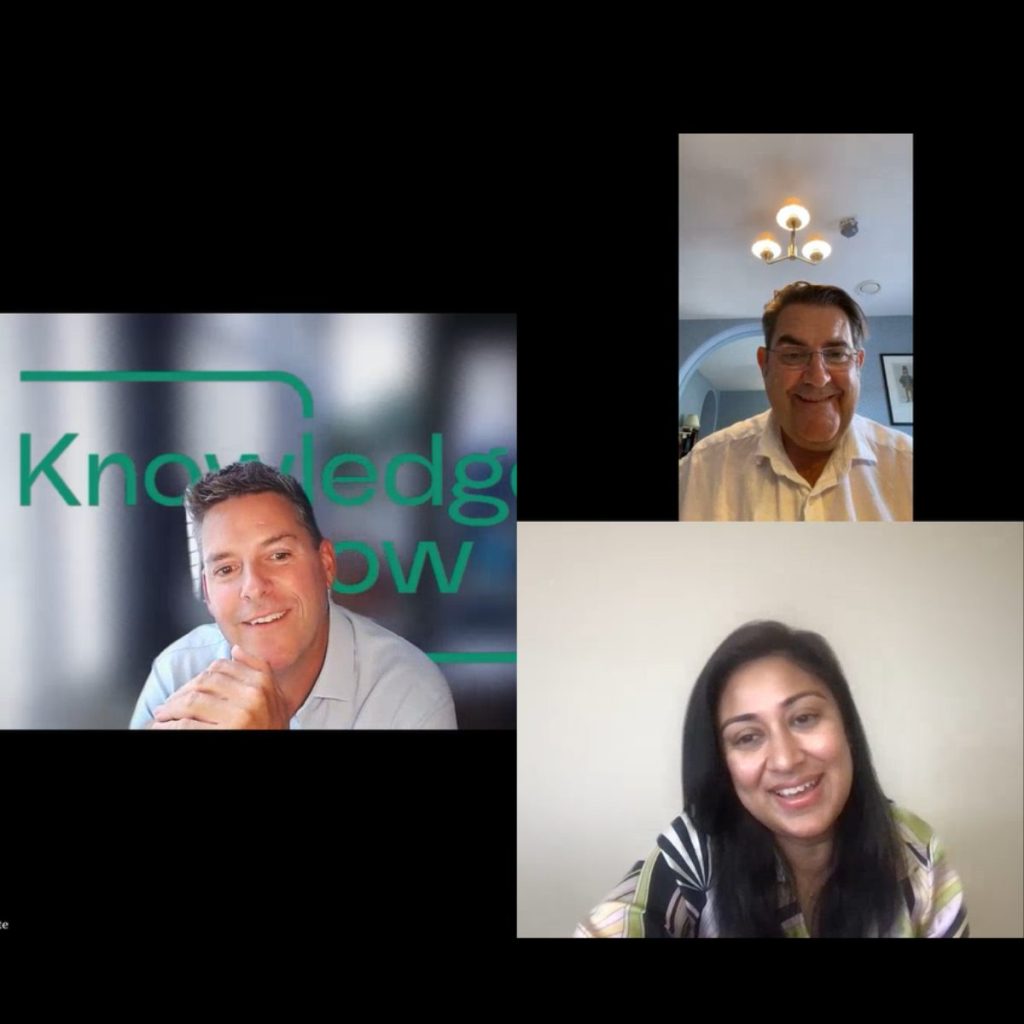
Six legs on the pantomime horse again — and this time we had to explain what a pantomime horse actually is. Su Belagodu joins us from Winchester, Massachusetts (yes, we compared notes on the other Winchester), introduced by our previous guest Nicole Alos. Her first question after the explanation: “Are you the head or the back?” Kieron’s answer: Neil’s very firmly in the front. He’s at the back, but driving.
Su started in computer science until a manager told her she asked too many questions and wasn’t a very good coder, so she should go into product. For Su that was a blessing in disguise. She’s led healthcare startups, co-founded an AI-native company in 2024 when she didn’t yet know what “agentic” meant, and now advises companies on the thing everyone gets wrong.
The warm body problem. Everyone knows you need a human in the loop. So organisations drop a programme manager at the end of a workflow, tell them to approve things, and call it governance. Su’s research, built on 40-plus interviews into a Human in the Loop Maturity Model, found what actually happens. After the first 20 or 30 approvals, confidence in the AI rises, fatigue sets in, and people start rubber-stamping. One human at the end of a workflow isn’t oversight. It’s poor design.
Trust, quantified. Accountability × transparency × accuracy. Accountability means someone answerable who can actually change things. And the answer can never be “it was the AI.” Perhaps her most incisive line in the chat was that enterprises aren’t buying AI, they’re buying confidence that AI won’t add risk. That’s why they don’t adopt. Not cost. Not scepticism. Risk appetite.
One-way doors and two-way doors. Taco Bell’s AI took an order for “lots of water” and added 99 bottles. Annoying, reversible. Get a gas boiler enquiry wrong and it could have life-changing consequences. Design the checkpoints around which door you’re walking through.
Su also talked about pathology study where humans scored 97%, AI scored 98%, and the two together hit 99.8%. That’s co-intelligence in one number.
Safeguarding is a big topic for us and today Su explains why she tells her sixth-grader’s AI class don’t humanise it. Alexa and Siri trained us into blind trust, and no chatbot should replace a teacher or a counsellor.
Management agents that supervise swarms of other agents (a callback to Kieron’s son and his arguing bots). And Su turns the tables at the end to ask what AI adoption actually looks like in the UK, which gets us into the sovereign LLM problem, the Azure Foundry queue where Sweden gets everything first, and Kieron’s line that deploying Copilot as your AI strategy is like handing everyone Excel and calling it data analytics.
We’ve promised her a return at Christmas. In an actual pantomime horse outfit. She says she’ll hold us to it.
Two mates and a third stool with a new friend on. A bar. And all they want to talk about is AI.
Pull up a stool — we’ll get the beers in. 🍺
Su Belagodu is a fractional Chief Product Officer and advisor to Seed through Series B B2B SaaS companies. She is the creator of the HITL Maturity Model and the HITL Health Index, a framework for measuring whether human oversight of AI systems actually works. She writes for Forbes Tech Council and publishes The Framework Effect on Substack.
Website: https://subelagodu.me
LinkedIn: https://www.linkedin.com/in/subelagodu/
Forbes: https://councils.forbes.com/profile/Su-Belagodu-AI-Adoption-Human-in-Loop-Governance-Leader-Humyn-Pulse/48d708b0-6773-4e6e-a014-790390a35d75
TRANSCRIPT
Neil Watkins
Right, well, in case, let’s get this pantomime horse of a podcast underway. And this week’s podcast, there aren’t four legs on the pantomime horse. There are six legs because as anybody who can see the video will be able to see, we have with us a lady called Sue
Su Belagodu
Mm.
Kieron White
Woohoo!
Su Belagodu
Mhm.
Neil Watkins
Bella Godu. Did I get that right, Sue? Excellent. Sue, welcome. Thank you very much. But we’ll talk in a second, but I need to explain something because when we were talking earlier, you live in America and you don’t actually know what a pantomime is, much less a pantomime horse.
Su Belagodu
Yes.
I do not enlighten me.
Neil Watkins
But.
Kieron White
Very wise, very wise not knowing what it is. It’s not, yeah, I think it’s quite quintessentially British, I think, a pantomime.
Neil Watkins
I thought.
A.
I think it is, yeah. It’s A Christmas thing and it’s like a jokey play. It’s on in lots of the theatres. It’s tradition to take the kids. There’s lots of booing at the baddies and cheering of the goodies. Lots of dressing up, lots of songs, lots of really bad jokes. But one of the things in these
Su Belagodu
Interesting.
GROUP.
Neil Watkins
pantomime theatre performances. It’s something called a pantomime horse. And effectively, you’ve got somebody in the front who’s got their two horse legs and then the horse’s head. And then somebody has to be the back end. So there’s two legs, but they’ve got to bend over so that their back becomes the horse’s back.
Su Belagodu
Mm-hmm.
Ohh.
Yeah.
Neil Watkins
And I’ve always thought it’s going to be really quite uncomfortable in either of those, because you’ll be like a straight back if you’re in the front. And I can do the back, my back neck, my back would hurt so much if I was in the back of the pantomime horse. So yeah, it is, if you ever get the opportunity, if you’re in the UK to go and see a pantomime, I’m sure you won’t be disappointed. They’re always a lot of fun.
Su Belagodu
Oh my dear God.
Yes.
Hmm.
Neil Watkins
But yeah, it’s a Christmas thing and I think, you know, because it’s just coming up to August, they’re bound to start being prepared for Christmas anyway. So yeah, they’ll be getting ready. So if you feel the need to appear in a pantomime horse, if anybody ever asks you to get into a pantomime horse outfit, just so you know, just ask my question.
Su Belagodu
Yeah.
No.
Helen.
Kieron White
Yeah.
Neil Watkins
Yeah.
Su Belagodu
That sounds fascinating. I will cheque it out. The only thing I’ve done in London during Christmas is visit Oxford Street. I should definitely do more. But this is fascinating. Now I’m going to not stop thinking about how uncomfortable those two
Neil Watkins
Mm.
A.
Su Belagodu
People are. And what’s a horse with six legs now? I can’t even fathom that. Like, oh my dear goodness, like who’s sandwiched between them now?
Kieron White
Yeah.
Neil Watkins
It.
Kieron White
That’s right, it gets worse.
Neil Watkins
Yeah, yeah, got, got a few.
Su Belagodu
Yeah.
Kieron White
Very good. Well, welcome, Sue. It’s delightful. Go on, sorry, are you speaking? I can’t.
Neil Watkins
OK, enough of that.
No, go ahead, Kevin, go ahead.
Kieron White
So yeah, I’m very key. You work in AI adoption, but I’d love to hear more how you position what you do, but I’m fascinated. It’s one of the biggest challenges we have in what we do is encouraging clients to really make use of tools that we provide, to design tools that do things that they need. But yeah, getting people on the journey is really tough.
fascinated to explore that with you in this session. But tell us about your background. How have you ended up where you are now?
Su Belagodu
Yeah.
Thank you, Kieron. I started as a technical person. I have a computer science background and then I asked a lot of questions. And so my managers all along said, hey, you know what? I think you belong in product because you care about what the customer wants. You’re asking a lot of questions.
And frankly, you’re not a really good coder. So go to the product. So I, you know, blessing in disguise because I loved doing product and designing how systems should look. I then led company, I led startups in the healthcare space.
Neil Watkins
Cook.
Su Belagodu
became a product leader. And essentially that means, you know, I’m the fall man if something goes wrong. And after many years of doing product leadership, I started advising. I didn’t know people pay me for advising. And I was like, I love it. I mean, that’s my side hustle now. And so once
Kieron White
Yeah.
Su Belagodu
Such advising gig turned into me becoming a co-founder of an AI native startup. And this was in 2024. And I didn’t know what Agentic meant then. I was just offering product strategy to that company. And my reason for joining that absolute startup was
I wanted to learn more about AI and how to build with it. Fantastic journey. The technology, AI technology blew my mind. What would take us six months, took us like one month to build an MVP. We were doing really well with small businesses and then
That’s it. There was like a period. We couldn’t progress to bigger companies and enterprises. And that’s when I started to realise that, all right, you know what? Just automation and AI is not great. We need a human in the loop. AI could give you speed and breadth.
of things, but then the human should be the one guiding. So once we adopted those principles, we were able to crack the enterprise deal. The company, the startup did excellent. We got funded by a VC company and they moved to San Francisco. I live on the other coast in Boston. And
I found my love in helping other companies navigate through the same journey that we did. And I kept saying, listen, building with AI has gotten very easy, but positioning and selling AI is hard. So
led to becoming a co-founder to a solo founder. And that’s led me down the path of understanding human in the loop more and not just a warm body in an AI workflow. So what I do now is I do consulting, helping companies understand how to build
good AI products and systems with a human in the loop as part of their design. I teach. And yeah, I’ve also built another small product that’s going to be something, but you know, it’s still in its nascent stages. It helps companies measure how their AI workflows and AI systems are performing. It’s more a
Kieron White
Nice.
Su Belagodu
Finance thing, yeah, that was a long pantomime course.
Kieron White
Oh, yeah.
That’s great. Well, and there’s so much in there. I’d love to hear more about the kind of measuring how they’re working, but let’s get into that in a bit. I think that, well, you talked about sort of product manager role, I guess that’s the point where you become responsible for kind of interpreting user wishes as well as sort of actually owning the kind of technical
Well, not owning the technical, but liaising with the technical side. So is that in your product leader role, does that, is that what you’re spending your time doing? Is it about users and adoption? Is that how you got into that piece?
Su Belagodu
Absolutely, you’re right on the money there. I almost look at as bridging 3 kind of roles. One is the user, of course, what are they going to use, not what we believe they’ll use. Then there’s builders who just want clear instructions. These are your techie developers. You give them a clear instruction, they’ll build to it.
Kieron White
Yes.
Su Belagodu
And then there’s typically the founders or the owners of the company. These are visionaries, right? These are idea people. And seldom all those three things don’t align. The idea people have big grand ideas, and then your users don’t really want to use what you’re building. And the builders are wondering about
what is it you really want to build? Like you said something else last week and this week you’re saying something else. So the product person sort of sits in the middle of these three roles, helping them understand each other and build something solid that users and customers will ultimately
Benefit from.
Kieron White
Yeah, interesting. And that whole kind of leader’s view of what is necessary versus what the team will, I mean, that’s just played out through software forever, really, hasn’t it? Like, I always think the kind of software sale, at least the one of old would be they’d come in and do a demo on perfect data with perfect use and maybe look at what we could do for you and the CEO or the C-suite are going, that’s brilliant. We need that. And of course,
Su Belagodu
Good.
Kieron White
That’s when the trouble really starts, and yeah, getting those benefits is tough.
Su Belagodu
Yeah, I think, you know, the gap that I would see was no one’s really asking your actual customers and users how they’re using their product. And I think that’s when the product role kind of started to take shape because there was C-suite and strategy consultants who were
telling you what to build. And then there were the builders who would follow the instructions and just build it. But who’s going to go out there and talk to your customers, understand the market, and actually start to build the right things? So it was kind of, it was fun because I, at the end of the day, love working with people. And I also understand technology.
Kieron White
Yeah.
Yeah.
Su Belagodu
So it was the ideal role for me because I would speak to the user, speak to the founder, speak to the developer. It’s like being not bilingual, but more than that, right? Because you’re talking different languages to different people, ultimately trying to build the same thing.
Kieron White
Yeah.
Yeah, yeah, I can imagine it. So, it’s like just the impossible task of trying to kind of manage to three sides of a of a three sides of a pantomime horse, perhaps.
Su Belagodu
Yes.
Neil Watkins
And then?
Su Belagodu
Yes, exactly. The six-legged one.
Neil Watkins
Sure.
Have you seen any difference in kind of pre AI and then post AI? So your post your post 2024? Is it still the same kind of issues or have things changed? Is anything is anything different?
Su Belagodu
No.
Yeah.
I think it’s significantly different, Neil. That’s a good question. I think right when AI became a thing, when ChatGPT launched in 2020, the first use case that everybody could think of was efficiency gains. Whatever it took the marketing team to do research, say,
One week would now take them a day. If a product manager or a developer needed to write an e-mail to a customer, they would type it, erase it, type it again, erase it again, because they’re like, wait, we’re not saying this right. That kind of miscommunication got aligned in minutes.
Neil Watkins
Hmm.
Su Belagodu
because now they would just feed that in their ChatGPT window. It would tell you how to communicate given the type of user. And so the immediate value was efficiency gains. This meant things got done much quicker, more efficiently. It took a while for the market to
look at AI applications as beyond just that. What’s after you’ve gained the efficiencies? And now people have more time. You had a person to literally write emails to your customers. Now that can get automated. What next? Right? That’s when AI started to
I think become part of the solutions you were building. What could we not do before that we can do now with AI? But going back to your question, like I think it got a lot better, but also a little chaotic. You know, how I was talking about, there’s a visionary founder and then there are builders who would just want
Kieron White
Mm.
Su Belagodu
definitive requirements and they’ll build to it. What used to take months for these two to align on what to build now takes hours because, you know, a visionary now can use a vibe coding tool and tell you exactly what they want to build. And a product person can take that to a user or even create synthetic users using AI.
Neil Watkins
Yeah.
Kieron White
Mm.
Su Belagodu
and validate that the very same day. So at the end of the day, you have a detailed requirement document for your tech team to build. And then the tech team uses co-pilot and builds that out, the first version of it, in a day. And so the whole feedback loop has
crunched down to from days to hours now. That’s definitely happened. And that was great because everybody was like, yay, you know what? We are awesome. We are going to pump out 100 other requirements. And there was kind of an overload of how much can your user act
Kieron White
Yeah.
Mhm.
Su Belagodu
actually use? What do they really want? But no one stopped to think that because we were all so excited about, look at this shiny new technology, right?
And a couple months after that, and I keep saying months because with AI, things are changing every week with every base model updating itself significantly smarter than the previous version. Things are moving really fast. So a couple months from then, people stop to say,
Kieron White
Yeah.
Su Belagodu
Oh my goodness, here are all these goof ups that’s happening because of AI. Did you guys hear this story about, I think McDonald’s rolled out an AI order system and someone asked it a coding question, right?
Kieron White
Yeah, I think they do their Python script. They said, I want to order some chicken nuggets, but before I do, I need to solve this Python problem.
Neil Watkins
The.
Su Belagodu
You helped me solve this. I know, like, this is food with entertainment and, you know, getting your job done. Like, why wouldn’t you use it, right? But can you imagine the token maxing that happened there? Like, McDonald’s wasn’t prepared for people to ask a full-on Python solution.
Neil Watkins
And.
Kieron White
Yeah.
Yeah.
Yeah, exactly.
Yeah.
Su Belagodu
Similarly, there was another one. There is another chain here in the US called Taco Bell. I’m not sure if Taco Bell is in the UK, but in Taco Bell, someone just keyed in, in their order, they put in lots of water and it added 99 bottles of water or something to that effect.
Neil Watkins
Yes.
Su Belagodu
And then they had to come back and say, that’s not what we asked for. But hey, you just, there wasn’t a human.
Kieron White
Kind of did. He kind of did. That’s a lot of water.
Su Belagodu
Exactly, right? But what was missing there was an actual informed human who would say, maybe in a disgruntled voice, they would say, what does a lot of water mean? How many bottles do you want? Right? That’s not something the chat bot did.
Kieron White
Yeah.
Yeah, indeed.
Right indeed. And I think that human in the loop thing is really, it interests us a lot. We talk about, because obviously, you know, all AI caveat, it can be wrong, you need to cheque. And then I kind of think to how much can you expect a human to cheque? A number of the tools that we produce are kind of
Neil Watkins
Mm.
Su Belagodu
You.
Kieron White
inquiry managers, if you like. It sort of, you know, an e-mail comes in, the knowledge flow, our platform will read the e-mail, look in the policies and data systems, work out what the answer is and draught an answer. It then goes to a human, and that’s how we like it. And we want the human to be able to see the data sources, the
Su Belagodu
Mm.
Neil Watkins
Colmer.
Su Belagodu
What?
Kieron White
into my mate clicking the mouse for a while. I think it’s a real challenge. And you’ll have seen, I’m sure there’s a couple of case law now that have been out there in Germany, the Google summary, the AI Google summary in Germany, they have ruled that that is Google’s, they own that. So if they’re wrong,
Su Belagodu
Cook.
Mhm.
Mm.
Kieron White
that’s Google problem. You can’t just go to AI. And there was the famous case of the Canadian airline that its chat bot said to some chap he could have a refund and that wasn’t really true. And he took it to court and the court in the US said, or Canada, I guess, said, no, you have to stand by what it said.
Su Belagodu
Yeah.
Yes.
Kieron White
So I think it’s a real challenge, isn’t it? Of how do we how do we get humans reasonably checking and how do we kind of flag up the things they should cheque? And it’s a real tough one. Do you ever, I mean, have you tackled any of that? It’s really difficult, I think.
Su Belagodu
No.
Oh, yes, absolutely. What I was noticing, so I’ve used, I created this framework called Human in the Loop Maturity Model based on about 40 plus interviews and work with different workflows, AI workflows. And what you’re describing, Kieron, is exactly what was happening. They were rubber stamping approvals because there’s fatigue.
Kieron White
Yeah.
Su Belagodu
And there was the quality of the output was still slightly better than maybe what if, you know, if they had done it without the AI. So what happens is after the first 20, 30 AI outputs that they’ve reviewed and approved, the confidence in AI starts to increase.
And so the human starts to slack. And so what we’ve, in my work, what I’ve tried to do is help companies define metrics and KPIs that are based on human and AI collaboration. Typically, companies say, all right, you human, how many
Kieron White
Right.
Yeah.
Nice.
Su Belagodu
how many files or emails or draughts did you approve? You know, it’s like a mechanical thing. If they say 100, okay, you met your quota for the day. AI, what was the accuracy of that output? It says it was 80%. Okay, the AI met the quota for the day.
But no one’s measuring the collaboration between AI and human, right? No one’s saying, hey, you approved or you auto approved.
Kieron White
Yeah.
Su Belagodu
less than 5% or more than 5% of the AI outputs? Why did you do that? Like, is there a reason for that? Or anytime a human approves it, there needs to be a one-liner reason for why this is or this is not. Or even just measuring human fatigue. If
Kieron White
Mm.
Yeah.
Su Belagodu
You put one human at the end of the entire workflow and call it human in the loop, then that’s just poor design.
Kieron White
Yeah, interesting.
Su Belagodu
you know, what it should be doing is checking in with the human at the right times and automating the right steps. So the way I’ve seen this managed is understanding what sort of use cases need to be fully automated, which ones require a human oversight,
where they review something, make a few changes, give feedback to the AI, and push it forward. And which of them absolutely require a human? So there is a confidence threshold that you set for each of your AI outputs. And based on that confidence threshold,
you then redirect it to different sources. And that’s all part of your system design.
Kieron White
Yeah.
Mm.
Su Belagodu
I referred to this a little earlier, which is the warm body problem. People realise that you need a human in the loop, and so they would just drop in a programme manager or a consultant and say, hey, start approving these things. You are the responsible human. They’re not going to be effective in their role.
Kieron White
Yeah.
Su Belagodu
if they don’t have a way to shape the AI output.
Kieron White
Indeed. And I think that, because it seems to Gartner’s sort of view of the world is that we’ll have the businesses that are sort of an individual running a team of agents. And in that model, I think it sounds like what they’re getting at is exactly that. You’re responsible for the design, the data that’s driving it, how it works, and then obviously it’s output.
Su Belagodu
Yeah.
Kieron White
so that you in theory own it like you would if you’re hiring a team of people and managing them to do a task and trying to get people’s skills to a level where they’re able to do that, I think is a huge challenge for everybody. But it sounds to me like a very sensible future where you, it’s effectively loads and loads of product owners, but they’re responsible for this, you know, little team or swarm of agents if they need that.
Su Belagodu
Yeah.
Absolutely.
Kieron White
To do the work.
Su Belagodu
Absolutely. There’s quite a few mature systems out there where they have a monitoring agent or the management agent, right? There’s one product, no endorsement here. This is something I’ve personally used called Wayfound. They create these management agents.
Kieron White
Yeah.
Su Belagodu
These agents manage your swarm of agents. They’re responsible for making sure that they’re working as per design. They’ve routed these requests based on confidence threshold accurately. They’re giving feedback to the human appropriately. So this management agent then manages that
Kieron White
Nice.
Su Belagodu
team of agents. And so the human now is only responsible for that one management agent. So that’s also part of your design, right? You can’t have, you can’t say adding agents will increase efficiency and then add one human for every agent you deployed, right? So how do you do it more efficiently?
Kieron White
Yeah.
Yeah.
Yeah.
Su Belagodu
That’s kind of how I’ve seen multi-agent systems work. You need these management agents dropped in. Because can you imagine the damage in a multi-agent system? If one agent gets an incorrect output, it triggers 10 other agents.
Kieron White
Yeah.
Yeah, indeed, yeah.
Su Belagodu
You know, the output is catastrophic.
Kieron White
On the podcast some time ago, I was sharing with Neil my son, who’s 20 years old and at university and has built a load of Claude agent stuff, which I love and I encourage enormously. But he said he burnt, they burnt all of his tokens with two of the agents having an argument. And he said, and it’s exactly that model. And the thing just obviously took off at the speed of AI.
Su Belagodu
Matt.
Neil Watkins
The.
Kieron White
arguing with each other and then so he built a project manager agent that now his agents aren’t allowed to talk to each other anymore. They can only talk back to the project manager who judges, decides what to do.
Su Belagodu
Yeah, yeah, and that, imagine that in an enterprise.
Neil Watkins
Yeah.
Kieron White
Exactly, with, you know, I mean his token burn was I think $5 or something. So it’s kind of like, you know, it was annoyed. But yeah, imagine when it’s like Amazon and it’s 500 million, which happened. So I hear allegedly.
Su Belagodu
You.
Yeah?
Neil Watkins
Yeah.
Su Belagodu
Yes, there were a lot of memes showing, you know, money down the drain literally because of the upsetting. And this again is lack of governance as part of design.
Kieron White
Yeah.
Neil Watkins
Mm.
Kieron White
Yeah.
Yeah, interesting. I really love that. I really love that thought process of finding the right moments to bring the human in and cheque the right stuff. We have, we have a, we call them our stepped, our stepped runners in knowledge flow, which do that. They will go through and say, oh, here’s the evidence I can see. Cheque that. Are you happy? Am I right? You know,
Su Belagodu
Yeah.
Yes.
Mm.
Kieron White
within reason and then, okay, I can now move on to the next piece. But they have sort of moments in the cycle. But I think we did that more out of, it wasn’t as cleverly thought through, I don’t think, as you have done. I think it was more sort of like that’s what’s necessary for this task with explainability and governance involved. But I love the, I love that as a principle.
Su Belagodu
Yeah.
Kieron White
For product design, that’s really sensible.
Su Belagodu
Yes, absolutely. You know, what I started to think about was, especially when we were talking to enterprises or SMBs, they weren’t just buying AI, they were trying to buy confidence that AI will not add more risk. That’s all.
Kieron White
Yeah.
Yeah.
Su Belagodu
right? So your AI model could be fancy, could solve a math Olympiad quiz and whatnot. But if they believe adding that will increase their risk, they’re not going to adopt it. And so I started to think about, all right, so that correlates to trust.
Kieron White
Yeah.
Su Belagodu
And how do you kind of define or quantify trust? It can’t be just a feeling, right? Like all these years, trust is something marketing and brand building does because it’s still a feeling. It’s invoking a feeling in your users and customers. But when it comes to AI, trust needs to be quantified.
And the way I was able to kind of define it for my customers and friends as well is I look at it as accountability times transparency times
Kieron White
Mhm.
Neil Watkins
What?
Su Belagodu
Accuracy.
Kieron White
All right.
Su Belagodu
Now, accountability is basically saying who’s responsible for it, and the answer can never be it was AI, is who’s going to hide behind that, right? It has to be an accountable person who can make meaningful changes if something goes wrong. Transparency is, Kieron, what you referred to in knowledge flow, where there’s explainability.
Kieron White
Yeah.
Su Belagodu
right? It’s talking to your users and showing them why it’s doing something, you know, showing that reasoning. And then there’s accuracy, which primarily depends on the model you’re using behind the scenes, like the base model, but also your own training data. Have you
Kieron White
Yeah.
Su Belagodu
trained that model on your data, how accurate is it? And if you do all of that, I think for each one of those steps to increase trust, you need an actual human who has the domain knowledge to be able to do that. So
Kieron White
Yeah, exactly.
Mmh.
Su Belagodu
When we talk about trust in AI, you can’t develop trust with technology without a human involved. And that’s kind of what kind of led me as well to develop this maturity model to help people understand how do you define trust, because that directly correlates with adoption.
Kieron White
Yeah.
Su Belagodu
People are not adopting AI not because it’s expensive or because they don’t believe in technology. They don’t have the scope to add more risk, right? Yeah, and you asked me earlier on, what is that product that I’m building and how does it help?
Kieron White
Yes.
Su Belagodu
And that’s precisely what it does. Like human pulse is something that plugs into workflows and then tells you the health of your AI systems. It tells you, hey, here’s your index. It gives you a score. It’s essentially measuring your entire workflow against
Kieron White
Yeah.
Su Belagodu
6 dimensions, something like, you know, how often are you intervening and giving feedback? How well are you training the base model? How is the performance of the human involved in it? So it takes all of that and the trust equation and gives you a score and tells you how to improve it.
Kieron White
Yeah.
Yeah.
Su Belagodu
And where currently people are using it is, there’s either a product or an engineering lead who uses it to monitor the AI systems they’ve deployed in their teams. And then the C-suite has a governance overview, which says, what are all the AI workflows we have in our company?
Kieron White
Yeah.
Su Belagodu
How are they doing? Are they performing well? Are they subpar? And then there is a correlation to the EU AI Act and the NIST AI Act here in the US, which basically says, are you compliant or will you not be compliant? Is there a gap in the way you’ve built it? Or are you going, you know, is your board going to laugh at you when you present this to them?
Kieron White
Yeah.
Yeah, indeed. Interesting. I love it. That’s really good. So one of the things that we’re right now adding into our knowledge flow agentic side of things is, so in an e-mail hand I’ve mentioned already, so reads the e-mail, puts the draught answer in front of the user. The part that we’re now doing is when they edit that, if they edit it,
Su Belagodu
So, that’s kind of what is, yeah.
Yeah.
Kieron White
We’re tracking what they’ve changed so that you can classify it as, was it a tone of voice thing? Was it an accuracy thing? Was it wildly off? So we can then start to see which work, which use cases, I guess, through the workflow are low risk and never get changed. So we’ve got data on it as opposed to
Su Belagodu
Mm.
Yes.
Yes.
Kieron White
humans telling you they liked it or didn’t like it. The idea being that eventually we deal with, for example, social housing providers here. So and they will deal with a load of inquiries all the time. One of the biggest ones is, can I have a pet dog? And the answer is invariably, yes, you can. But they’ll get some of the large we deal with
Su Belagodu
What?
Yeah.
Kieron White
one of the very largest in the country and they get that about 100 times a day. And so it’s like, well, actually, can we, let’s look at how often it gets changed by the humans currently using it. It never gets changed. You know, if it, or if it is, it’s so minor. And then there’s another thing which I think is really interesting, which is a what if
Su Belagodu
Hi.
Yeah.
Mhm.
Yeah.
Kieron White
cheque. So if we had sent it without the human changing it, what would have been the impact? And so, so what is it? It’s an AI run over of like asking it to a risk analysis. So for example, if someone says my gas boiler in my house isn’t working, that potentially to giving them wrong information could end up in
Su Belagodu
Yes.
Right, how do you do that? That’s fast.
Hmm.
Kieron White
of gas explosion or some horrific thing. So whereas telling them they can’t have a dog when they could have had or the other way around is kind of like an irritant, but not, you know, not exactly life threatening. And so they, you know, immediately the risk is a different level. And then when it’s even more minor, like, what time do I have my keys into the office? And it’s like, well, you can.
Su Belagodu
Like.
Yes.
Yeah.
Kieron White
from 930 or is it 10? You know, again, you’re kind of like in inconvenience, but not catastrophic. So it’s kind of just a risk assessment on what would have happened. And all of that data then can come together to help you inform, right, these things, let’s push them to full automation. The question we haven’t answered yet, though, which is interesting.
Su Belagodu
Yeah.
Right.
Neil Watkins
I.
Su Belagodu
Right.
Kieron White
is when you push pets to full automation, how often do you then still cheque anyway? And we’ve got to kind of, we’ve now got to work on that because you know, it could be, it could be silently wrong in three months time, wrong all the time. And no one’s looking.
Su Belagodu
Yeah.
It will.
Listen, it will or it may be because it again depends on if the question is has a binary response or not. What if the question is…
I have a pet, but I’m going to add five more in the next round.
Kieron White
Yeah, exactly. Or it’s a flat, or it’s a block of, it’s apartment block and you’re not allowed pets in that apartment block. There are, there are nuances, but no exactly a building in enough of the kind of, you know, we use RAG AI, retrieve augmented generation to make sure is it looking at the right things. But yes, and but that drift that happens anyway, I worry about is that this thing’s now automated and running and you’re never going to know it’s wrong until
Su Belagodu
Right, right.
Kieron White
Something bad happens, yeah.
Su Belagodu
It actually is strong. Yes, yes. I love that you have that as part of design. That’s just the human giving feedback to the AI to make it smarter, right? And early on, I’d done this talk where I said, who really is in the loop? Is it AI or the human? We often assume that
Kieron White
Yes.
Yeah.
Su Belagodu
AI is helping us get better, but it should be the other way around as well. Like, it’s our responsibility to make sure that the output gets better for the AI, right? And…
Kieron White
Yeah.
Yes.
We had so the other side of it, the part of the reason that we built this data based, the data focused, evidence focused, I’ve had many a time and the best example, I won’t name the client, it was an HR team and we had built a HR assistant, a policy assistant, a RAG, based on RAG AI, very accurate. I mean, our tools are really good in that space.
Su Belagodu
Mmh.
Mm.
Okay.
Kieron White
And they kept saying, well, we don’t like it. And they never could give a reason. And I eventually thought, it was always kind of mind the things like, well, we wouldn’t have written it like that. And I’m like, OK, well, how would you have written it? And they’d show you, you know, they’d say their response. And it’s kind of just a slightly different approach. And you’re thinking, this is not any longer about
Su Belagodu
Mm.
Kieron White
accuracy of the AI is that this is about you just not liking it for all the reasons that some people may not. Is like, hang on a minute, what do I do now? If this is, if this AI tool is going to do this, what I do all day. So it’s kind of some of that is that if we can get actual data, then we can change that argument slightly into
Su Belagodu
Yeah.
No.
Yes.
Kieron White
There are better things, there’s all these difficult things that does need a human, all this easy stuff we can potentially take away from you.
Su Belagodu
What?
Yeah.
One of the ways to look at it is, I think you said it quite well, which is, is that decision reversible? Is that a one-way door or a two-way door? If your AI
says, like in that example of the number of water bottles, not catastrophic, or even in your example of a pet, if it says no, and then they cheque with you guys and you say yes, nothing’s happening. But if it gets the water heater question wrong, then something catastrophic can happen. So
Kieron White
Yeah.
Yeah.
Su Belagodu
One way to look at it is that, is that a one-way door or is it a two-way door? Can you come back and reverse this? And as for, you know, people that do not adopt because it’s not just right,
Kieron White
Yeah, yeah, nice.
Su Belagodu
I found that it’s got a lot to do with education as well, educating them on how to use it and also that it’s not a risk to their jobs. We had a lot of pushback in my first startup because people who are ultimately assessing the tool and purchasing it, we were automating their workflows.
Kieron White
Yeah.
Yeah.
Su Belagodu
And so the C-suite would be like, oh my goodness, ROI, let’s go, we need this tool. And then they would have the tech person assess it and they would come back and say, oh, this isn’t quite right. You know, X percent of use cases slipped through your system and whatnot because
Kieron White
Mm.
Su Belagodu
threatened, right? So you start with the leadership is what I say. If leaders can convince their teams that increased ROI doesn’t necessarily mean them losing their jobs, then that can do really well for them. Because roles are merging. I mean, that’s not something we can deny.
Kieron White
Yeah.
Yeah, yeah.
Su Belagodu
Before, there was a specialist role for everything people did, and now it’s moving towards generalists. And so I think it’s a good opportunity to tell people, well, if you use this, you now have experience using an AI product. You’re smarter for it.
And, you know, there are other responsibilities you can take up, not just do this task that’s going to be automated. Because if not today, then maybe two years from now, that kind of a role will definitely not be around. And so the sooner you get comfortable using AI tools,
Kieron White
Yeah, indeed.
Yeah.
Yeah.
Su Belagodu
The sooner you get comfortable working with AI as a teammate, the better off your own future is going.
Kieron White
Yeah, indeed, I completely agree. And I see no evidence of job losses in any of the things we do, as you see people being able to focus more on the things they want to do. I often talk about in teaching, we work a lot in education and teachers, 50% of their time is spent outside the classroom doing all the things that they have to do in a load of reporting, a load of
writing stuff and admin. AI, as I would say, can handle a lot of that or can certainly help with a lot of that. Here’s the big thing is 25% of teachers in the UK leave within two years of starting because it’s not the job they thought it was. The number one reason they give where they’re leaving is because of the
50% of the time they spend doing admin. And that’s awful to think that these people have gone through their training, it’s been their desired world. They, in the main, enjoy the part that we would think of teaching standing in front of a class of students, but the rest of it drives them away. And that is a prime example for me of where if we can
Su Belagodu
Yeah.
Yeah.
Kieron White
take away or at least help enormously with all of that drudgery. We can make teaching an amazing job and give people back the time to be amazing at it and focus on what they need to do. And it’s so true of every job in different ways. Teaching is a bit more emotive, I think, as a subject, but it’s true of a data entry clerk or whatever. They probably don’t want to do
Su Belagodu
Yes.
Kieron White
Half of what they have to do.
Su Belagodu
work either. I think it applies to healthcare as well. Like, we’ve been seeing how you typically think, oh, doctors are so well accomplished and they probably won’t feel threatened by technology, but there is an adoption issue in healthcare as well, right? Because, but then they hide behind the governance and compliance and all of that, which
Kieron White
Yeah.
Su Belagodu
is probably right, but then, you know, you can use it for your admin work. You know, with no patient data, you can still use it. And there’s been results and experiments that have been run where, say, a pathologist reviewed 100 samples and they were 97% accurate with
Kieron White
Yes.
Su Belagodu
diagnosis, AI did it independently, and it got 98 or something like that. But when we put them both together, they got 99.8% right. Right. It’s that co-intelligence that’s really going to push the envelope.
Kieron White
Yeah.
Yeah.
Perfect. Amazing.
Yes.
Su Belagodu
And the sooner people adopt AI in their workflows to then understand, hey, this is where my intelligence is required and this is what I can automate, that’s a behaviour change for them as well, right?
Kieron White
Yeah.
Yeah, indeed. And I love so and measuring impact. Sorry, Neil, I’m conscious. I’m there’s last question from me and then I’ll let Neil get a word in edgeways. Yeah, probably not. But so, so one of the things I often try and get people to think about is not measuring just on efficiency, but measuring on where it matters. And again, education.
Neil Watkins
Better not.
Su Belagodu
Anand.
Yes.
Kieron White
application processes. So students waiting two weeks to hear about their application, it needn’t be because there’s this compliance cheques, that stuff AI can smash and quick oversight. It doesn’t take a lot of human because it is literally, is that data correct? Does it fall inside the rules? And then a few cases of outside that you could give them an answer within minutes.
Su Belagodu
Ohh.
Yeah.
Kieron White
That’s a wonderful thing for a student that can help them get on with what they need to be doing in their life. And I’m always reminded of the hospital example in the UK here where they were using AI to look at, I think, CT scans. So and that process is you get the results two weeks later if you have a human do it.
Su Belagodu
Mhm.
Mm.
Kieron White
which is probably not two weeks of your life that you’re really happy about. And whereas the AI was giving the early, pretty much the, you’re fine, you can go home, not worry about it before they’d got their shirt back on. So you’re just getting dressed and it’s going, no, you’re good, off you go, you don’t have to worry about it. That kind of world, I think that’s the impact I really seek out is where can it actually make a real difference
Su Belagodu
Yeah.
Yeah.
Yeah.
Kieron White
to people’s lives rather than that efficiency, which is nice. I’d like to take away the drudgery from people’s jobs. Saving people an hour here and there is great, but ultimately the real prize in my mind is how do you do those transformational things that really make a difference.
Su Belagodu
Listen, if people, not everybody sees saved time as a good thing, right? So there’s always people who would come back and say, well, why would it take a doctor two weeks and this one did it in minutes? I don’t trust its output. And that’s when you get those semi
Neil Watkins
Be.
Kieron White
Right, interesting.
Yeah, indeed.
Su Belagodu
knowledgeable people who come and say, have you heard about hallucination? What if this hallucinated? Have you heard that AI outputs can be completely wrong and it’s biassed? What if it doesn’t know how to read my data? And I think building those solutions with governance and human in the loop design
Kieron White
Hmm.
Su Belagodu
can help kind of squash those concerns that people have. Because those are valid concerns. Like we all know that AI will get analytical stuff right. If it’s looking at that scan and all it has to do is based on data points, it will get it right. But it will miss the nuances about cultural bias.
Kieron White
Yeah.
Mhm.
Su Belagodu
or ethnicity.
Kieron White
Yeah.
Su Belagodu
all of those points that that’s the nuance that the human can add, right?
Kieron White
Yeah, and I’ve heard in that same exact story, it’s not the same example, I don’t think, but where the AI is completely correct about saying you’re all clear, but it’s missed the fact that there was something else wrong. But it wasn’t trained to look at that, it didn’t care about that thing, you know, obviously the human will
Su Belagodu
Yeah.
Yeah.
Kieron White
potentially notice other things as well. So yeah, there’s a little way to go, I think, isn’t there, in trust and accuracy in the models themselves, but.
Su Belagodu
White.
Neil Watkins
Yeah.
Su Belagodu
Absolutely, absolutely. There are some ways to go and we can only get there if we use it and then give it feedback. I’ve seen a lot of people that treat AI as a one-way thing where they just consume it. If they don’t like the output, they’ll drop it. And I’m like, no, give it feedback. It’s looking to learn. It’s looking
Kieron White
Yeah.
Yeah, yeah.
Su Belagodu
And the better it gets, the better your life gets. So it’s so important to have that relationship with this technology. One caveat, because I think you said some of your users and customers are also in education. One thing that I always tell kids,
Kieron White
Yes.
Su Belagodu
of all ages that are using AI. Like my kid is in 6th grade and they have an AI class. They have a subject. Yeah. And so what I tell them is, don’t humanise AI. We already all, you know, we have names like Alexa, Siri,
Kieron White
Nice.
Right.
Yeah.
Su Belagodu
And you’re starting to humanise it. And what that could land up doing is blind trust. So it’s good to be, you know, it’s good to question AI as technology. And I always say, don’t humanise it. Don’t think it’s going to give you life advice and
Kieron White
Yeah, interesting.
Su Belagodu
You can just rely on that and not include the human that’s your teacher or counsellor or someone who has good intentions. Don’t, they’re not a replacement for any of those things, especially teachers as you brought up.
Kieron White
Yeah.
Yeah, that’s definitely good advice, isn’t it? Definitely good advice.
Neil Watkins
Yeah, something we’ve pushed pretty heavily here and we will continue to do so because there’s been lots of things in the press, as you know, about people using AI for advice and ending and ending badly. And speaking, just speaking of ending, we’re coming to the end of our time together, unfortunately, which is really, and I’ve really enjoyed listening to the answers, even though Kieron wouldn’t let me get a question inside with.
Su Belagodu
Yeah.
Okay.
Neil Watkins
But that’s okay, as I’m used to it by now. It’s only 25 years, is it 20? I don’t know how many years it is now. So I’m kind of used to it. But so we should give you the opportunity. I don’t know if you’ve got any questions for us. It’s been like it felt just sitting here watching it, it’s felt like a bit of an interrogation. So apologies for my fellow
Su Belagodu
You.
Neil Watkins
a pantomime horse interrogation colleague. Have you got any questions for us?
Kieron White
I thought it was a good discussion.
Su Belagodu
You.
Well, Neil, that’s sweet of you. My question was, are you the head or the back?
Neil Watkins
Yeah.
Su Belagodu
I pretend to be nice.
Kieron White
Ha!
I think Neil was very firmly in the front of this pantomime horse. I’m very much at the back, but driving.
Neil Watkins
Up.
It it feels like we take turns is the honest truth.
Su Belagodu
No, this is like…
Kieron White
That is true. It depends, yeah.
Su Belagodu
This has been a fun conversation. When you said, speaking of ending it badly, this is time to end this. And I was like, oh my gosh, Neil, no.
Kieron White
Ha ha.
Su Belagodu
But I think that I’m really curious about what the state of AI is in the UK. In the US itself, I feel if you’re on a different coast, like the West Coast, San Francisco, California, every hoarding you see when you’re driving from your airport to the hotel is going to be an AI ad.
Whereas on the East Coast, it’s not there yet. But we’re a lot of good companies here. We have Lovable, we have, oh my gosh, I’m blanking and they’ll hate me for this. Sorry, Boston. But there’s a really good AI push in the Boston area as well. But there is a difference. So what is the state of AI in the UK and are people adopting it? Are they
Neil Watkins
Okay.
Kieron White
Yeah.
Su Belagodu
you know, still on the fence.
Neil Watkins
I think it’s a really interesting question, actually. We should give a little shout out to Nicole Alos, who actually put us together. So thank you, Nicole. It was very kind of you to recommend to. And she asked a similar question, but she had a slightly different one, which was, how do people in the UK
perceive the tech companies. And I don’t know whether, you know, some people, I think it’s probably in all countries, you know, some for some people AI is bad and or tech companies are bad and blah, blah, blah. But I think I think it depends on who you, there’s a lot, obviously we move in circles where there’s lots of talk about AI because we’re in that business.
Su Belagodu
GROUP.
Neil Watkins
And I think I was reflecting on some of your earlier answers about adoption in various sectors and various industries. And I think lots of people know about teachers take education. We all know kids are using AI to help do their homework, but actually how are teachers helping them get better? And I think there’s a lot more of that.
stuff than it probably was two or three years ago. There’s a lot in the…
Su Belagodu
Yeah.
Neil Watkins
press about AI all the time. There was a claude leak just in the press yesterday, which was reported here. So there’s lots of kind of data security concerns. There’s lots of concerns about things like autonomous weapons. I don’t know whether, you know, I don’t know how much in the US you get to see things like
Su Belagodu
Yeah.
Yeah.
Neil Watkins
Ukrainian war or whatever, we get a lot of that stuff in Europe, of course. And then kind of automated systems, drones, etc. I think in the UK we have some big challenges, like why don’t the UK have our, there’s no sovereign LLM, you know, there’s talking
There’s talk about sovereign data centres in the UK. I think for one of the challenges for Kieron and I and Donald, who’s the who’s the CTO for us, you know, we we get lots of people who are using the latest models like Claude or GPT 5.6 and sorry, called Fable and.
Su Belagodu
Mm.
Neil Watkins
Chat 5.6, but actually what we produce is confidential and private, and we actually build the solutions in customers as your tent, but you can’t get the latest models in the UK. We are running months behind, so it’s really…
Su Belagodu
Mhm.
Oh.
Neil Watkins
interesting that we don’t get access to those things within the Microsoft Azure Foundry. So, so we’re trying to, we’re trying to keep up, I guess. There’s lots of talk in the UK right now about things like, you know, should you be using the Chinese models because they’re
open and fast and free and lots of concern about data. I don’t know whether you’ve got those same concerns in the US.
Su Belagodu
Yeah.
Neil Watkins
So, I think it depends on, on, I think it depends on who you talk to is the understanding. You asked a really small question which has got a very big answer.
Kieron White
And some stats, 76% of teachers use AI. That’s based on a February 2026 survey of many thousands of teachers. So that’s pretty good. I like that. And I think 83% of businesses in the UK are using AI in some way. Most of that just means they’ve used co-pilot.
Su Belagodu
Mm.
Kieron White
So it’s kind of, and in my mind, it’s kind of makes me cross because people, I always say deploying co-pilot as your AI strategy is like giving everyone XLS your data analytics strategy. It’s like, great, it can help enormously, but it’s not going to be the answer on its own, that’s for sure. So it’s, so yeah, so yeah, it is getting quite a lot of use.
Su Belagodu
Yeah.
Yeah.
Yeah.
Kieron White
I feel over three years of doing this job, the argument is no longer about you need to adopt AI. It is how should we adopt AI? It used to be, I’m not so sure. Let’s see. Now, that’s gone. People are aware they’ve got to do it. It’s just they’re not sure now what to do.
Su Belagodu
But.
Yeah.
Right, right. That makes a lot of sense. Yeah, adopting it responsibly has been the theme here as well. I want to quickly touch upon two small things you mentioned, Neil. One was lack of access to the latest model. So you guys get the Fable access, access to Fable 4.
Kieron White
So this is inside Azure Foundry, what as Neil was talking about. So Microsoft released to the different regions, different models. Sweden get a lot of favour in the EU. They can put, they can, I mean Europe, they can get, they get all the latest models straight away. We get them a long time later. We just got access to 5.5.
Su Belagodu
Inside.
Oh.
Yeah.
Kieron White
ChatGPT 5.5 within Azure Foundry. So, which is, yeah, it’s slightly annoying. We did, we got Fable until your Washington decided that no one was allowed it, but they said no non-US citizen, didn’t they? And so it was pulled for a while. But we did, so we do get those models, I think, pretty much as they’re deployed on the public.
Su Belagodu
Oh.
Kieron White
Domains, but those aren’t that useful in enterprise because they’re not secure for what we do at least.
Su Belagodu
Nope.
Right.
Right, right.
I hope they push the other models out soon because I did cheque out both Kimmy AI and DeepSeek. I think Kimmy’s K3 is doing pretty well.
Kieron White
And it’s a local model. You can run it locally and get Fable-style answers. I mean, that is very impressive.
Su Belagodu
Yeah, yeah. So thank you. Thank you for that answer. And I think like it’s, you guys are, if it’s 83% and 70 something percent, you said in schools, that’s fascinating. That looks like we’re all moving towards the same question, which is how do we adopt it responsibly?
Kieron White
Yeah.
Yes.
Su Belagodu
and sustain it. And it’s not just a phase. It’s not like the, it’s not hype. It’s moved beyond that. So that’s always a good thing.
Neil Watkins
Yeah.
Kieron White
Yes.
Neil Watkins
Yeah, and it’s been really good to talk to you about adoption on the other side of the pond and search it to both compare and contrast. There’s clearly a lot of similarities in what we’re doing and it’s been a real pleasure to talk to you Sue. So thank you so much for taking the time.
Kieron White
Yeah.
Yes.
Su Belagodu
Right.
Neil Watkins
I hope you have a great day over there in Boston. Kieron, thanks as ever, but a special thank you to you, Sue, and another special thank you to Nicole for putting us in touch. And I hope we can talk again soon.
Kieron White
Okay.
Su Belagodu
Absolutely. Thank you for having me. I loved having this discussion and love to stay.
Kieron White
Yeah, let’s keep in touch. I’d love to know. I’d love to hear how you how you keep getting on and keep learning. So we’d love to have you back at some point if you’re willing. Thank you.
Neil Watkins
That’d be, that’s a great idea. I think we should do it at Christmas when it’s pantomime season and we should.
Kieron White
Oh, perfect. We can actually get a pantime horse outfit and everything.
Su Belagodu
I would love that. I would love that. I will hold you to this promise.
Neil Watkins
But in that case, we will speak to you in December. Thank you very much, Sue.
Kieron White
Wonderful.
Great, sir. Thanks, Sue. Thank you. Bye bye. See you. Bye.
Su Belagodu
Thank you.
Neil Watkins
Bye, bye.
Su Belagodu
Take care.