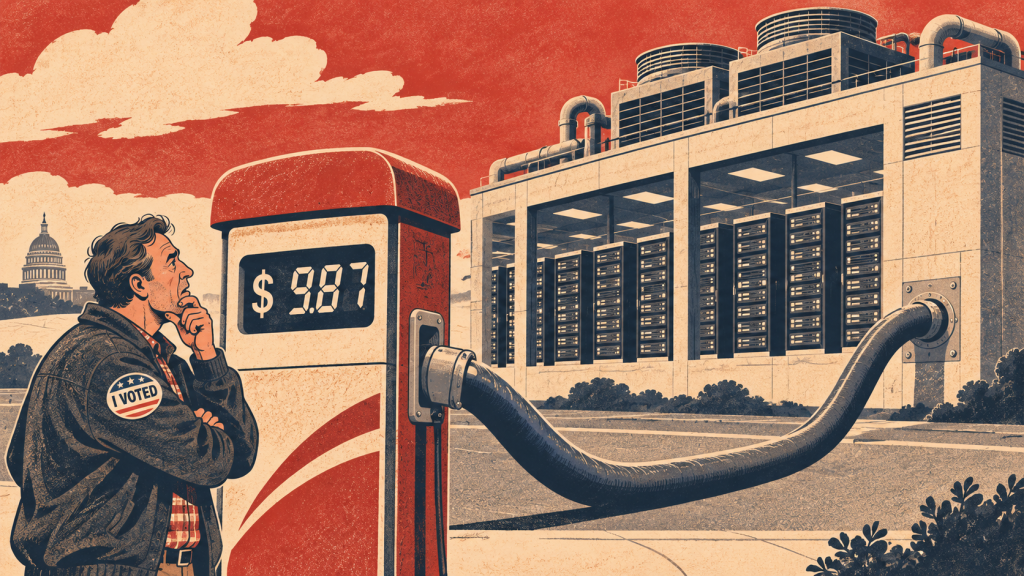
When I was a policymaker, I worked with a minister who used to remind me that we shouldn’t design universal systems around what he called “the determined rulebreakers”.
His point was that there would always be people who deliberately worked out how to get around the rules – and we need ways to identify and deal with them – but you can’t design every interaction around preventing that minority from ever succeeding. If we did, we would make the whole system far too complicated, unfriendly, bureaucratic and expensive for everyone else.*
It was a useful lesson. Particularly for those of us whose professional training involved responding to every conceivable problem by adding another paragraph to the statutory guidance.
I’ve been thinking about it again while reading about AI-discovered security flaws in PHP, software used by a large proportion of websites. Organisations have been rushing to apply fixes while attackers try to exploit the weaknesses. AI is helping find the holes, and changing how quickly people can take advantage of them.
PHP stands for “PHP: Hypertext Preprocessor” — an acronym that includes itself, because apparently it wasn’t confusing enough already. It originally meant “Personal Home Page”. And if PHP means nothing to you even after reading that, you only need to know that it’s a programming language that helps websites work behind the scenes, including many built using WordPress. You don’t need to know PHP is there, any more than you need to know much about your plumbing to be able to turn on a tap, but a security flaw in it can still become your problem — usually one you need your hosting company or developer to fix.
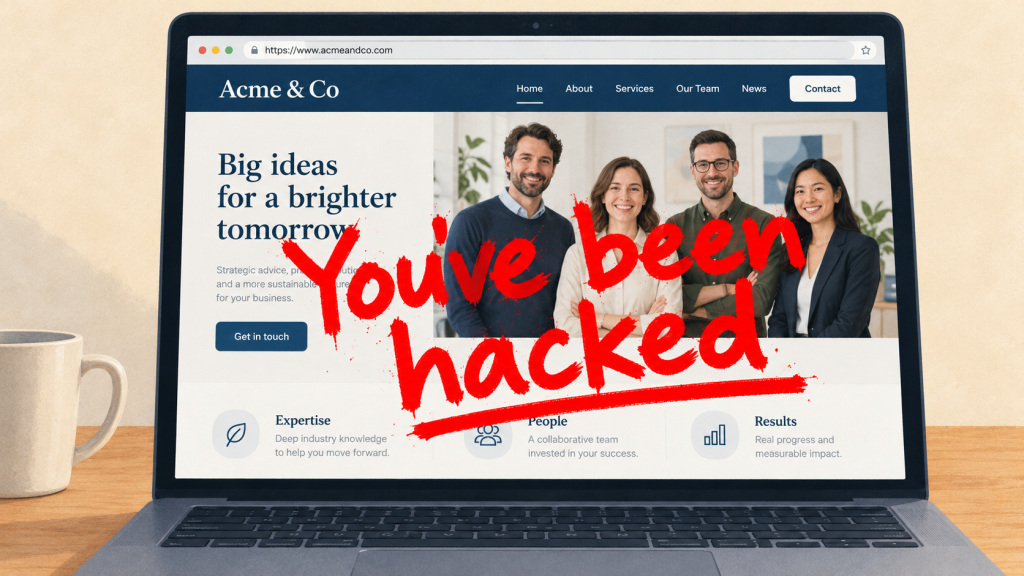
So this is worrying cyber security news. But for those of us responsible for organisations rather than qualified to investigate the code, I think there’s a useful question underneath the headlines: what would actually happen if someone hacked our website?
Not everything needs to be Fort Knox
Imagine a fairly ordinary company website. It tells people what you do, introduces the team and provides contact details. It doesn’t hold customer accounts, take payments or connect to sensitive internal systems. If it went offline for a few hours, that might be irritating and cost you some enquiries. If you had a clean copy and someone who could restore it promptly, you might reasonably decide that some risk of disruption was acceptable.
Now imagine a system holding case records, financial information or the details of people seeking confidential advice. Or a service people urgently need to access. The consequences are very different, so the protection, the recovery plan and the money you are prepared to spend should be different too.
There are complications, obviously. A compromised company website could be used to impersonate your business, mislead visitors or direct them somewhere harmful. People might judge a tech company more harshly for getting hacked than a small charity, but either could lose trust – particularly if their response lets people down. And restoring your own pages wouldn’t undo harm already done to somebody else. “It’s only a website” therefore needs a bit of investigation. But it is still reasonable to ask how much protection is enough, and what each additional layer achieves.
Security costs money. It also costs time and can introduce friction for the people using a service. Spending those resources where they make the greatest difference is part of taking security seriously.
The determined rulebreakers have new tools
The minister’s point wasn’t that we should leave everything open and hope for the best; it was that prevention has limits, and a functioning system also needs detection, response and judgement.
There is an important difference with cybersecurity, though. The determined rulebreakers don’t have to remain a small, labour-intensive minority. Automation lets them try to pick more locks. And the somewhat mid bad guys now have access to rather better tools.
“We’re not interesting enough to hack” isn’t much comfort, either. An attacker looking for a particular weakness may have no interest in your organisation until their tools find it. The National Cyber Security Centre’s assessment from last year was that AI would make cyber intrusions more efficient and increase the threat, including by shortening the time available to fix disclosed vulnerabilities. They were right. And that changes the calculation. A risk you could reasonably tolerate last year probably needs another look.
It doesn’t mean every small business suddenly needs the security budget of a bank. It does mean “we decided this was proportionate” needs a date attached, and some idea of what would cause you to rethink.
Can AI help us keep up?
This is where I think AI has a useful role beyond generating either the threat or another reassuring policy. Used well, it could help organisations make sense of security notices, compare them with an up-to-date list of their systems and prepare questions for suppliers. A technical expert would still need to verify whether a warning applied, but getting from “something alarming in the news” to “here are the things we need to establish” should become quicker.
It could also help us rehearse. Give a secure AI tool a fictional scenario: your website has been compromised on a Friday afternoon. Ask it to introduce developments and challenge your responses: your supplier isn’t answering, someone reports a suspicious payment link, or your backup turns out to be older than expected. Who makes the decisions? What do you tell customers? At what point do you take the site offline?
You can discover quite a lot about your recovery plan by trying to use it. And a bit of war gaming is quite fun if you do it before anything has actually gone wrong.
Then there is learning from what actually happens. AI could help summarise appropriately handled incident reports, spot recurring issues and track whether agreed improvements were completed. If the same problem keeps coming back, perhaps the answer isn’t another email reminder to staff.
Here at Leading AI Global HQ, we can reassure our customers because we don’t use PHP at all. Perhaps because our CTO is foresighted enough to keep it out, or possibly because we don’t need it for our secure AI agents that run inside a client’s Azure tenancy.
Proportionate doesn’t mean permanent
For me, the useful discipline is being able to answer a few ordinary questions. What are we protecting? Who could be harmed? What protection is already in place? How would we know something had gone wrong? Could we put it right, and have we checked?
The basic housekeeping matters: updates, protected accounts and usable backups. AI-powered solutions don’t relieve us of that. They may help us notice sooner when our arrangements need to change.
I still think that minister was right: systems designed primarily around determined rulebreakers will probably become miserable for everybody else – possibly to the point of being entirely unusable. But accepting some risk only works if you can detect the consequences, respond and learn. “We can fix it quickly” needs to be something you’ve tested, not just something you tell yourself.
The question isn’t whether we can afford to make everything perfectly secure; it’s whether we know what we’re prepared to risk – and how we notice when we need to change our assessment.
*Although, sometimes governments take that route as a deliberate design choice. I would offer up the UK immigration and asylum system as an example.