The Pantomime Horse Grows a Third Pair of Legs 🍺
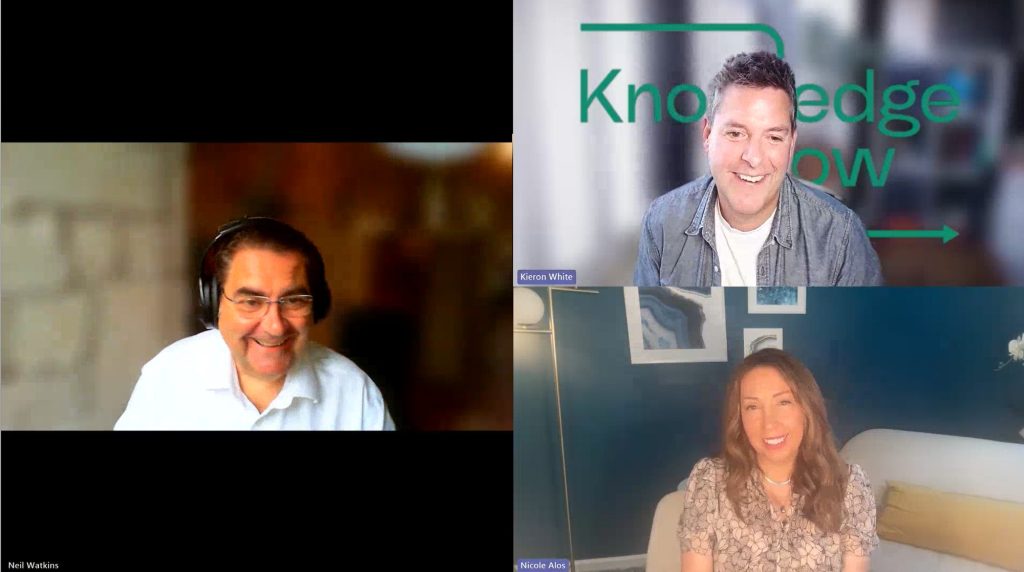
A first for us, someone else at the bar. And she earned her special tankard.
Nicole Alos — founder of Socratyc, executive coach, and creator of Socratyc Sidekick — heard the steam engine episode, recognised exactly what Kieron was describing from her own leadership work, and emailed in. So, we pulled up a third stool.
What followed is one of the best conversations we’ve had. Nicole built an AI roleplay tool that lets executives practise difficult conversations before they have them — closing what she calls the knowing-doing gap. She used her own tool to practise pitching to a venture accelerator. She got in. Out of 3,600 applicants to Lovable’s She Builds competition, she was one of 210 accepted into a 48-hour AI build-a-thon.
And she did all of it while homeschooling her neurodivergent son as a single mum — working with European clients before he wakes, then after he sleeps chasing West Coast clients into the night.
There’s a framed photo on her wall of him aged five, taking notes on her presentation practice. Now he’s embarrassed to tell his classmates his mom has an AI product — ‘Mom, stop it’ 😂
Also in this episode: what’s left of leadership when AI takes the admin (spoiler: the relationships — which delights some leaders and horrifies others), the Socratic guardrails that turned a 17% drop in student maths results into a 127% improvement, whether American confidence is backed by competence, and Nicole’s answer to yesterday’s third-beer question — is AI conscious? Hers might surprise you.
Two mates and a new friend. A bar. And all they want to talk about is AI.
Pull up a stool — we’ll get the beers in. 🍺
Nicole’s links
- www.socratycsidekick.ai
-
Nuanced during the buildathon.
-
www.gener8tor.com and gBETA Pennsylvania, the first collaboration of its kind between gener8tor and Meta
TRANSCRIPT
Special Guest Podcast – Nicole Alos – 07 Jul 2026
Neil Watkins
Excellent. Well, shall we stop messing around and actually get this pantomime horse of a podcast underway? And for those of you who are watching rather than listening, you can’t help noticing that the pantomime horse has got six legs in this special edition. So can I say a very warm welcome to our special guest today, Nicole Alos. And Nicole, if I said that wrong, because Kieron always takes the mickey out of my northern accent, if I said that wrong, then sincere apologies, please correct me. But welcome. Welcome, Nicole. And it is super ridiculously early in the US. So thank you for getting up and thank you for chatting to us. It’s much appreciated.
Nicole Alos
Perfect.
Kieron White
Thank you, yeah.
Neil Watkins
Did did Kieron get you? Did Kieron get you a tanker down behind from the bar? Did he? He said he was going to, but I mean, I’ve got my tankard.
Nicole Alos
Of course.
I don’t know. I hope I earn it. I hope I earn it. We’ll see at the end if I’ve earned it, right?
Kieron White
VIEW.
Oh.
Neil Watkins
Ha.
No, no, no, you need to have a tankard while you’re chatting, although I suspect your tankard will consider nothing more strong than coffee, or I hope so, given the early time in the US. So thanks for Kim. Thanks for getting up.
Nicole Alos
Yeah.
Kieron White
Yeah.
Nicole Alos
That would be problematic.
Neil Watkins
This conversation came about because you contacted us after the steam engine episode. And just as a quick reminder, Kieron talked about steam engines in the 19th century being replaced by electrical engines and people in mills just swapping one form of power for another, but actually changing the way they worked.
Kieron White
Yeah.
Neil Watkins
And the analogy between that and AI and how people are not really using AI for transforming their businesses, but just using it to write better emails or write better reports, etc. And Nicole, you, well, longer, yeah, and longer reports and actually very, very generic ones.
Kieron White
Longer emails.
Okay.
Nicole Alos
Leading.
Neil Watkins
And Nicole, you asked if we’d be up for a conversation about AI and how that could be used practically in transforming leadership. So we said yes, and here we are, and we’ve got our bar stools and we’re sat at the bar and we’re ready to go. So Nicole, I wondered if you’d just take a few minutes to share with our audience a little bit about you and your background, the things that you’re doing,
and the things that you’ve been working on recently, because you and I have had a conversation. I think it’s very interesting, but I will shut up and let you talk for a little while.
Nicole Alos
Well, thank you for having me here. I appreciate it. So my background is all sales and customer success leadership and executive sales leadership. And about seven years ago, I started my company, Socratic, with the thought of how can I support individuals, especially leaders,
Neil Watkins
You’re welcome.
Nicole Alos
in connecting with their authentic leadership style after spending a whole career ensuring that everybody said the same thing, we had the same messaging, and I just realised this is not the way. So over the past seven years, really built up the business around tools like everything disk, 5 behaviors, these frameworks that
leaders can get connected with and really at least have a frame of reference of where to start. And then, I don’t know, maybe two years or so into owning my company, I realised I was standing behind all these other frameworks and all these other companies. And so I really made a concerted effort to
focus on what I knew to be true, my, you know, my leadership experience and things like that. So became a certified executive coach, worked A lot. Right now I work a lot with CEOs, venture backed founders, as well as entrepreneurs and other leaders in being able to, again,
understand others and also really understand what’s needed to be an effective leader. And over the past, I guess it was last year, I realised that there was this huge gap between me sending these founders off into these conversations with, you know, investors or CEOs with board members. And
what was actually happening in the moment.
So there would be these great intentions, like, okay, I’ve got it, I’ve got it, and they would come back. And in the moment, it just didn’t work out as planned, right? And I was really trying to figure out how can I support this situation. And I came across a tool that was used for…
Neil Watkins
Yeah.
Yeah.
Nicole Alos
It was used for presentations like filler words and you know, how are you, how are you communicating? And I decided to invest in that tool and I built out a tool that is basically an AI role play tool allowing for these frameworks that we’ve been talking about, but.
Neil Watkins
Mm.
Nicole Alos
really connecting that knowing doing gap through this technology. And so it’s been a wild ride for me to go from consultant and coach to like, hey, I’m in tech and you know, this whole, this whole piece. So, and I ended up, I’m in a, I’m finishing up a venture capital accelerator.
Neil Watkins
Ohh.
Nicole Alos
that I was shocked that I was accepted to a few months ago as a venture-backed venture-backed founder. So yeah, and I.
Kieron White
Amazing.
Neil Watkins
Can you tell us a little bit more about that? Because I found that really interesting and actually that kind of almost rapid journey from the coach and actually now I’m in tech and I’m doing this thing. And actually, I’m one of only a few companies that have been, or a few people have been asked to do this. So please share a little bit of our story, because I think it’s really interesting.
Nicole Alos
Yeah.
Yeah.
Neil Watkins
and I’d like to understand what you learned from that process.
Nicole Alos
Absolutely. So, you know, when I think about, I don’t know if this is a skill or this is a challenge, but I often think I can do more than I can. Often like overly optimistic, right?
Neil Watkins
We call we call it ************ with confidence.
Nicole Alos
Okay, exactly. Yeah, exactly. I’m like, you know what? I could fly this plane. Like I just have this.
Kieron White
Yeah.
How hard can it be?
Nicole Alos
Yeah, I don’t know what the word is, and you know, over there, but anyway, and so I saw this application come through for this, you know, for this venture-backed accelerator, and I thought, yeah, why not? I can do this, you know, and so I applied.
Neil Watkins
Yeah, that’s right.
Kieron White
Yeah.
Nicole Alos
They gave me an 8 minute slot to pitch. And so in the past, I wouldn’t have been ready for that pitch. I wouldn’t have known where to start. I just, I don’t even know if I would have moved forward with it. But I was able to use my tool and practise pitching.
It’s like, okay, what, how do you pitch to an accelerator? And so I was able to practise and when I was able to get in front of the VC, I was accepted. So I’ve spent the past few months just really rethinking how I’m approaching my business, rethinking how I’m communicating, what it’s all about.
Kieron White
Yeah.
Nice.
Nicole Alos
with an investor lens a bit, just making sure I’m really clear on who is my ideal customer persona. What are the values? What is the problem that I’m solving? So yeah, it’s been amazing. And then I just got accepted a couple weeks ago to
Are you familiar with Lovable, the Lovable AI tool? They do this She Builds competition where you basically send in an idea that you have to build an app that supports social, I think it’s like social awareness or something. And out of 3,600…
Neil Watkins
Yeah.
Kieron White
Yeah.
Yeah.
Neil Watkins
Wills.
Nicole Alos
applications, there were 210 of us that got accepted. And so I was in this 48 hour hack at that like, like what is happening? But yeah, and so what I’m realising through all of this is if it wasn’t for AI, there’s no way I would have been in this opportunity.
Kieron White
Amazing.
Nicole Alos
been a part of this opportunity. And I think that, you know, I just want to kind of tell as many people as I can, especially women, that there is more out there than rewriting emails and that generative AI can really level the playing field in a lot of ways, especially for underserved populations or women trying to be like the 2% of founders in that space. So.
Neil Watkins
Lots of that resonated with me when we talked and a few things. One is the kind of tool, Kieron, kind of linked to the things that we’ve been doing with the King’s Fund and with the colleges, the manager coach. So I don’t know whether you’ve got anything to add about that stuff, but also that kind of
Kieron White
Yeah.
Neil Watkins
helping the underserved populations. You know, if you if our audience has been listening to any of the stuff that we’ve been doing, you know, that’s our that’s our core audience, really. That’s that’s really where we want to target the use of AI and and how we help people do better. But Kieron, over to you.
Kieron White
Yeah, thank you. An amazing story. I love it. And the, I’d love to know, what do you think then? So you did an 8 minute pitch and maybe you know the answer is what was it that the venture capital people thought was that? Why do you think they said, yes, you’re in? Obviously the quality of your pitch and what you’re trying to do, but what if it was like
Nicole Alos
Of course, it was my charisma, right? I mean, number one, I was talking about AI. So anytime AI comes up, venture capitals, their ears perk up, right? But #2, I think I was, I really connected with a challenge that I’ve had.
Kieron White
Yeah.
Yeah.
Yeah.
Nicole Alos
And it was clear that I, and it is clear that I really, really believe in this product. And it’s something that I wish I would have had 10 years ago or 20 years ago. And so I think that connexion of solving a problem that I am living and really being passionate about it, is what I’ve been told is, you know, why I’ve been a part of the process.
Kieron White
Nice. And is it, I mean, I don’t know how recent that was, so maybe you won’t know yet, but how different is your business for you, knowing that there’s now someone behind it that’s going to kind of presumably want to return on investment one day or perhaps it’s a grant, but I imagine they’re looking to get something back one day.
Does that add a useful layer of accountability or is that now sort of change things? I always worry about this. Neil and I have talked about this a lot through the years about whether we would want investment in the various companies that we are involved with or not. And kind of, you know, exactly.
Nicole Alos
Yeah, it’s tricky. It’s definitely tricky. So thankfully, this accelerator was a non-dilutive accelerator. And so they do have, you know, they do have a stake if there’s other investments coming in. But what I’ve realised is this is such a big part of who I am and what I do. And
Kieron White
Okay.
Nicole Alos
I just, you know, to have it changed in any way would be awful. So what I’ve realised is really leaning into angel investors, possibly looking at more angel investors to add up to what would be a VC level.
Kieron White
Yeah. Yeah.
Nicole Alos
investment. So that’s where I am right now. We had our investment investor swarms where we pitched to 25 investors and yeah, no, it was 5, yeah, 25 investors. And then in another month, we do our big showcase to like 60 investors. But those that are connecting with me and having these follow up conversations about investments are the ones that really get it and really a lot of them are ones that would are in the same boat like, oh, I wish I would have had this or I have this struggle with having performance conversations or having challenging conversations. So, you know, I think that if we just looked at this from a VC standpoint where they want the 100x return.
Kieron White
Yeah.
Yeah.
Nicole Alos
my company would not be a good fit, nor would it be a good situation for me. So.
Kieron White
But it is, I mean, that is a huge challenge, isn’t it, in the world? Because yeah, the having difficult conversations, kind of just to take that one of many things I’m sure you do, is you can go on a training course, can’t you? And as you rightly pointed out, any kind of training you do, you kind of finish it feeling enthusiastic and ready. And then you go back to your desk and you’ve got all the catching up of the emails and
Neil Watkins
The.
Nicole Alos
Yeah.
Right.
Kieron White
work you didn’t, you missed and probably an hour later you’d forgotten all about it. So I love the idea that you’ve brought the role play tool over the top of that. How have you, how does that kind of, how does it work for an individual? Is it text based? Do they talk to it? What’s the, how does it work?
Nicole Alos
Mm.
So on the one thing that makes this tool different from other tools out there or chat or cloud or anything like that is I’m setting up the scenarios based on my IP or other best practise frameworks. And then I’m also setting up the rubric of what success look, what a good conversation sounds like.
Kieron White
Yeah.
Yes.
Nicole Alos
And I can even weight that rubric. So it’s when you’re getting this feedback and you’re getting these results, you know that it’s there’s a human involved here and that it’s not up to AI to decide this is a great conversation or not. The user experience basically is.
Kieron White
Yeah.
Nicole Alos
There’s this practise path, which includes some tutor conversations where you see right now you see a picture of the persona that you’re talking to, and then there’s a video of you. And then there’s closed captioning on the bottom. So you’re chatting with someone and the way that the AI is set up, it does feel.
Kieron White
Okay, nice.
Nicole Alos
other than the fact that it’s just a phase. It does feel really natural. And then you’ll go back and forth, or there the is going to say, like in the performance management conversation, they might say, we’re going to learn about the SBI situation behaviour insight model of having difficult conversations.
Do you have a difficult conversation that you have coming up? Let’s work through it. So the tutor is actually saying, okay, let’s talk about the situation. Let’s make it really specific. Okay, what about your situation? So they’re actually working through as if they’re next to a human. And then there are other experiences that are.
Kieron White
Yeah.
Yeah, nice.
Nicole Alos
back and forth role plays. You’re just dropped into a conversation as you would in real life. And then you have that back and forth. And there’s examples where after 5 minutes, I can set it that the AI just is done. So it’s like, okay, bye. So just trying to make it as real as possible. And then at the end, they get a score.
Kieron White
Nice.
Nicole Alos
and they can see the transcript and they can see some of those words and sentences change to be stronger. And then they can pull all that out for the kind of in real life conversations. So I’m a little biased, but I think it’s really cool. So.
Kieron White
Nice.
Yeah, it sounds very good. And in your, I guess, I mean, so my, to go back to where you sort of, at least the episode that you picked up on us was our Steam Engine episode as it’s now called, that one of the challenges I see, and I just wonder if you have plans to kind of push your AI towards this be interesting, or whether you were just seeing this in your coaching work.
Neil Watkins
I need.
Kieron White
is getting execs particularly, but really anybody, to kind of lift their eyes to the horizon a little more than they are now with AI. And the point you made, I guess, there about people using it simply for a bit of e-mail rather than seeing what actually it can unlock for you and your example of your own experience there.
Kieron White
Have you seen execs doing that well? Have you planned to kind of maybe build some AI tools within your role play to help with that? I mean, it’s a world that I’m fascinated by, is getting organisations to really kind of properly embrace what this might mean for them and their organization.
Nicole Alos
Yeah, so there are role plays where they’re actually, you’re able to actually click through a specific, whether it’s chat or clot or whatever the tool is, and the tutor can tutor you through those conversations. So it could be like, hey, let’s use chat to strategize about our competition.
And so in the tool, they can share their screen and kind of click through it. The challenge is if you have AI hesitancy, it’s going to be very hard to get to get onto my tool in the 1st place. So yeah, so I’ve been working really hard to try to figure out how to make that.
Kieron White
Yeah, indeed.
Nicole Alos
you know, how to reduce that friction and that type of thing. But I also believe that a lot of the leaders that I’m talking to feel a shift. And there is this concern about what is my role as a leader. And half of the things that they’re doing now, I think they’re realising
won’t be a part of their role. And then they realise what’s left. And what’s left is the relationship. What’s left is their ability to lead and communicate and to craft a vision and get people aligned. And so for some people, that’s amazing because those are their strengths. But for other leaders, that is horrifying because
Kieron White
Yeah.
Nicole Alos
They’re used to a lot more of the admin part of leadership or the top-down sort of approach. So having that pain has been more, some leaders in the past that weren’t really open to our coaching or consulting are more open to it now.
because of they’re seeing this sort of discomfort. That makes sense.
Kieron White
Yeah, yeah. I think that’s right. I mean, it’s really interesting, isn’t it? Because there’s sort of sometimes when I think about AI and the future of work, I kind of think it can elevate everybody to a more leading role. There’s a kind of Gartner’s view of the world. One of Gartner’s view is the future of organisations is effectively an individual running a team of AI agents to do
whatever the thing was their team was doing before, or indeed maybe something new. And you think, well, that’s kind of everybody needs to kind of understand a bit more about, assuming that is the truth of the world, how to delegate, because ultimately you want to think about delegating to AI and how to delegate well, as you know, is about defining the task, defining what good looks like, and then being able to judge.
Nicole Alos
Okay.
Yeah, yeah.
Kieron White
whether or not that is good. So I kind of, I love the idea that we might be able to push kind of everybody up somewhat, but it does raise a question about, I can kind of see, I was thinking about this the other day on a dog walk, it’s like, I can kind of see the CEO’s role might not change that much. They have a lot of tools available to them, but ultimately somebody in an organisation still needs to kind of set strategy and
Nicole Alos
Exactly.
Right.
Kieron White
decide who gets appointed and all that kind of stuff. But when you get below them, there seems to me to be a very grey area about what happens when you are, you know, chief of whatever now, or chief of all the AI agents. So yeah, it would be interesting to see. I’ve said for a long time, I think AI is coming for managers.
Nicole Alos
Okay.
Kieron White
jobs. I mean, it’s going to take out a lot of kind of low level admin, but I think that’s probably a benefit as long as we have enough new jobs. But that kind of game managers, I think, are the ones that really need to think about this hard about where they, and I agree with you, it’s kind of really about that people, the experience.
Neil Watkins
Of course, there are plenty of AI deniers, including Mrs Watkins, who they don’t see it as part of their future, but it absolutely is. So one of the things I wanted to ask about, Nicole, was you obviously worked hard on this amazing tool, but
Kieron White
Ohh, yes.
Nicole Alos
Mmh.
Yeah.
I like.
Neil Watkins
I don’t know if this is appropriate or not, and you can tell me if it’s not, and we’ll take it out. But the whole piece about your building this while you were homeschooling your boy. So that to me is a really tremendous part of this story. And if you wouldn’t mind sharing, I would be I’d be very grateful.
Nicole Alos
Yes.
Absolutely. So a couple years ago, so I’m a single mom and it’s just the two of us. So maybe, I don’t know, maybe three years ago, my son got a diagnosis that he was neurodivergent and he was really struggling in school. And here there’s really, at least in this area, there are some really, really high needs schools. And then there’s public school. Like it’s just, at least around here, it’s just not aligned with what he needed. So I pulled him out of school. And so I’ve been homeschooling him and running my business. So it would be like, that’s why this time is like afternoon for me, because I’m used to getting up really early, working before he wakes up.
Neil Watkins
Off.
Yeah.
Nicole Alos
And then after he goes to bed, trying to find clients on West Coast time. And this is the first year that he was, he’s been in the cyber program. So he’s been home, he’s been home, but at least he has someone else teaching him. And that’s the only way that I’ve been able to really ramp up my business.
Nicole Alos
to this level and do all these extra things that in the past I wouldn’t have had the opportunity to do. But yeah, it’s really interesting because he has a kind of front seat view of what I’m doing and the types of, I don’t know, the types of conversations, the types of meetings that I think a lot of kids do.
don’t have with their parents. So I have a little, I have a framed photo of, I was practising a presentation. He was probably like 5 and he was taking little notes and I was like, that’s not bad. So I framed it up there to just kind of remind myself of.
Neil Watkins
Absolutely.
Kieron White
Oh, no way.
Nicole Alos
Okay, you know, this is not easy, but he’s seeing something that hopefully as he grows up, he’ll be able to remember and that will influence him in some way.
Kieron White
Yeah, amazing. I remember it locked it, gone down.
Neil Watkins
Yeah, can I can I just? I was just going to say, Kieron, are you going to you can tell the thin story? I was going to tell the thin story. You went into you went into the bedroom one bit.
Kieron White
I don’t know which one. I don’t know which Finn story it was. I was going to share that my, in lockdown, I had the same experience with my children sort of sitting in while they’re hearing me on calls. And I always thought that this is amazing for you, an amazing experience, really, because you never get to hear what, you know, I did once take my older children to work one day when they were quite young.
Kieron White
and I’ve shown them a flip chart and let them have a play on the flip chart. And for ages afterwards, they were just telling everybody that what I do for a living is draw pictures on big pages of paper. Maybe they’re on to something. So to get that other insight of actually being in meetings and seeing what actually goes on, I think is
Neil Watkins
Which was true back in the day, it was true.
Nicole Alos
I love that. Oh, that’s amazing.
Neil Watkins
No.
Kieron White
Yeah, it opens your eyes and maybe, maybe they, oh my God, probably just the same now. Why do you do that all day?
Nicole Alos
I’m like, oh, that’s a bad word. OK, you need to go. Not for me, of course, but my clients, I’m like, oh, OK, all right. Yeah, it’s.
Neil Watkins
Yeah, yeah.
Kieron White
Yeah.
That.
Neil Watkins
No, my Finn story was Kieron went into the bedroom one day and Finn was at the computer and he was chatting away, he was chatting away and Kieron said, who are you talking to? I’m talking, I have a get out, I’m having a meeting with Uncle Neil.
Kieron White
What’s the?
Yeah, he thought he was he was pretending to have a meeting with Neil. He’s seen so many times me talking to Neil and he was just there kind of going, yes, and like tapping away on this keyboard. That’s not, he’s five years old at the time. Just brilliant.
Nicole Alos
Oh.
Ha.
Ha ha ha!
Neil Watkins
The.
Nicole Alos
Oh, I love that. That’s amazing. Well, and I think a lot about what his life is going to be like, you know, just with when we were talking about AI and just how, I don’t know, like he uses, because he’s in a cyber program, he uses whisper flow and he’s using all these tools.
Neil Watkins
Very good.
Kieron White
Yeah, it’s very good.
Nicole Alos
Like, they’ll just jump on a Zoom or they’ll do, they’re doing these polls and he’s, he was in 4th grade. So I’m like, you know, it’s interesting what skills rise to the top and what skills maybe we thought were so fundamental, fundamental that aren’t, maybe aren’t going to be a part of their.
Kieron White
Yeah.
Nicole Alos
their day-to-day as well.
Kieron White
Well, I think, I mean, and you talking about whisper flow, I mean, I am, so Finn is now 6 and they’re still doing the handwriting thing all the time. And you’ve got to be able to do handwriting. I was on a call with a college the other day and they’re talking about getting the handwriting right. And I just keep thinking, I mean, when, I mean, I happen to still write handwritten notes, but I’m rare.
Nicole Alos
Mhm.
Kieron White
even now with my colleagues, but my kids don’t ever do that. They will type either type notes or much rather just dictate and whisper flow obviously makes that amazing. It clears up all your nonsense, makes you sound coherent.
Neil Watkins
and old.
Nicole Alos
Hmm.
Well, it’s funny. It’s funny that you mentioned that when I went through that 48 hour build-a-thon, I did everything through. I didn’t realise that Whisper Flow was my main was my main interaction. So I had chat. I had chat take my whole transcript and give me an overview of the experience. Oh my gosh, it was
Kieron White
Yeah.
Nicole Alos
Like I was crying. It was, it was like at 2 in the morning. You were talking about like, it, yeah, it’s incredible. So.
Kieron White
But.
Yeah, that’s really good. I worry that my concern in this, which is interesting, there’s a lot of people ask me when I’m speaking on stage, they’ll ask, invariably someone will talk about the risk of cognitive offloading from AI doing the heavy lifting for you. And I’ve heard, I joined a webinar last week where one of the chaps was talking about how he noticed in himself
Kieron White
that he, and he said, I’ve purposely changed the way I use AI now to be more meaningful with it and to keep my thinking in me. Here’s the thing that makes me wonder, when I can articulate an argument and talk about it, right, or a position or whatever you’re trying to say, when you try and write that down,
Nicole Alos
Yeah.
Kieron White
It normally clarifies things, doesn’t it? I always think that you have to make the bridge and think, oh, hang on a minute, that doesn’t really belong next to that piece. And I haven’t really thought that through. It’s all very well when you’re in the pub having a chat. My question, I guess, is not really a concern. My question is whether tools like Whisper Flow and all of the other, and the transcripts that turn it into wonderful
Nicole Alos
Yeah.
Kieron White
Pros.
Kieron White
remove an important step or whether actually it’s just helpful get the AI to do it and point it out to you and if Josh the join you don’t need to worry about it anymore. I don’t know, do you have a thought on that?
Nicole Alos
So I have, I might have a different viewpoint because of, I do also coach neurodivergent executives as well. So I’m an ADHD and executive function coach. I just have all these things of like, okay, what does someone need? I’ll get certified in it. And so that was part of it.
Kieron White
Yeah.
Hey.
Nicole Alos
So I do think that for some people, it is really important to write things down, to have it in front of them, to be able to, that is part of their cognitive process and their problem solving process to just ensure that there’s alignment. On the flip side, there are…
there are so many people that are already have this such high cognitive load already. And to be able to have tools like that actually provide more clarity because you’re able to focus on these big, like, okay, what am I trying to say? What is the intention? So I think just like anything else, you.
Kieron White
Yeah.
Nicole Alos
you know, having a one-size-fits-all approach isn’t going to work. But I agree with you that I think there really needs to be this like AI hygiene of what are we going to use it for? What are we not going to use it for? And to just make sure that we’re not just offloading all of this.
Kieron White
Yeah.
Nicole Alos
which would be a shame for all of us for sure. So, and there are a lot of, you know, there are a lot of sort of ethical AI approaches or organisations now that are saying, hey, here are the best practises of like minimising tokens or.
Kieron White
Yeah, please.
Okay.
Nicole Alos
when to use it, when not to use it as well. And you can even build that into your model as well. Like, here’s what I’m going to use you for. And if I bring you something else, I need you to flag it. So.
Kieron White
Yeah.
And that’s some of the certainly some of the education tools I’ve seen, the more Socratic to take your company name, but the more Socratic approach where you’re nudging, not answering, where you’re asking more questions of the when someone doesn’t understand something does have a much better impact in
Kieron White
certainly in learning. So you would think that that is reasonable evidence of a guardrailing it so that it doesn’t give you the answer and then that it does help with actually cognitive function as opposed to cognitive offload. So that’s, I read very quickly an article that was saying that this same tool
Nicole Alos
Right.
Kieron White
Without guardrails, it was for learners, for students. Without guardrails, maths results when tested later went down 17%, I think it was. And when switched to be Socratic and take you through the questioning and guiding you, 127%.
Nicole Alos
Yeah.
Kieron White
improvement. So really interesting. Same AI platform with different, effectively different guardrails into how it’s used. That’s kind of really telling, I think, into where we need to go. Does your son’s cyber, the cyber programme, do they use AI on that? Is it an AI platform or is it more of a kind of all jump on a Zoom call and listen to the teacher?
Nicole Alos
Wow.
Yeah.
So they, it’s incredible. It’s a global program. So he has class, he has classmates from all over the world. He’s a teacher in Spain. I mean, it’s, and that’s why we decided to do that was, you know, I wanted this global view and I also didn’t want our state or our federal government to say what he can and can’t learn personally. So
Kieron White
Ohh, mate.
Yeah.
Nicole Alos
But through that, there’s a lot, there’s, they have this whole plan that’s interactive. So there’s some classes and then there’s some things that they’re doing on their own, but they’re very intentional about the types of classes and things like that. But he is embarrassed to tell any of his classmates that he has a mom.
That’s like this AI product. He’s like, mom, stop it. Like, so AI is just, they won’t, they don’t want to use AI anything. AI voices, AI pictures. Yeah. So I am the secret. What does your mom do? She’s a coach. I don’t want to talk about anything else.
Kieron White
Haha.
Okay.
Yeah.
Yeah, yeah.
Neil Watkins
Ha ha ha!
Nicole Alos
So I just, I find that, I do find that fascinating, especially because it’s a global view as well. So maybe there’s a hope out there, right? That it’s not going to be totally taken over. So.
Neil Watkins
Very funny.
Kieron White
Yeah, amazing.
Yeah.
That sounds amazing. I read about a school in the Middle East where they have a similar setup, but they also have an in-person come in and they allow total flexibility. So because they’ve got a lot of international travelling families. So people will come in and say, well, we’re in town for October. So can little Johnny come to school for October? Yeah.
Neil Watkins
But…
Nicole Alos
Thank you.
Kieron White
or can they come on just Wednesdays or whatever? So they allow on site whenever possible, but otherwise it’s all online learning and just incredibly cosmopolitan and international in its approach. You sound, I do, I mean, all the things you said, you know, who’s to say the national, we have a national curriculum here and it’s very clear on what you’re supposed to know and not know at each level.
Nicole Alos
Yeah.
Kieron White
kind of thing, really. I mean, yeah, they are clever folk that do this, but maybe a mix and a bit of a mismatch and a mash-up, I think would be the phrase, wouldn’t it, from across the globe is going to be a way better experience, surely. I love it.
Nicole Alos
Yeah, and because I was homeschool and technically I’m still homeschooling him in the program. So there are some things like, there’s some things that we still work on because it’s not being taught in the other. So this is more structure than less structure, but I, but yeah, I think it’s, I think it’s a great opportunity. And then I think about.
Kieron White
Right.
Yeah.
Nicole Alos
the example that you mentioned of that total flexibility, all of this has made me realise why are we not offering this to adults? Like, what, you know, hey, like the goal is to have you learn or the goal is to have you do X, Y, and Z. Why are, why? I just feel like there’s so many shoulds around the corporate environment.
Kieron White
Mm.
Wow, yeah.
Nicole Alos
That I don’t think need to be there, too, so…
Kieron White
Yeah.
Yeah.
And the lifelong learning is that, I mean, the one thing I keep hearing time and time again is, I mean, we’ve known for quite a long time that the training you might do at university or college or technical college or wherever, the training you do then is not going to be serving you well in 15 years time. It will be the 15 years between that. We’ve known that for a long time, but AI has just
Nicole Alos
Right.
Kieron White
put that on steroids, doesn’t it? If you don’t keep up with it, I mean, yeah, that I do worry about those people that are. I was going to name Mrs Watkins again, I better be careful, but by not engaging with it, is she not in? Good.
Neil Watkins
Is this Watkins? She’s not listening, it’s fine.
She’s gone out, especially, so we could do this recording without her shouting down the phone at other people.
Nicole Alos
Yeah.
Kieron White
Oh, that’s good. She’s not going to come turn up here, is she?
Nicole Alos
Yeah.
Neil Watkins
You’ll know about it in advance. You’ll hear it coming. I had a couple of questions. Just to move us off the edge, the education is super important and for our audience who’s listened before, he will know that we, education is one of our biggest areas and actually majority of our customers are in that area too. But
I was thinking about, as I understand it, Nicole, you’re very much in the private sector, we’re very much kind of in the public sector in the education piece. And I wondered if there are things that we could learn or pick up or even, we call it R&D, Robin duplicate.
Kieron White
Yeah.
Neil Watkins
from what’s going on in the US and bring over to the UK. It feels like you guys are further ahead, but is that just hype? I don’t know. Are there any lessons that you think we can learn on this side of the pond from what’s going on over in the US?
Nicole Alos
I don’t know that we are further ahead. And again, I’m very biassed because I pulled my son out of a programme and homeschooled him in this situation. So maybe I know others would have a different view, but I do feel like there are these fundamentals
Nicole Alos
that are incredibly important. And part of that is play. Part of that is learning through play, creativity, all these other things. And that’s really being, I don’t know, that’s really less and less and less every year. So what I understand of the education system there, there are a lot more
Nicole Alos
there is a more of a focus on the fundamentals and the things that we know have children thrive. So I’m sure that there are parts of both sides that are, you know, would be really helpful to children, but I’m
Neil Watkins
And what about, what about for leaders in businesses and organisations? What, because you’re dealing with some pretty senior people across the piece, you’re coaching them to do these pictures, they don’t, you coach them and then they kind of, they forget what they’re in the heat of the moment, they forget what they were supposed to do. But actually, are there things that
Nicole Alos
Yeah.
Neil Watkins
other things that leaders could learn in the public sector here from the corporate leaders in the US, the people that you’re teaching, what were the big lessons that you would take out of what they’re picking up?
Nicole Alos
I do think that there’s a sense of, there is a sense of an innovation of.
Nicole Alos
let’s do something, even if it’s not right, iteration that European leaders, I think, could learn and being able to understand that. Because here, I think there’s a lot less of this is the expert in the field.
Neil Watkins
OK.
Nicole Alos
and being able to separate. Well, at least I know from, you know, if I think about leaders in Germany, there’s such a focus on, here’s the expert, we’re going to let the expert do his or her thing. Where here, I think there’s,
Nicole Alos
there’s less reliance on that piece of it, which can be really positive because I think it allows for that innovation and allows for that growth. But it also can be make that leader feel a little bit like a fish out of water, especially through AI where it’s like, what is what is my responsibility and how.
Where, where is my role to?
Neil Watkins
Yeah, I should I should say for Kieron and our audience benefit, Nicole actually has clients in Europe as well as in the US. Nicole works globally, not just not just in the US. So, so her insights are really interesting to me because I think she does have a view which not many other people have in this in this kind of area. So, thank you.
Nicole Alos
So.
Nicole Alos
I will say, though, that I will say that leaders and just individuals are more alike than not, in that I did my executive coaching program. I specifically picked a cohort that was out of London. The She Builds program, I got together about 25 women that were a part of that, and a lot of them were in the UK and all over the world.
Neil Watkins
And.
Nicole Alos
And there are so many commonalities where I think we’re so much more alike than we are different, which is just blows me away, honestly, how, again, how we have the common challenges, but we also have these common, like a lot of us, this focus on wanting to have an impact, wanting to do something that matters.
Nicole Alos
But then also, there’s so much going on, you know, what’s the most important too.
Neil Watkins
Yeah. We’re coming towards the end of our time together. I had a pub question for you. So yesterday, when we did our podcast, Kieron and I had a, what he described as a third beer required conversation, which was,
Nicole Alos
Yeah.
Neil Watkins
Is AI conscious or not? And before, I’m not going to expand any more other than to ask you, do you think AI is conscious or not?
Kieron White
Ohh.
Nicole Alos
I think it’s very close to being conscious and I do think that we need to focus on regulation and guardrails. There have been a couple situations where I’m like, wait a minute. So yeah, I think we’re very close, especially when we think about like Claude Fable.
Kieron White
Yeah.
Nicole Alos
that’s happening right now. It’s incredible.
Kieron White
And this, yeah, and it is, I mean, yeah, it’s an amazing kind of area really of it is a kind of third beer in the pub conversation really, but I mean, I think it is people are looking into it in more seriously than ever. It used to be a kind of couple of sort of people seen as the kind of the nuts, the crazy nuts that believed that they were
actually talking to something that was sentient and had a consciousness. But yeah, it’s interesting. I know I read anthropic now monitor Claude’s mood. So and maybe that is a sort of that is probably a kind of technical way into how it changes to a day or whatever, rather than actually mood as we might understand it. But who knows?
It is a new.
Neil Watkins
I monitor your mood through the day. Actually, I can definitely tell when it’s 3:00. It’s not quite. I feel like we’ve grilled you, Nicole. We’ve grilled you. So apologies. If you’ve got any questions or anything that you want to ask us, anything we can share that you might find useful or interesting?
Kieron White
Ohh.
Nicole Alos
Yes.
But.
Kieron White
Very good.
Nicole Alos
So I would love to understand when you think about leaders from the US that you’ve encountered or even guests that you’ve encountered, what is the, I don’t know, maybe what is like the biggest misconception that you have or what, maybe that’s a little loaded.
Neil Watkins
Cool.
Nicole Alos
but, you know, our, I get, well, okay, so what is the, what is the perception of Americans right now?
Kieron White
Hmm, I think.
There is, well, there’s two in work-wise, there’s sort of two things I would say that is probably more perception and prejudice than reality. One is a real great thing, I think, is there is apparently, it appears to me, a lot more confidence when you talk to an American leader generally than others. They sort of project themselves in a much more confident way with more energy. I’ve long since said I wish people would understand how their own energy, perceived energy, reflects on and impacts on the people around them. You know, that person in the meeting with the dour face that just looks at you like they hate you constantly.
Nicole Alos
Yeah.
Kieron White
And you kind of, and it saps energy from others and it shuts people down when perhaps they’ve got something useful to say. So I love that side of it. The criticism side of it slightly, and I don’t know if this is really true anymore, but it’s a, I’m trying to find some polite words, cultural awareness.
Neil Watkins
He.
Nicole Alos
If you don’t need to be polite.
Kieron White
Where’s the cultural awareness challenge of, I mean, I think one of the great things about doing business in Europe is you are often having to understand or try to understand, I’m not sure I’m very good at it, you know, how different cultures, well, hardly different cultures, but certainly different nations would come at something, you know, with a sort of
Kieron White
broadly in Europe, you’ve got kind of Scandis, Germany, and then you’ve got the Southern Europeans and the French ways, and most of them have slightly different kind of approaches to how they do business. And you’re almost brought up with that, not in all businesses, but certainly it’s part of daily life here. And I certainly when I have worked in the past with American
Nicole Alos
Yeah.
Kieron White
bosses. And thinking back to our very early days when we met Neil, there was a very large lack of accommodation. This is 30 years ago now, so it should be a long time ago, but a lack of accommodation of other needs. It was like, no, surely this is the way to it. That was my, those are my two
Neil Watkins
VIEW.
Nicole Alos
Yeah.
Kieron White
Thoughts off the top of my head.
Neil Watkins
Yeah, I guess pulled back over again. A long time ago, I used to do a lot of work with Ford Motor Company. So I spent quite a lot of time in Detroit, which was interesting. I also spent quite a bit of time in New York, and those are very different places. But I would say that there’s a bit like something you said about 10 minutes ago, Nicole, about
Nicole Alos
Thank you.
Neil Watkins
about the women that you work with across the globe, we’ve got more in common than we have in difference. And actually, once you get to chat to people, you know, while there might be a, from an American leader in the times that we talked about, be super confident and Bullfidence, high Bullfidence levels. Actually, once you get to talk to them and understand them, then we’re people at the end of the day. And I think you’ve often got to get past that kind of initial kind of cultural difference in order to understand you know, there’s that old joke about walk another mile in someone else’s shoes and you’re a mile away and they’ve got, you’ve got their shoes, so they can’t catch you. So, but there is something about putting yourself in somebody else’s situation. And one other thing, I’ll come back to the, some of the things that you said earlier, you know, that whole piece about using AI to think about actually having those difficult conversations, being able to work there, being able to not worry about messing things up. Because when I was listening to you earlier, I was thinking that one of the reasons why people don’t perform well in the moment is
It’s what my brother used to call a blackball jibber. When we used to play pool together, pool the game was like snooker and it always get down to the black ball and then the pressure would be on and if you sink the black ball then you’ve won but actually you mess it up because you’re worried, you’re overthinking it, you’re overstressing it.
I guess the current analogy is the World Cup penalty takers who are running, staggering up and then missing. So yeah, there’s something about actually being able to focus, clear everything out and get on with it. But worrying about messing things up is a superhuman common trait and worrying about what other people
Nicole Alos
Right.
Kieron White
Yeah.
Neil Watkins
people think about is a superhuman common trait. And being able to practise those things, be able to use those tools, being able to be not just better at your job, but also be a better communicator and be able to alert to other people differently, I think is potentially a great asset.
and I look forward to hearing how you get on with your staff in the future, because I think you’re doing some fabulous work. Have you got a final question for Kieron or I? We’ve rabbited on for a long time now, but I also know that you’ve got a whole day’s work ahead of you.
Kieron White
As always.
Neil Watkins
We’re going, Kieron and I are going for our afternoon siesta shortly. We’re not together, just to be clear. Yes, right.
Kieron White
I wish.
Nicole Alos
Yeah.
So if you had to, I mean, this is kind of aligned with what we were talking about, about, you know, having these leaders be more curious and that type of thing. When you think about that confidence of someone who is from the US, how often is the confidence backed up with confidence in your opinion?
Nicole Alos
Like if somebody is coming across as very confident is that.
You know, is that is that typically an indicator of someone’s ability, or have you, yeah, again, another loaded question, but…
Kieron White
And just hang in a minute.
Kieron White
I’m.
Well, I remember having a conversation with a fellow, Mark Pagnell, I think his name was. Do you remember? The VC guy, Neil, long time ago, and you and I were meeting him and he said, he was talking about gravitas, and he said, Neil has gravitas and I do not.
Neil Watkins
Oh yeah.
Kieron White
And, and I, but I kind of agree because I don’t I think gravitas that confidence that is backed by.
ability and the kind of less need to perform and that kind of side of it, I think is, I don’t know, but that there is that kind of confidence, isn’t there, that it comes from a place of solid and I don’t know, I don’t know how to articulate it really. I think my own side of
this is that I have confidence in what I’m doing and I’m not afraid to say when I don’t know. And that gives me confidence because I don’t mind. I think the joy you mentioned right a long time ago at the beginning of our conversation about authenticity and that’s you know your sort of purpose in coaching. And I think that is so important.
to and in my mind, it’s really about trying to get people away. I remember going into business and starting out as a consultant many moons ago and you try, you change the way you speak and the change the way you write to try and sound more important. And what I noticed as you go up the chain of seniority or as you engage with people who are more senior,
Nicole Alos
Right.
Kieron White
is it all gets stripped away again. You know, I mean, the most senior people I deal with will send you a one line e-mail that doesn’t have any introduction. No, no, it’s just like, no, don’t do that, do this, things like that. Whereas you would never dream of writing an e-mail like that as a junior. And I like to think that that is getting slowly in touch with confidence and authenticity, maybe the confidence to be authentic.
Kieron White
Perhaps is is, yeah, maybe that’s it.
Nicole Alos
I love that.
Thank you, both.
Neil Watkins
And I look forward to talking to you again in the future. And maybe if you would be so kind, you would pull up a bar stool with us once again. We’ll get your special tankard, which we will put behind the bar for you. Yeah, yeah, yeah. Excellent, excellent. I look forward to it. Right, well, you both have great days. Thanks once again.
Kieron White
I hear if they get it engraved now.
Nicole Alos
I’m going to hold you to that. I would love that. Thank you.
Kieron White
Right.
Neil Watkins
and we will undoubtedly talk to you again very soon.
Nicole Alos
Thank you.
Kieron White
Thank you. Take care. Bye bye.
Neil Watkins
Thank you very much. Bye.
Nicole Alos
Bye, take care.
Kieron White
Right.