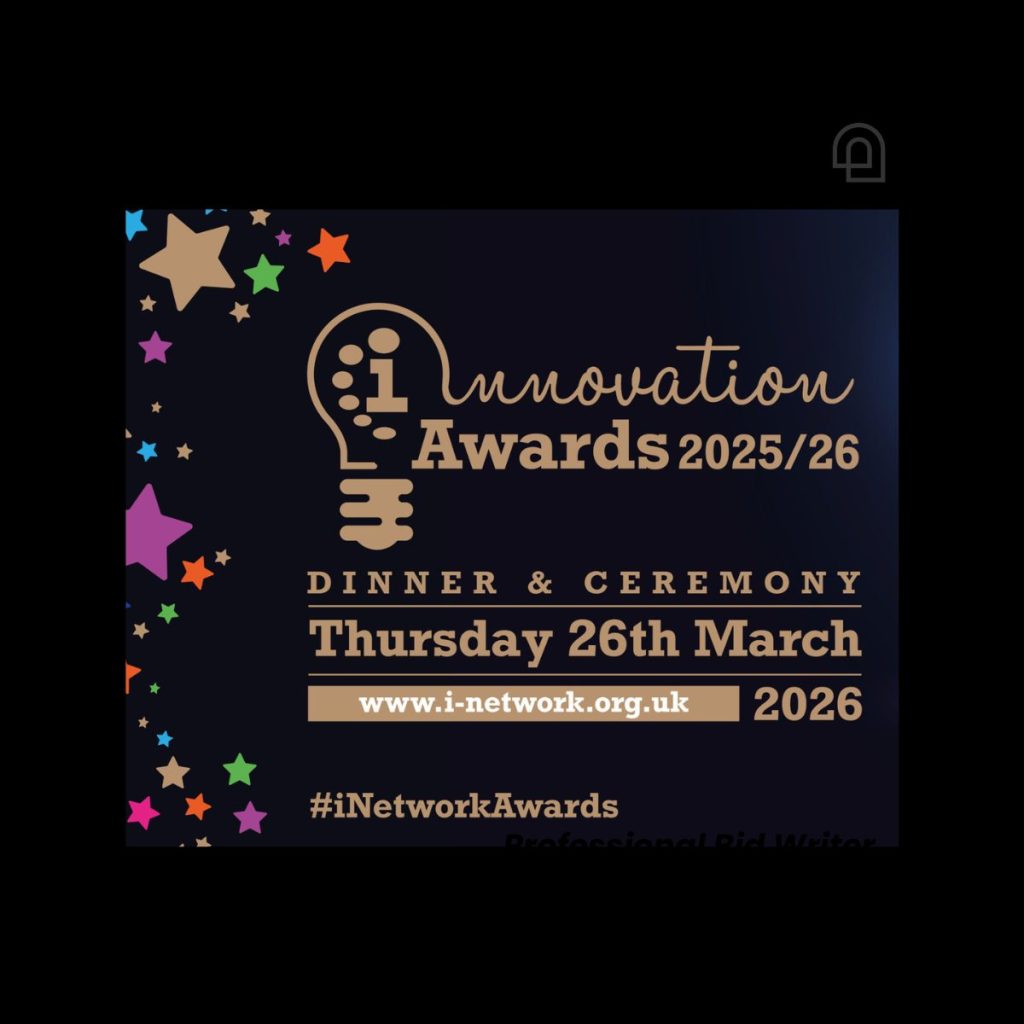
North Yorkshire Council (NYC) have been nominated for the iNetwork Transforming & Innovating Public Services Award for their work with Leading AI.
A Flock of Bots
NYC has reimagined public sector innovation by embedding “Innovation as a Service” across the organisation. This approach is not a single project, but a new way of working that makes innovation accessible, impactful, and sustainable for everyone—from front-line staff to senior leaders. The initiative’s core aim is to democratise innovation, ensuring that anyone with an idea can access support and resources to turn it into reality. The council’s transformation journey began post-LGR, moving away from traditional project-focused transformation teams to a council-wide model.
The “Innovation as a Service” ethos is defined by openness, agility, and collaboration, involving service users, business partners, staff, and external experts (including our customers). Notable events, such as the Social Care and AI Discovery Day, brought together over 200 stakeholders, fostering honest dialogue and co-creation. A key strand of this initiative is the development and deployment of AI-powered tools—these are far ranging but a significant success has been the development of a range of AI Assistant Bots.
These come under three development areas:
1) developed by a 3rd party as part of existing product development e.g. Copilot and our Legal bot that advises on Legal case law
2) developed in collaboration with a supplier to fit a specific user case
3) developed in house with NYC Technology and service expertise.
The most notable of these are developed with a company called Leading AI and comprise 2 bots: Polly (the Children and Young People’s Services Policy Buddy) and Hanc (the Housing and Care Policy Buddy). NYC and Leading AI worked together to coproduce the tools. Polly came to last years I network awards as a PoC, but the next steps of this journey have been even more impressive!! Polly is now a well-established tool. ‘She’ enables staff right across the Children and Young People’s directorate to instantly access and interpret complex policies.
Polly used Retrieval Augmented Generation to focus the AI assistant on to the specific policies and guidance that are relevant. She won’t go outside these documents, and she is also designed to give clear answers but not direction, the social care worker or other officer remains responsible for decision making.
Polly was developed with rigorous testing, starting small and scaling what worked. The innovation team support implementation with a Data Protection Impact Assessment as well as the NYC AI Ethical Impact Assessment. Polly has followed the NYC innovation steps of: Scan, Test, Scale and Embed and the mantra of only continuing work that keeps adding value. Polly is now at embed stage, this is often the most difficult stage, driving the adoption curve to its peak number of users and usages. This adoption phase is talked of again and again across the innovation networks as the hardest nut to crack but also as the point to which real value at scale can be delivered. However, with Polly there was no need to drive innovation, she flew!
As a keynote speaker at the 2025 iNetwork conference said:
“Innovation shouldn’t have to be driven; it should be unstoppable!”
Polly certainly epitomises this approach and NYC is taking this learning to the wider product set (or the ‘flock of bots as its more colloquially known). Building on the success of Polly (and the gently competitiveness between Adults and Children’s Social Care!) the next step was to build Hanc. Hanc is another policy assistant but this time for ‘Housing and Care’. As it is cross service, this had the additional benefit of helping multidisciplinary teams that work across complex policies.
This type of context often sees services that aren’t person centred as they exist in policy and process silos. Making policy more accessible, more frequently accessed and easy to analyse would make working together across disciplines far easier. This is a specific area of interest for NYC and other local authorities as post LGR the housing and care services are now under one organisation, opening lots of possibility and benefit but also creating a friction that needs to be supported. Having a policy expert (in the form of an AI assistant bot) in the team can help clarity and communication, without the emotion or history of previously separate services coming together.
The energy didn’t stop there, even more ambitiously, Hanc was also designed to be council-agnostic, supporting cross-council adoption and standardising innovation opportunity nationwide. North Yorkshire Council are very keen to innovate as an organisation but also as part of the brilliant public sector collective. Building in a ‘one for all’ mindset means the whole sector can share and benefit from successes and learnings. Both tools, as with the whole ‘flock’ of bots and all other AI tools, are built on robust ethical principles, with comprehensive buy-in from leadership and frontline teams.
What are the key achievements?
The approach to building the NYC AI Assistants bots has delivered a series of sector-leading achievements:
- A focus on people and culture: these achievements are not about AI; they are about people. The success happens because of a relentless focus not on what can be done but on what should be done and why as well as ongoing priority to engage people, their work and how they feel.
- Social Care and AI Discovery Day: Engaged over 200 stakeholders, generating ideas and forging connections for lasting transformation. This event has since been replicated by other councils, demonstrating its impact. This is part of the NYC commitment to creating the space for people to explore and learn and try. This ‘space’ is not a defined or restricted process or timeslot it is about the permission and freedom for staff to think differently, use their imagination and be curious.
- AI Assistants (Polly and Hanc): Polly is now live, empowering staff to access and understand complex policies instantly. In its first three months, Polly had 849 users, 2174 prompts, and saved 2421 hours. Practitioners report significant time savings (5– 7 hours per week), improved practice consistency, and enhanced professional confidence. Hanc, currently in proof-of-concept, is being tested across five councils, with strong sector-wide interest to scale.
- Cross-pollination: Learning from social care has been successfully transferred to other directorates, developing AI assistants and solutions across the council.
- Comprehensive Buy-In: Senior leadership endorsement, active engagement from frontline teams, and private sector partners (Leading AI) have all contributed resources and expertise.
- Scalability and Replicability: The council’s approach is now a model for others, with tools and processes designed for adoption beyond North Yorkshire.
- Direct benefits:
o Improving policy accessibility and enabling staff to quickly find accurate guidance. o Reducing time and complexity in navigating lengthy policy documents.
o Enhancing service quality and supporting informed decision-making.
- Creativity and unseen benefits: when Polly and Hanc and the rest were developed there was a relatively simple use case – an officer who needs to find the right bit of guidance can have an accurate, intuitive and easy to use interface to make it easy. Through the PoC’s and ongoing development and testing with user’s additional uses and benefits were quickly surfaced
o People translated outputs into their first language, making complex policy far easier to understand
o People translated outputs into easy read guides using themes like superheroes or plain English to make them far more accessible and person centred
o Themes from the frequently asked questions are taken to support learning and development planning
- Feeling like innovators: the bots are examples of thinking big and acting small which means being able to deliver real value at pace. They have their own inherent value but also contribute to the broader value of supporting these often-downtrodden staff groups to feel and act like innovators, to even feel cutting edge!
How Innovative is your initiative?
Lots of councils and organisations have built or brought in bots or are dabbling with AI. Not a lot of councils have a comprehensive, people focussed, strategically backed and planned out pipeline for building and caring for a ‘flock of bots’ as part of an even bigger and well-established approach to innovation. North Yorkshire Council are so far into their AI journey they have stopped talking about it with such gravitas, for NYC this is just another piece of innovation. This is not a bit of tech; this is a radical departure from business as usual. It is genuine, systemic, and scalable – rooted in value and outcomes as described by people themselves.
The council’s approach to innovation champions a 3 pillared approach of: reassurance, assurance and doing it! This means people have permission and confidence to try as well as the literacy around and access to the latest technology plus the ability to deliver Proof of Concept work, using rapid feedback, pilots, and direct engagement with service users and staff.
Key innovations include:
- Democratised Innovation: Anyone in the organisation can access support to develop and scale ideas, breaking down silos and fostering a culture of experimentation. This builds a pipeline of change as well, as the bot is not a one-off experiment or someone’s pet project but a part of something much bigger that people teams and services can access and say ‘me next’!
- AI for Good: The development of AI assistants (including but not limited to Polly and Hanc) is guided by ethical impact assessments, ensuring technology enhances human work rather than replacing it. The approach is to use AI capabilities to reduce the slog and not the skill and to unburden people from tech, systems and bureaucracy. These tools use natural language queries, provide plain English, language translations, easy-read explanations, and support neurodiversity and inclusion.
- Public/Private Partnership: Collaboration with Leading AI has enabled the council to co-create solutions that are practical, scalable, and replicable. Hanc’s council-agnostic design is a national first, aiming to standardise policy access across local authorities.
- Benefits Tracking: Rigorous measurement of impact ensures that innovation delivers real, tangible benefits—not just “nice to have” results.
- Continuous Learning: The council works with research institutions, industry partners, and public sector networks to stay at the leading edge, sharing learning internally and externally. This model stands out because it is accessible to all, rooted in collaboration, and proven to make a tangible difference for people and communities. It is already being emulated by other councils and networks, setting a new standard for public sector innovation.
What are the key learning points?
Several key learning points have emerged from the council’s transformation journey:
- Culture is Critical: Successful innovation requires a culture where officers feel empowered to experiment, learn, and scale new ideas. Permission to innovate is as important as the tools themselves.
- Start with People: Listening to staff and service users is essential. Innovation must address real needs and be co-created with those who deliver and use services.
- Ethics and Trust: Building trust around new technologies is vital. Ethical impact assessments, transparency, and open dialogue help address anxieties and ensure responsible use.
- Partnerships Drive Success: Collaboration across public and private sectors brings together diverse expertise and resources, enabling solutions that are both practical and scalable.
- Benefits Must Be Measured: Rigorous tracking of outcomes ensures that innovation delivers value for money and supports organisational sustainability.
- Scalability Matters: Designing solutions that can be adopted by other councils maximises impact and supports sector-wide transformation.
- Continuous Improvement: Rapid learning cycles, regular pilots, and sharing best practice help embed innovation across the organisation and beyond.
- And finally…don’t be scared to give things a go! These lessons have shaped a replicable model for innovation in local government, one that is inclusive, cumulative, and genuinely transformative.
Additional Comments
NYC truly values being part of I Network and appreciates the many groups, learning opportunities, and connections it offers. Being shortlisted for awards is an added bonus, and NYC would be thrilled to receive that recognition again. The organisation takes great pride in its flock of bots approach, along with the context and unique products involved, and would welcome the chance to share these achievements with the broader network.

Latest posts


Free webinar – AI in Housing is a senior leadership decision, not an IT project
Events